Can you cancel a gym membership easily? Yes, you often can, but it depends on your specific gym contract cancellation terms. This guide will help you navigate gym membership termination and your consumer rights gym. We’ll explore fitness club cancellation policy nuances, health club membership laws, and how to handle recurring payment cancellation.
Joining a gym can be a fantastic step towards a healthier lifestyle. However, life circumstances change. You might move, get injured, or simply find the gym isn’t the right fit anymore. This is when understanding cancel gym membership law becomes crucial. Many people find themselves locked into agreements they no longer want or can use, often due to complex terms and conditions buried within the initial sign-up paperwork. This article aims to demystify the legal landscape surrounding gym memberships, empowering you to terminate your agreement without unnecessary hassle or unexpected fees.
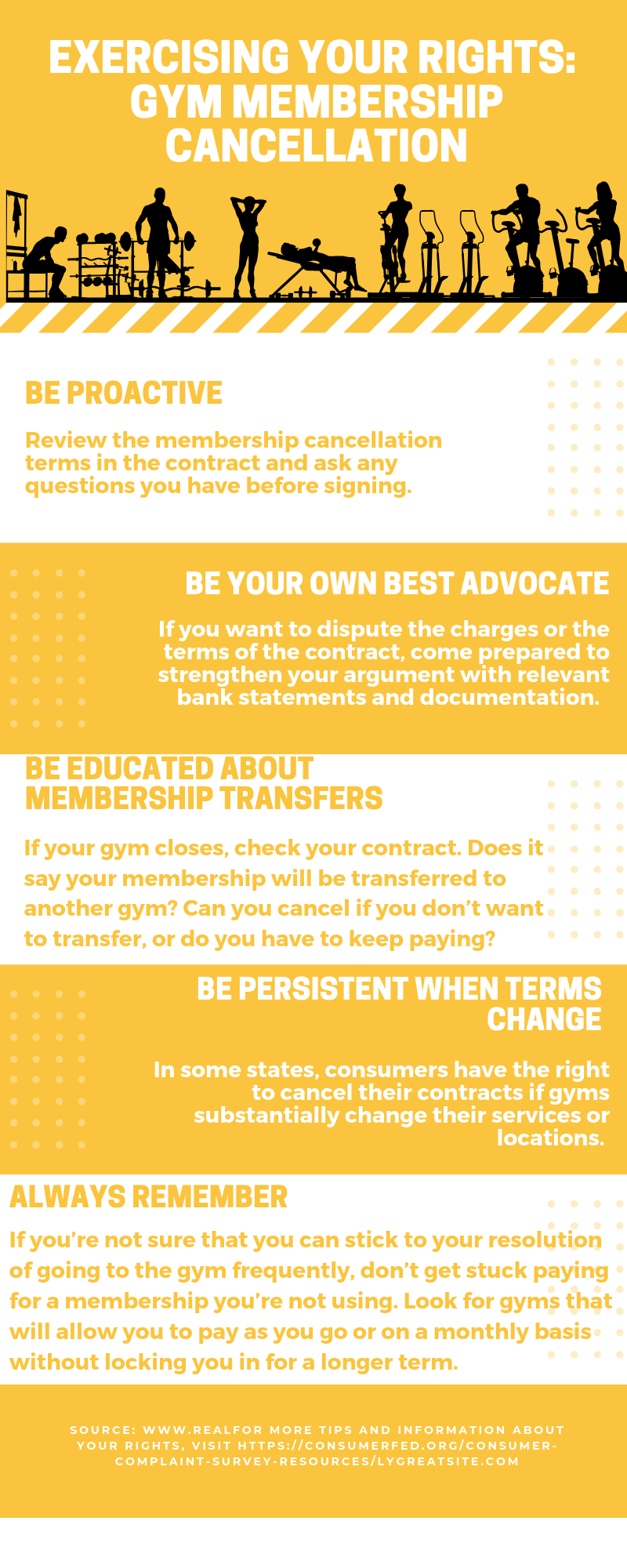
Image Source: consumerfed.org
Deciphering Your Gym Contract
Your gym membership agreement is a legally binding document. It outlines the terms of your membership, including payment schedules, usage rules, and, critically, the procedures for gym membership termination.
Key Clauses to Look For:
- Cancellation Policy: This is the most important section. It will detail the required notice period, any fees associated with cancellation, and the acceptable reasons for terminating the contract.
- Automatic Renewal: Many gym contracts auto-renew. It’s vital to know when your renewal date is and how to opt out if you don’t wish to continue your membership. This relates directly to automatic renewal laws.
- Cooling-Off Period: Some jurisdictions have laws that provide a “cooling-off” period, allowing you to cancel within a few days of signing the contract without penalty.
- Termination for Cause: This clause usually covers situations where the gym fails to provide services (e.g., closing the facility) or if you have a significant personal reason (like a medical condition).
- Contract Length: Be aware of the initial commitment period. Cancelling before this period ends often incurs higher fees.
What is a “Fitness Studio Termination” vs. a General Gym?
While the principles are similar, “fitness studio termination” might sometimes involve more niche clauses if the studio offers specialized services (like personal training packages or specific class memberships) that have their own cancellation terms distinct from a general gym membership. Always read the fine print for the specific type of facility you’ve joined.
Common Reasons for Gym Membership Termination
People seek to cancel their gym memberships for a variety of valid reasons. Knowing these can help you frame your request and understand your rights.
Valid Grounds for Cancellation:
- Relocation: Moving a significant distance away from the gym (often defined by a mileage limit in the contract).
- Medical Reasons: A serious illness or injury that prevents you from using the gym’s facilities. This usually requires a doctor’s note.
- Gym Closure or Service Reduction: If the gym closes permanently, significantly reduces its hours, or eliminates key facilities or services you signed up for.
- Contractual Breach by the Gym: If the gym fails to uphold its end of the agreement.
- Cooling-Off Period: As mentioned, utilizing the statutory right to cancel shortly after signing.
Navigating Gym Contract Cancellation
Successfully cancelling your gym membership often hinges on following the specific procedures outlined in your contract and relevant laws.
Steps for Effective Gym Membership Termination:
- Review Your Contract: This is paramount. Find your original agreement and read the cancellation clauses carefully. Note the required notice period and any fees.
- Gather Supporting Documentation: If you’re cancelling for medical reasons, obtain a doctor’s note. If you’re moving, you might need proof of a new address.
- Write a Formal Cancellation Letter: This should be a clear, concise letter addressed to the gym’s management.
- State your intention to cancel your membership.
- Include your full name, membership number, and contact information.
- Clearly state the reason for cancellation.
- Attach any required supporting documents.
- Specify the date you wish the cancellation to be effective, respecting the notice period.
- Request written confirmation of your cancellation.
- Send the Letter: Send it via certified mail with a return receipt requested. This provides proof that the gym received your notification and the date it was received, which is crucial for adhering to notice periods and avoiding further charges.
- Stop Recurring Payments: Once you’ve submitted your cancellation request and have proof of delivery, you may wish to contact your bank or credit card company to stop automatic payments. However, this should only be done after ensuring you’ve met the gym’s cancellation requirements to avoid being flagged for non-payment. This is particularly important for recurring payment cancellation.
- Keep Records: Save copies of your contract, cancellation letter, postal receipt, and any correspondence with the gym.
Understanding Contract Cancellation Clauses:
These clauses are designed to protect both the member and the gym. While they can seem daunting, understanding them allows you to meet your obligations and exercise your rights. For instance, a clause might state you need to give 30 days’ notice before your next billing cycle to avoid being charged for that month.
Health Club Membership Laws and Consumer Rights
Laws governing gym memberships vary by state and country. These laws are designed to protect consumers from unfair practices.
Key Consumer Rights Gym Protections:
- Right to Cancel Under Specific Circumstances: Many laws mandate that gyms must allow cancellation under certain conditions, such as medical incapacitation or relocation, often with reasonable documentation.
- Prohibitions Against Deceptive Practices: Laws often prevent gyms from using misleading advertising or hiding important contract terms.
- Limits on Automatic Renewals: Some jurisdictions have laws that regulate how automatic renewal clauses can be implemented, often requiring clear disclosure and an easy opt-out process. This is a significant aspect of automatic renewal laws.
- Cooling-Off Periods: As previously mentioned, many regions offer a mandatory period after signing a contract during which you can cancel without penalty.
Automatic Renewal Laws: What You Need to Know
These laws are crucial for managing your gym memberships. They typically require businesses to:
- Clearly disclose that a contract will automatically renew.
- Notify you before the renewal date.
- Provide a simple way to cancel the automatic renewal.
Failure to comply with these laws can render the automatic renewal clause invalid.
Handling a Gym Membership Dispute
If your gym refuses to cancel your membership or charges you unfairly, you may have grounds for a gym membership dispute.
Strategies for Resolving Disputes:
- Direct Communication: First, try to resolve the issue directly with the gym’s management. Clearly state your case and refer to your contract and relevant laws.
- Formal Complaint: If direct communication fails, file a formal written complaint with the gym’s corporate office, if applicable.
- Credit Card Chargeback: If you’ve paid via credit card and believe you’ve been unfairly charged after attempting to cancel, you can dispute the charge with your credit card company. Provide them with all your documentation.
- Consumer Protection Agencies: Contact your local or state consumer protection agency. They can offer guidance and may intervene on your behalf.
- Small Claims Court: For significant financial disputes, you might consider taking the gym to small claims court.
Factors Affecting Your Case in a Gym Membership Dispute:
- Quality of Documentation: The stronger your records, the better your chances of winning a dispute.
- Clarity of Contract: Ambiguous contract terms may be interpreted in your favour.
- Adherence to Procedures: Demonstrating that you followed the gym’s cancellation procedures correctly is vital.
Fitness Studio Termination Specifics
While many principles overlap with general gym cancellations, a fitness studio termination might have unique considerations.
Unique Aspects of Fitness Studio Contracts:
- Class Packages: If you purchased a package of classes rather than a general membership, the cancellation terms might be tied to the expiry of those classes or specific usage rules.
- Personal Training Agreements: If your membership includes personal training, the cancellation of that specific service often has its own set of rules, which might be separate from the general gym access.
- Specialized Programs: Programs with fixed durations or specific outcomes might have non-cancellable clauses unless specific conditions are met.
The Impact of Recurring Payment Cancellation
Understanding how recurring payment cancellation works in conjunction with your gym membership is critical to avoid unwanted charges.
Best Practices for Managing Recurring Payments:
- Timing is Key: Ensure your cancellation request is submitted in accordance with the gym’s notice period before the next payment is due.
- Communicate with Your Bank: If you’ve attempted to cancel with the gym and they continue to charge you, inform your bank or credit card provider about the dispute and request they block future payments from that merchant.
- Avoid Stopping Payments Prematurely: Stopping payments before you have a confirmed cancellation or a valid dispute can lead to your account being sent to collections, negatively impacting your credit score.
Key Takeaways for Cancelling Your Gym Membership
Successfully cancelling your gym membership requires diligence and a clear understanding of your rights and obligations.
Essential Checklist:
- [ ] Read your contract thoroughly.
- [ ] Identify the notice period for cancellation.
- [ ] Note any fees associated with gym contract cancellation.
- [ ] Check for automatic renewal laws that may apply.
- [ ] Gather all necessary documentation (doctor’s notes, proof of address).
- [ ] Write a formal, dated cancellation letter.
- [ ] Send the letter via certified mail with return receipt.
- [ ] Keep copies of all correspondence and receipts.
- [ ] Follow up to ensure the cancellation is processed.
- [ ] If necessary, dispute charges with your bank.
Frequently Asked Questions (FAQ)
Q1: Can I cancel my gym membership if I move to a different city?
A: Generally, yes. Most health club membership laws and contracts allow for cancellation if you move a significant distance away. You will likely need to provide proof of your new address, such as a utility bill or driver’s license.
Q2: What if my gym significantly changes its hours or services?
A: If the gym makes substantial changes to the services you contracted for, you may be able to cancel your membership without penalty. This often falls under the gym breaching its contract. Document the changes and refer to your contract’s clauses regarding service provision.
Q3: My gym charges a cancellation fee. Is this legal?
A: Cancellation fees are often legal if they are clearly stated in your contract and are considered “liquidated damages” to compensate the gym for lost revenue from your early termination. However, some states have laws that limit the amount of these fees. Review your contract and state laws.
Q4: How do I stop automatic renewals for my gym membership?
A: To stop recurring payment cancellation due to automatic renewal, you typically need to provide notice before your renewal date, as specified in your contract. Many automatic renewal laws require the gym to remind you before renewal and provide an easy opt-out method.
Q5: What if the gym won’t provide written confirmation of my cancellation?
A: If the gym refuses to provide written confirmation after you’ve followed all cancellation procedures, send a follow-up letter stating that you consider the membership cancelled as of a specific date, referencing your previous communication and proof of delivery. You may then proceed with stopping payments through your bank and contacting consumer protection agencies if the gym continues to pursue payment. This is a common scenario in a gym membership dispute.
By arming yourself with this information, you can approach cancel gym membership law with confidence, ensuring your rights are protected and your fitness studio termination or gym membership cancellation is as smooth as possible. Remember, the key is always thorough documentation and adherence to the terms of your agreement and applicable consumer protection laws.