What are Kegel exercises for men? Kegel exercises help make the muscles below your bladder stronger. Why do men need Kegels? These muscles do important jobs. They help control urine flow, support the bladder and bowels, and play a role in sexual function. Can men do Kegel exercises? Yes, men absolutely can and should do them for better health.
Kegel exercises are simple squeezes. They work the muscles at the bottom of your pelvis. This area is often called the pelvic floor. Making these muscles strong can help with many things.
Image Source: my.clevelandclinic.org
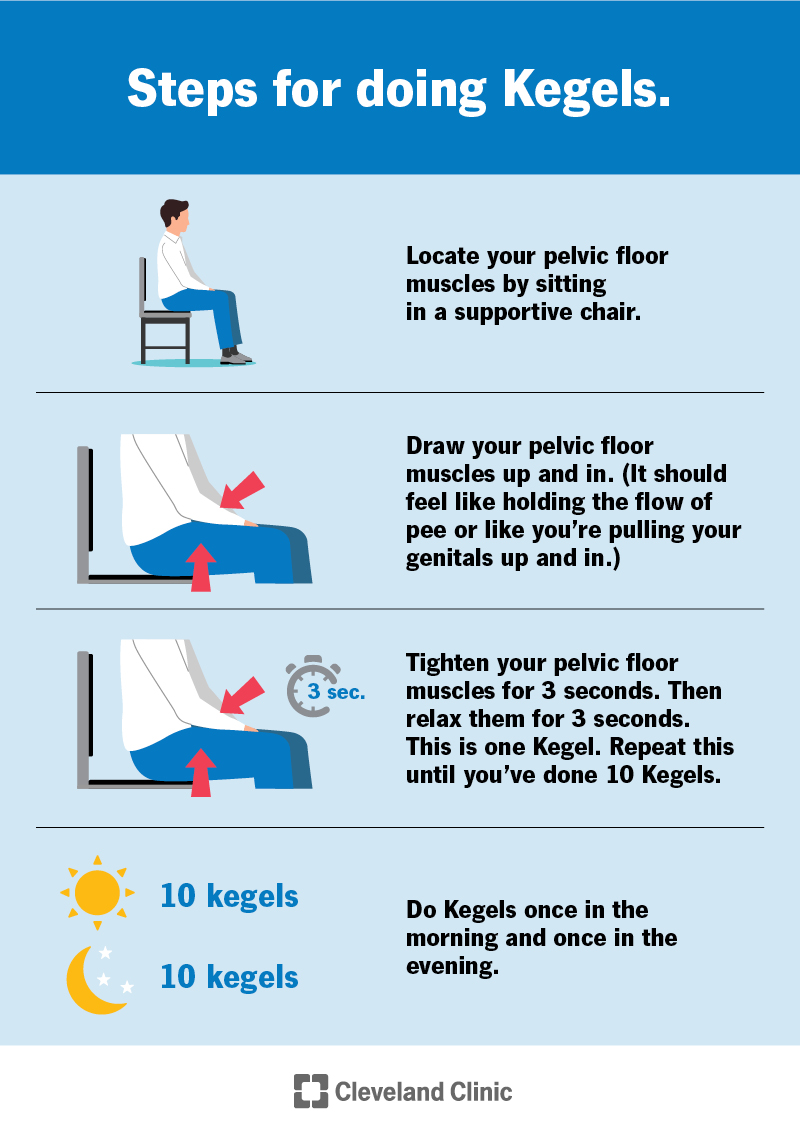
What is the Male Pelvic Floor?
Think of your pelvic floor as a hammock. It sits at the bottom of your body. It holds up your organs. These muscles go from your tailbone to your pubic bone. They also wrap around your rectum and urethra (the tube urine comes out of).
These muscles are super important. They help you hold in urine. They help you hold in gas and stool. They also work during sex. Like any other muscle, they can get weak. This can happen because of age, surgery, or weight gain. But you can make them strong again. You do this with specific movements, like Kegel exercises for men.
Locating Your Pelvic Floor Muscles
Finding these muscles is the first step. It is key to doing Kegels the right way. It can be tricky at first. These muscles are inside your body. You cannot see them. But you can feel them work.
Here are a few ways how to find pelvic floor muscles male:
- Stop Urine Flow: The easiest way is when you pee. Start peeing. Then, try to stop the flow midstream. The muscles you squeeze to do this are your pelvic floor muscles. Do not make this a habit. Only do it to learn where the muscles are. Stopping urine often can be bad for your bladder.
- Prevent Passing Gas: Imagine you need to prevent passing gas. The muscles you tighten around your anus are part of your pelvic floor. You should feel a lift and squeeze in that area.
- Finger Test: Sit or lie down. Put a clean finger just in front of your anus. Now, squeeze the muscles like you are stopping gas. You should feel the muscles around your anus tighten and lift your finger slightly. Do not squeeze your buttocks, legs, or stomach. Only focus on the pelvic floor area.
Once you find the right muscles, you are ready to start doing Kegels. Remember, the goal is to squeeze only these specific muscles. Do not hold your breath. Keep your belly, legs, and butt relaxed.
The Benefits of Kegel Exercises for Men
Many men think Kegels are only for women. This is not true. Men get great benefits from these exercises. Making your pelvic floor muscles strong can help your health in many ways. Let’s look at the Benefits of Kegel exercises for men.
- Pelvic Floor Exercises for Men Urine Control: This is a major benefit. Weak pelvic floor muscles can lead to leaking urine. This is called urinary incontinence. This is common after prostate surgery. Strengthening pelvic floor men helps improve control over the bladder. It can reduce or stop leaking. This is especially true for Kegel exercises after prostate surgery.
- Support After Prostate Surgery: Surgery on the prostate, like for cancer, can weaken the pelvic floor muscles. This often causes problems with urine control. Doing Kegel exercises after prostate surgery can help muscles heal faster. They help regain control of the bladder. Many doctors tell men to start Kegels before surgery. This can make recovery better.
- Improving Sexual Health: Strong pelvic floor muscles are key for men’s sexual health. They help with blood flow in the pelvic area. This is important for erections. They also help control ejaculation.
- Kegel exercises for erectile dysfunction: Weak pelvic floor muscles can sometimes make it hard to get or keep an erection. Exercising these muscles can help improve blood flow. This may make erections firmer. While Kegels are not a cure for all cases of ED, they can be a helpful part of treatment.
- Kegel exercises for premature ejaculation: The pelvic floor muscles play a role in ejaculation. By learning to control these muscles, men may gain more control over when they ejaculate. This can help delay ejaculation for men who finish too quickly.
- Better Bowel Control: Just like with urine, the pelvic floor muscles help control bowel movements. They help hold in stool and gas. Strong muscles can help prevent accidental leaks.
- Support for the Spine and Pelvis: The pelvic floor muscles work with other core muscles. They help support your spine and pelvis. Making them strong can improve posture. It can also help with some types of lower back pain.
So, Kegel exercises are not just about one thing. They help with basic body functions and quality of life. Making these muscles strong is a smart health choice for men.
Proper Technique for Male Kegels
Doing Kegels the right way is very important. Just squeezing hard is not enough. You need to find the right muscles. Then, you need to squeeze and relax them correctly. This is the proper technique for male Kegels.
Here are the steps for doing a basic Kegel squeeze:
- Find the Muscles: Use one of the methods talked about before. Make sure you know which muscles to squeeze. Do not squeeze your belly, butt, or thighs.
- Get in Position: You can do Kegels in any position. Lying down is often easiest when you start. Gravity is not working against you as much. Later, you can do them sitting or standing.
- Squeeze the Muscles: Tighten your pelvic floor muscles. Pull them up and in. Imagine you are trying to stop both urine flow and passing gas at the same time.
- Hold the Squeeze: Hold the squeeze for a few seconds. Start with 3 to 5 seconds. Do not hold your breath. Breathe normally.
- Relax the Muscles: Slowly let go of the squeeze. Relax your pelvic floor muscles completely. This relaxation phase is just as important as the squeeze. Make sure you fully release the tension.
- Rest: Rest for the same amount of time you held the squeeze. If you held for 5 seconds, rest for 5 seconds.
- Repeat: Do this squeeze-hold-relax cycle again.
Key Points for Correct Technique:
- Focus: Only use the pelvic floor muscles. Keep other muscles relaxed.
- Breathing: Keep breathing normally. Do not hold your breath.
- Gentle, then Stronger: Start with a gentle squeeze. As muscles get stronger, you can squeeze a bit harder. But never strain.
- Full Relaxation: Make sure you relax fully between squeezes. Muscles need to rest.
Avoiding Common Mistakes
Many people make errors when starting Kegels. Knowing these can help you avoid them.
- Squeezing Other Muscles: This is the most common mistake. Do not squeeze your butt, legs, or stomach. Focus only on the pelvic floor. Squeezing other muscles does not help the pelvic floor. It can even cause pain.
- Holding Your Breath: Holding your breath can make you feel dizzy. It does not help the muscles. Breathe smoothly.
- Pushing Down: Do not push outwards or downwards. You want to lift the muscles up and inwards. Pushing down can be bad for your pelvic floor.
- Stopping Urine Flow Regularly: Only do this once or twice to find the muscles. Doing it often while peeing can stop your bladder from emptying fully. This can lead to problems.
Learning the proper technique takes practice. Be patient with yourself. It is better to do 10 correct Kegels than 50 wrong ones. If you are not sure you are doing them right, talk to a doctor or a physical therapist. They can help you find the muscles and check your technique.
A Simple Kegel Workout Routine Men
To get the benefits, you need to do Kegels regularly. It is like any other exercise. You need to build muscle strength and control over time. A Kegel workout routine men includes different types of squeezes. It also includes sets and reps, just like lifting weights.
Here is a basic routine you can start with:
-
Slow Squeezes: These build strength.
- Squeeze your pelvic floor muscles.
- Hold the squeeze for 5 seconds.
- Relax for 5 seconds.
- Repeat 10 times.
-
Fast Squeezes: These build control and reaction speed.
- Squeeze your pelvic floor muscles quickly.
- Hold the squeeze for just 1 second.
- Relax for 1 second.
- Repeat 10 times.
Structuring Your Daily Kegels
Aim to do these sets multiple times a day.
- Morning: 1 set of 10 slow squeezes, 1 set of 10 fast squeezes.
- Midday: 1 set of 10 slow squeezes, 1 set of 10 fast squeezes.
- Evening: 1 set of 10 slow squeezes, 1 set of 10 fast squeezes.
This routine gives you 30 slow squeezes and 30 fast squeezes each day. You can do them at different times. Find times that fit into your day easily.
Making It a Habit
It is easy to forget to do Kegels. Link them to things you already do.
- Do them while brushing your teeth.
- Do them while sitting at red lights.
- Do them while watching TV.
- Do them before you go to sleep.
Consistency is key for strengthening pelvic floor men. Doing a few correct Kegels every day is better than doing many just once a week.
Progressing Your Routine
As your muscles get stronger, you can make the exercises harder.
- Increase Hold Time: Increase the hold time for slow squeezes. Go from 5 seconds to 7 seconds, then to 10 seconds. Always match the rest time to the hold time.
- Increase Reps: Do more squeezes in each set. Go from 10 to 12, then to 15.
- Increase Sets: Do more sets throughout the day. Maybe add a set in the late afternoon.
- Change Positions: Practice Kegels while sitting, standing, and walking. Doing them against gravity is harder. Standing is more challenging than lying down.
Listen to your body. Do not do so many that your muscles get tired or sore. Start slow and build up over time.
How Kegels Help With Specific Issues
We talked about the benefits in general. Let’s look closer at how Kegels help with certain problems men face.
Kegel Exercises for Erectile Dysfunction
Getting and keeping an erection needs good blood flow. It also needs healthy nerves and muscles. The pelvic floor muscles help pump blood into the penis during arousal. They also help keep blood there for firmness.
Weak pelvic floor muscles may not support this process well. Strengthening them can improve blood flow to the penis. This can make erections better. Kegels can also help with feeling in the area. This can make sex more enjoyable.
Research shows that Kegels can help men with ED. One study found that Kegel exercises helped many men with ED get better erections. It is not a magic cure for everyone. But it is a simple thing many men can try. It has no bad side effects. Combining Kegels with other treatments for ED, like lifestyle changes, can be very helpful.
Kegel Exercises for Premature Ejaculation
Premature ejaculation (PE) is when a man comes too quickly during sex. This is a common problem. The pelvic floor muscles are involved in ejaculation. Learning to control these muscles gives men more power over their body’s response.
By doing Kegels, men become more aware of these muscles. They can learn to relax them to delay ejaculation. They can also use a technique called the “squeeze technique.” This involves squeezing the pelvic floor or the base of the penis just before climax. This helps stop the urge to ejaculate.
Doing regular Kegel exercises for premature ejaculation can make men more aware of their pelvic floor. This awareness helps them control the muscles better during sex. This practice can give men more control over their timing.
Pelvic Floor Exercises for Men Urine Control
Problems with urine control are often caused by weak pelvic floor muscles. This is very common after prostate surgery. The prostate gland sits right below the bladder. Removing it can affect the nearby muscles and nerves.
Doing pelvic floor exercises for men urine control strengthens these muscles. They help close the urethra. This is the tube that carries urine out of the body. Stronger muscles keep this tube closed until you want to pee.
For men dealing with leaking urine, starting a Kegel routine is a key step. It helps regain the ability to hold urine. It improves confidence and quality of life. It takes time and regular practice to see results. But many men find that Kegels make a big difference in reducing or stopping leaks. This is especially true for Kegel exercises after prostate surgery.
Kegel Exercises After Prostate Surgery
Prostate surgery (like radical prostatectomy) is a common reason men start doing Kegels. The surgery can affect the nerves and muscles that control the bladder. This often leads to leaking urine, especially right after the surgery.
Doctors usually tell men to start Kegels before the surgery. This helps men find the muscles. It also gives them a head start on strengthening them. Having stronger muscles before surgery can lead to faster recovery of bladder control afterward.
After surgery, starting Kegels again is important. The doctor or a physical therapist will tell you when it is safe to start. Usually, it is soon after coming home. Start gently. Focus on finding the muscles again. Swelling or changes from surgery can make this harder at first.
The Kegel workout routine men described earlier is a good start. Slowly increase the hold time and repetitions as you get stronger. Be patient. Full recovery of bladder control can take weeks or months. Doing your Kegels regularly is the best way to help this happen. Strengthening pelvic floor men is vital in this recovery phase.
It is also normal to feel tired. Do not overdo it. If you have pain, stop and talk to your doctor.
When to Talk to a Doctor or Physical Therapist
Kegel exercises are safe for most men. But sometimes, you might need help.
- If you cannot find the muscles: Some men have trouble identifying the pelvic floor muscles. A physical therapist who works with pelvic health can help. They have ways to check if you are squeezing the right muscles.
- If Kegels do not help: If you do Kegels correctly and regularly for a few months but see no change in your symptoms (like leaking urine or ED), talk to your doctor. There might be other reasons for your problems. Kegels might not be the right or only answer.
- If you have pain: Kegels should not cause pain. If they do, stop doing them and see a doctor or physical therapist. Pain could mean you are doing them wrong or have another issue.
- If you have other pelvic floor problems: Sometimes, pelvic floor muscles can be too tight, not too weak. This can also cause problems. Doing Kegels when muscles are too tight can make things worse. A physical therapist can check if your muscles are tight or weak.
A pelvic floor physical therapist is a specialist. They know a lot about these muscles. They can give you a personal exercise plan. This plan will fit your specific needs and problems. They can also use tools to help you feel the muscles better (like biofeedback). This can make it easier to learn the proper technique for male Kegels.
Integrating Kegels Into Your Daily Life
Making Kegels a regular part of your day helps you stick with them. Think about your daily routine. Find small pockets of time when you can do a set or two.
- Morning Routine: While making coffee, in the shower (though harder to feel muscles when standing and wet), or while getting dressed.
- Work/School: While sitting at your desk, during a commute, or in a meeting (no one can tell you are doing them!).
- Leisure Time: While watching TV, reading a book, or listening to music.
- Before Bed: While lying in bed before sleeping.
The key is to link Kegels to activities you do every day without thinking. This makes them a habit. You do not need special equipment or a lot of time. This is why Kegels are great. You can do them almost anywhere, anytime.
Kegel Workout Routine Men Table Example
Here is a simple table to help you plan your daily Kegels:
| Time of Day | Exercise Type | Hold Time (Seconds) | Reps per Set | Sets | Total Squeezes |
|---|---|---|---|---|---|
| Morning | Slow Squeeze | 5 (start here) | 10 | 1 | 10 |
| Fast Squeeze | 1 | 10 | 1 | 10 | |
| Midday | Slow Squeeze | 5 | 10 | 1 | 10 |
| Fast Squeeze | 1 | 10 | 1 | 10 | |
| Evening | Slow Squeeze | 5 | 10 | 1 | 10 |
| Fast Squeeze | 1 | 10 | 1 | 10 | |
| Total Daily | 6 Sets | 60 Squeezes |
You can print this table. Put it somewhere you see it often. Or set reminders on your phone. Aim for 3 sets a day to start. As you get stronger, you can increase the hold time, reps, or sets.
Frequently Asked Questions About Male Kegels
Here are answers to common questions men ask about Kegel exercises.
How Long Does It Take to See Results from Kegel Exercises?
It takes time to build muscle strength. Just like lifting weights. Most men start to see some improvement in 6 to 12 weeks. But this can vary. It depends on how weak your muscles were. It also depends on how often and how well you do the exercises. Be patient and stick with your routine.
Do Kegels Help with Urine Leaking When Coughing or Sneezing?
Yes, Kegels can help a lot with this. This type of leaking is called stress incontinence. It happens when pressure on the bladder makes it hard for weak pelvic floor muscles to keep the urethra closed. Strengthening these muscles helps them hold stronger against this pressure. Pelvic floor exercises for men urine control are very effective for this.
Can Kegels Make My Penis Bigger?
No, Kegel exercises do not change the size of your penis. They work the muscles around the penis, in the pelvic floor. They do not affect the penis tissue itself. However, they can improve blood flow to the penis. This might lead to better erections. This can make erections feel firmer or look larger when erect. But the size when flaccid or stretched does not change.
Are Kegels Safe for Everyone?
For most men, yes. Kegels are safe and helpful. However, if you have pain in your pelvic area, it is best to check with a doctor first. As mentioned before, if your pelvic floor muscles are too tight, doing Kegels might not be right. A physical therapist can help figure this out.
Can I Do Too Many Kegels?
Yes, you can overdo it. Doing too many Kegels without rest can tire the muscles. This can lead to muscle soreness or pain. It can even make symptoms worse temporarily. Follow a sensible routine. Do not push through pain. Make sure to fully relax the muscles between squeezes.
How Often Should I Do Kegel Exercises?
Aim to do them every day. Three sets of 10 slow and 10 fast squeezes a day is a good goal. Consistency is more important than doing a massive number of squeezes once in a while.
Do I Need Special Equipment for Kegel Exercises?
No. You do not need any equipment to do Kegel exercises. You only need your body and a little bit of focus. There are some tools, like biofeedback devices, that can help you learn. But they are not needed to start. Finding and feeling the muscles yourself is enough to begin.
Making Strengthening Pelvic Floor Men a Priority
Taking care of your pelvic floor is an important part of overall health for men. It is not just about fixing problems. Strengthening these muscles can prevent issues later on. It supports your body’s core. It helps with basic functions like peeing and pooping. It also plays a role in sexual wellness.
Doing Kegel exercises is a simple, private way to do this. You can do them anywhere. They take very little time. Adding a Kegel workout routine men into your day is an easy step for better health.
Remember the key steps:
- Learn how to find pelvic floor muscles male correctly.
- Practice the proper technique for male Kegels. Focus on squeezing and relaxing the right muscles. Keep others relaxed.
- Follow a regular Kegel workout routine men. Start simple and build up.
- Be patient. It takes time to see the Benefits of Kegel exercises for men.
- If you have trouble or pain, get help from a doctor or a pelvic floor physical therapist.
Whether you are looking for Kegel exercises for erectile dysfunction, Kegel exercises for premature ejaculation, pelvic floor exercises for men urine control, or help with Kegel exercises after prostate surgery, consistent Kegel practice can be a powerful tool. Start today and unlock the benefits for a healthier, stronger pelvic floor.