You can absolutely exercise at home. Many people find it easy and helpful. It saves time and money. You do not need lots of fancy gear. You can use your body weight. You can get fit right where you live. This guide helps you start your home fitness path. It gives you ideas and simple steps.
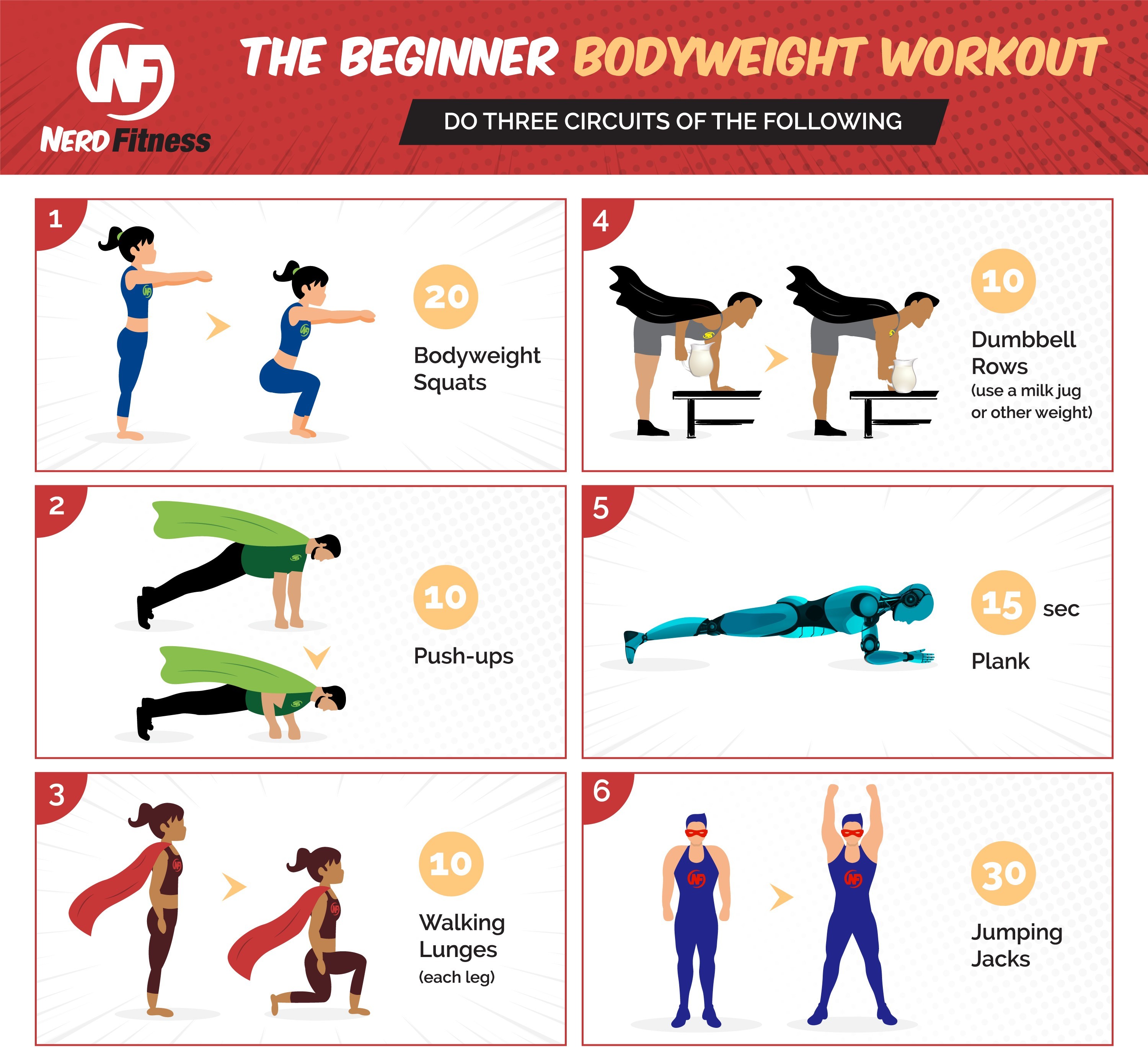
Image Source: www.nerdfitness.com
Starting Your Home Exercise Journey
Taking care of your body is key. Exercise helps you feel good. It makes you strong. It boosts your mood. You do not need a gym to do this. You can do great workouts at home. At home fitness is easy to start. It fits your busy life.
Lots of things make people want to work out at home. Maybe the gym is too far. Maybe gym fees are too high. Maybe you feel shy at the gym. Doing it at home fixes these issues. You pick the time. You pick the place. You pick the music.
What are the good points of home workouts?
- It saves time. No travel needed.
- It saves money. No gym fees. No gas cost.
- It is private. You do not feel watched.
- It is handy. You can do it any time.
- You can fit it in. Even a quick home workout helps.
Let’s get you set up. We will look at how to plan. We will look at different moves. We will share tips for sticking with it.
Making Your Home Workout Plan
Why make a plan? A plan helps you stay on track. It helps you reach your goals. Think of it like a road map. It shows you where to go. A good home workout plan makes things clear. It tells you what to do and when.
How do you make a simple plan?
- Think about your goal. What do you want to do?
- Get stronger?
- Lose some weight?
- Feel more energy?
- Move more easily?
- Just start moving?
Pick one or two things. Keep it simple at first.
- See how much time you have. How many days a week? For how long each time?
- Even 15-20 minutes helps.
- Three to four days a week is a good start.
- Maybe you can only do a quick home workout some days. That is fine.
- Think about what you like. What feels fun to you?
- Do you like fast moves? (Cardio)
- Do you like lifting or pushing? (Strength)
- Do you like calm moves like yoga?
Mix it up so you do not get bored.
- Pick your spot. Where will you work out at home?
- A living room corner?
- A bedroom space?
- A garage?
Make sure you have space to move. Make sure it is safe.
Once you know your goal, time, and what you like, you can map it out. Write it down. Put it on your phone. This makes your home workout plan real.
Let’s say your goal is to feel stronger. You have 30 minutes, three times a week. You can plan strength days. Maybe you add a little cardio.
- Monday: Strength (30 min)
- Wednesday: Strength (30 min)
- Friday: Strength (30 min)
Or, maybe you want more energy. You have 20 minutes, five days a week.
- Monday: Cardio (20 min)
- Tuesday: Strength (20 min)
- Wednesday: Cardio (20 min)
- Thursday: Strength (20 min)
- Friday: Quick mix (20 min)
This is your at home fitness plan. You can change it as you go. The main thing is to start.
Grasping Different Home Workout Types
You can do many types of exercise at home. You do not need a gym full of machines. You can use your body. You can use simple items. Let’s look at some main types.
Bodyweight Exercises
What are bodyweight exercises? These are moves where you use your own body’s weight. You do not need weights or machines. Your body is the tool. These are great for a no equipment workout.
Why are they good?
- You can do them anywhere.
- They build strength.
- They help you move better.
- They work many muscles at once.
- They are free.
Here are some simple bodyweight exercises:
- Squats: Stand with feet apart. Bend knees like sitting in a chair. Keep back straight. Stand back up. Works legs and butt.
- Push-ups: Hands on floor under shoulders. Body in a straight line. Lower chest to floor. Push back up. Works chest, arms, and core. (You can start on your knees).
- Lunges: Step one foot forward. Lower hips until both knees bend to about 90 degrees. Front knee over ankle. Back knee near floor. Push off front foot to stand. Works legs. Do both sides.
- Plank: Get on hands and knees. Put forearms on floor. Extend legs back. Rest on toes. Keep body in a straight line. Do not let hips sag. Works core. Hold for time.
- Glute Bridges: Lie on back. Knees bent, feet flat on floor. Lift hips off floor. Squeeze butt muscles. Lower hips slowly. Works butt and back of legs.
- Bird Dog: Start on hands and knees. Keep back flat. Reach one arm forward. Reach opposite leg back. Keep body steady. Do not twist. Bring arm and leg back. Do other side. Works core and balance.
You can put these together for a full no equipment workout. Do a few sets of each. Try 10-15 reps for each move. For planks, hold for 20-30 seconds.
Cardio at Home
What is cardio at home? It is exercise that gets your heart rate up. It makes you breathe harder. Cardio is good for your heart and lungs. It helps burn calories. You can do it without running outside or using a treadmill.
How can you do cardio at home?
- Jumping Jacks: Jump feet wide while raising arms overhead. Jump feet together while lowering arms. Simple and effective.
- High Knees: Run in place. Lift knees up high towards chest. Pump arms.
- Butt Kicks: Run in place. Kick heels back towards your butt. Pump arms.
- Burpees: Start standing. Drop to a squat, hands on floor. Kick feet back to plank. Do a push-up (optional). Jump feet back to hands. Jump up with arms overhead. Full body and high energy. (Can be done step-by-step without jumping or push-up).
- Mountain Climbers: Start in plank position. Bring one knee towards chest. Then switch legs quickly. Like running in a plank.
- Dancing: Put on music you love. Just move your body. It is fun cardio.
- Stair Climbing: If you have stairs, walk or run up and down.
- Jump Rope: If you have space and a rope, jumping rope is great cardio.
You can do these for a set time (e.g., 30 seconds each) or count reps. Repeat rounds. This makes a good quick home workout.
Strength Training at Home
What is strength training at home? It is exercise that builds muscle. It makes you stronger. You can use weights if you have them. But you do not need them. Bodyweight exercises are a key part of strength training at home.
Why do strength training?
- Builds muscle size and strength.
- Helps burn more calories even at rest.
- Makes bones stronger.
- Helps with daily tasks (lifting, carrying).
- Improves body shape.
How to do strength training at home:
- Using Bodyweight: As shown above (squats, push-ups, lunges). Do more reps or harder versions as you get stronger.
- Using Resistance Bands: Bands are cheap and light. You can use them for arm, leg, and back exercises. They add pull or push resistance.
- Using Dumbbells or Kettlebells: If you have these, you can do gym moves like rows, presses, curls, and lifts. Start with light weights. Learn the right way to do the move.
- Using Everyday Objects: Use water bottles, full backpacks, or soup cans as light weights. Get creative. A sturdy chair is good for step-ups or dips.
To build strength, you need to challenge your muscles. Do enough reps until your muscles feel tired. Then rest and do more sets. This tells your muscles to grow stronger.
Example strength training at home moves with light weights or bands:
- Bicep Curls: Hold weights. Arms down by sides. Bend elbows to lift weights towards shoulders. Lower slowly. Works front of arms.
- Overhead Press: Hold weights at shoulders. Push weights up overhead. Lower slowly. Works shoulders.
- Bent-Over Rows: Bend forward from hips. Keep back straight. Let weights hang. Pull weights up towards chest, squeezing shoulder blades. Lower slowly. Works back.
Start with 2-3 sets of 10-15 reps for most moves. As you get stronger, you can do more reps or make the move harder.
No Equipment Workout
Can you get a good workout with no equipment workout? Yes! This type of workout uses only your body weight. It is perfect for home.
A no equipment workout can mix cardio and strength.
- Jump jacks for warm-up.
- Squats for legs.
- Push-ups for upper body.
- Plank for core.
- Lunges for legs.
- High knees for more cardio.
- Glute bridges for butt.
You can do these moves one after another. Rest for a short time between moves. Do a round of all the moves. Rest for a minute or two. Then do another round. Repeat 2-3 times. This makes a full no equipment workout.
This is also a great way to start a beginner home workout. It helps you learn the basic moves. It helps you feel how your body moves.
Building Your At Home Fitness Program
Now you know about different types of exercise. How do you put them together? You build your at home fitness program. This means mixing cardio, strength, and flexibility.
A good program has a mix over the week.
- Some days focus on getting your heart rate up (cardio).
- Some days focus on making muscles stronger (strength).
- Some days focus on stretching or calming moves (flexibility, yoga).
This helps your whole body get fit. It also keeps your workouts interesting.
Beginner Home Workout
If you are new to exercise, start slow. A beginner home workout should be simple and not too hard. Focus on doing the moves correctly. Doing them right helps prevent hurt.
Here is a sample beginner home workout plan:
Goal: Start moving, feel better energy.
Time: 20 minutes, 3 days a week.
Type: Mix of bodyweight strength and light cardio. No equipment workout focus.
| Day | Activity | Time/Rounds | Notes |
|---|---|---|---|
| Day 1 | Warm-up | 5 minutes | Gentle arm circles, leg swings, march in place. |
| Workout Moves: | 2 Rounds | Do each move for 30 secs, then next. Rest 1 min between rounds. | |
| March in place / Light High Knees | 30 seconds | Keep knees low at first. | |
| Wall Push-ups | 30 seconds | Hands on wall, body straight, lean in. | |
| Squats (can hold onto chair) | 30 seconds | Do not go too low. Focus on form. | |
| Plank on Knees | 30 seconds | Keep back straight. | |
| Glute Bridges | 30 seconds | Slow and controlled. | |
| Cool-down / Stretch | 5 minutes | Gentle stretches for legs, arms, back. | |
| Day 2 | Rest or Light Walk | Let your body rest. | |
| Day 3 | Repeat Day 1 Workout | 20 minutes | Focus on smooth moves. |
| Day 4 | Rest | ||
| Day 5 | Repeat Day 1 Workout | 20 minutes | Maybe try a few moves without holding on. |
| Day 6 | Rest or Light Activity | ||
| Day 7 | Rest |
This beginner home workout is a starting point. Do not feel you must do a lot at once. The main thing is to start a habit. As you get stronger, you can add more time, more rounds, or harder versions of the moves.
Quick Home Workout
Sometimes you have little time. Life is busy. A quick home workout helps here. You can get a lot done in 15-20 minutes if you work hard. High-intensity moves are good for this.
A quick home workout often uses short bursts of hard work. Then short rest. You repeat this cycle. This is sometimes called High-Intensity Interval Training (HIIT).
Here is a sample quick home workout:
Goal: Get heart rate up, work many muscles fast.
Time: 15 minutes.
Type: Fast cardio and bodyweight moves. No equipment workout.
| Activity | Time | Notes |
|---|---|---|
| Warm-up | 5 minutes | Light jogging in place, arm circles. |
| Workout Rounds | 3 Rounds | Do each move for 45 secs, rest 15 secs. Rest 1 min between rounds. |
| Jumping Jacks | 45 secs | Move fast. |
| Squats | 45 secs | Keep good form even when fast. |
| Push-ups (on knees or toes) | 45 secs | Do as many as you can with good form. |
| High Knees | 45 secs | Lift those knees! |
| Plank | 45 secs | Hold tight. |
| Cool-down / Stretch | 5 minutes | Slow down, stretch out. |
This quick home workout is fast but effective. It gets your blood flowing. It works many parts of your body. You can change the moves. You can change the work and rest times. Find what works for you.
Exercise Routines at Home: Putting It Together
Making good exercise routines at home means thinking about your week. How do you spread out your workouts? You need rest days. Rest lets your body get stronger.
You also need to think about your whole body. Do not just work one part. Mix upper body, lower body, and core. Add cardio days.
Here are ideas for different exercise routines at home:
Idea 1: Full Body Focus (3 days/week)
- Monday: Full Body Strength (Bodyweight or light weights)
- Tuesday: Rest or Light activity (walk)
- Wednesday: Full Body Strength
- Thursday: Rest
- Friday: Full Body Strength or Cardio
- Saturday: Rest or Fun activity (dance, play)
- Sunday: Rest
Idea 2: Split Focus (4 days/week)
- Monday: Upper Body Strength (Push-ups, arm moves, back moves)
- Tuesday: Lower Body Strength (Squats, lunges, glute bridges)
- Wednesday: Rest or Light activity
- Thursday: Cardio Focused (Jumping jacks, high knees, burpees)
- Friday: Core and Flex (Plank, leg raises, stretching, yoga)
- Saturday: Rest
- Sunday: Rest or Fun activity
Idea 3: Mixed Week (5 days/week, short workouts)
- Monday: Quick Strength (15-20 min)
- Tuesday: Quick Cardio (15-20 min)
- Wednesday: Quick Strength (15-20 min)
- Thursday: Quick Cardio (15-20 min)
- Friday: Quick Mix or Rest (15-20 min)
- Saturday: Rest
- Sunday: Rest
These are just examples. Find exercise routines at home that fit your life. The best routine is the one you will actually do. Be ready to change it if needed. Your needs might change.
Remember to warm up before you start moving fast. Do 5-10 minutes of light moves. This gets your body ready. Cool down for 5-10 minutes after. Gentle stretching helps your muscles feel better.
Home Fitness Tips for Success
Starting is good. Sticking with it is key. Here are some home fitness tips to help you keep going.
- Set up your space: Find a clear spot. Make sure you have room to move your arms and legs. A mat can make floor exercises more comfy. Good shoes help protect your feet and knees, even indoors.
- Get ready: Wear clothes you can move in. Have water nearby.
- Use online help: Many free videos are online. Look for beginner home workout videos. Find videos for no equipment workout or cardio at home. Follow along at first.
- Set small goals: Instead of “get super fit,” try “workout 3 times this week.” Or “do 10 more squats than last week.” Small wins build confidence.
- Track your progress: Write down what you did. Note how you felt. Did you do more reps? Hold a plank longer? This shows you are getting better. It keeps you wanting to do more.
- Find a workout buddy: Even if they are not in the same room. Plan to work out at the same time. Check in with each other. This helps you both stay on track.
- Make it fun: Listen to music. Watch a show (if the workout allows). Try new types of workouts. If it is not fun, it is harder to keep doing.
- Be safe: Listen to your body. If a move hurts, stop. Do not try moves that feel too hard right away. Learn the right way to do each move. Watch videos that show good form.
- Be patient: Change takes time. Do not get down if you do not see big results right away. Keep going. Small steps lead to big changes over time.
- Celebrate wins: Did you finish a week of workouts? Did you do a move you could not do before? Give yourself a pat on the back.
- Mix it up: Do not do the exact same workout every time. Change the moves. Change the order. Change the time. This keeps your body guessing. It helps prevent boredom. This is part of building varied exercise routines at home.
- Fuel your body: Eat healthy food. This gives you energy for workouts. It helps your muscles get stronger.
- Get enough sleep: Your body repairs itself when you sleep. Good sleep helps you feel ready to work out.
These home fitness tips help make exercise a part of your life. Not just something you do once.
Keeping Up Your Home Fitness
Consistency is key to any fitness goal. Working out at home makes it easier to be consistent. It removes many excuses.
How to keep going?
- Make it a habit: Try to do it at the same time each day or on certain days. It becomes like brushing your teeth.
- Plan for tough days: What will you do when you feel tired or unmotivated? Have a quick home workout ready. Or plan for a lighter day (a walk, gentle stretch).
- Think about why you started: Remember your goals. Why is at home fitness important to you?
- Do not aim for perfect: Some days will be better than others. Missing one workout is okay. Just get back to it the next day.
- Find your community: Connect with others online doing home workouts. Share tips and encouragement.
Your at home fitness journey is yours. Make it fit your life. Make it something you look forward to. Even small steps every day or most days add up to big results.
Doing things like bodyweight exercises, cardio at home, and strength training at home can build a strong, healthy body. A no equipment workout means you can start right now. Use a beginner home workout to learn the ropes. As you get fitter, try a quick home workout when time is short. Build exercise routines at home that you love. Use home fitness tips to stay on track.
You have the power to get fit at home. It is ready for you.
FAQ (Frequently Asked Questions)
- Can I really get fit with a no equipment workout?
Yes! No equipment workout using bodyweight can build strength, improve cardio, and boost flexibility. Moves like squats, push-ups, lunges, and planks are very effective. - How long should a home workout be?
It depends on your goal and time. Even a quick home workout of 15-20 minutes can be good. Longer workouts (30-60 minutes) allow more time for different types of exercise and muscle groups. Consistency matters more than length sometimes. - How many days a week should I exercise at home?
For most people, 3-5 days a week is good. Start with 3 days if new. This gives your body rest time. Listen to your body and take extra rest if needed. - Do I need to warm up before home workouts?
Yes, always warm up! 5-10 minutes of light movement (like marching in place, arm circles) gets your body ready and helps prevent injury. - What if I do not know how to do a certain exercise?
Look for videos online! Many free videos show how to do bodyweight exercises and other moves correctly. Focus on form first, then speed or reps. - How do I stay motivated to exercise at home?
Find workouts you enjoy. Set small goals. Track your progress. Find a workout buddy (even online). Create a dedicated workout space. Use our home fitness tips above! - Can I build muscle with strength training at home without weights?
Yes. Strength training at home with bodyweight can build muscle, especially when you are starting or if you make the moves harder (e.g., single leg squats, push-ups on toes instead of knees). You can also add resistance bands or household items. - Is cardio at home as good as going to the gym?
Absolutely. Cardio at home using moves like jumping jacks, high knees, burpees, or dancing can raise your heart rate and improve your fitness just like a treadmill or bike at the gym.
Start your at home fitness journey today. It is possible. It is effective. It is for you.