How much physical activity do kids need? Children and youth need 60 minutes or more of moderate-to-vigorous physical activity every day. These are the general children’s physical activity guidelines recommended by health experts like the CDC. Meeting these daily exercise needs for kids helps them grow healthy and strong. This guide will explain the recommended physical activity for youth, the exercise guidelines for children by age, the benefits of exercise for children, and simple ways to start.
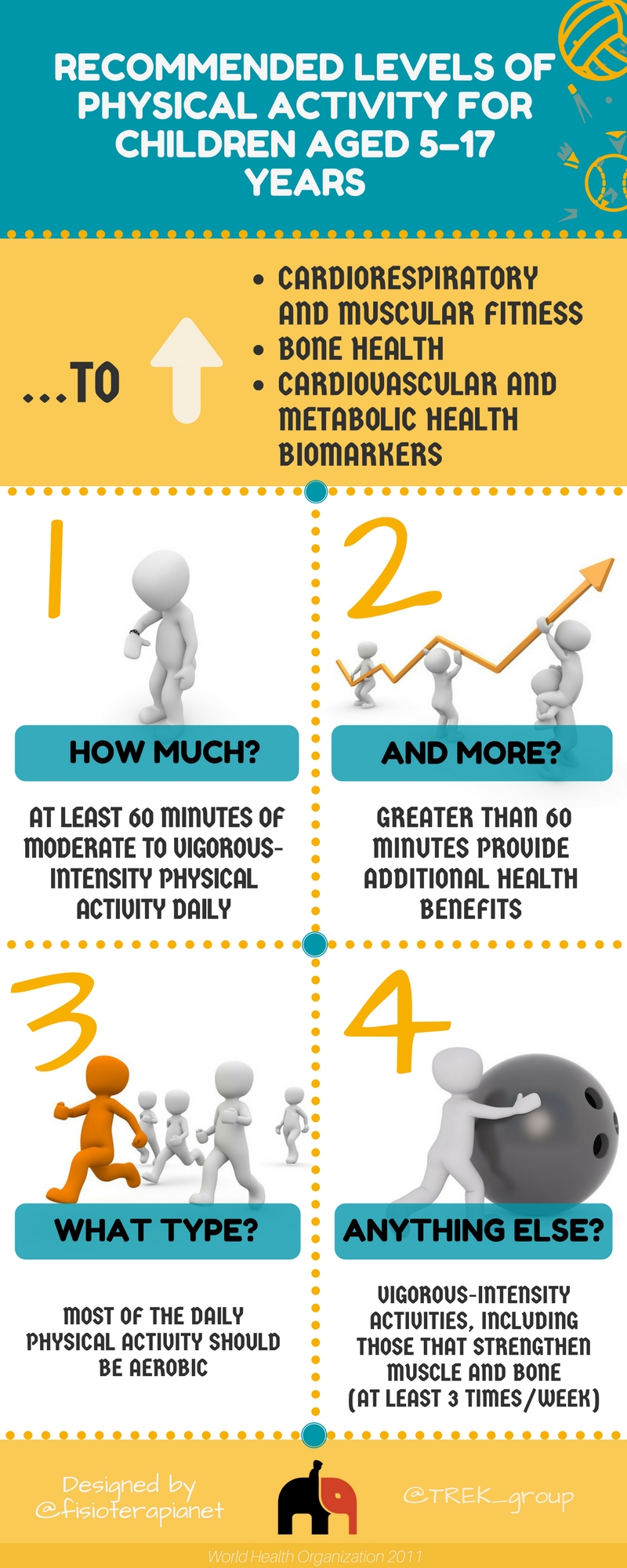
Image Source: exercise.trekeducation.org
Why Kids Need Daily Exercise
Exercise is not just for adults. It is vital for kids, too. Moving their bodies every day helps them in many ways. Think of it like building a strong house. Exercise helps build a strong body and mind for your child.
Benefits of Exercise for Children’s Health
Getting enough exercise offers lots of good things for kids.
- Strong Bones and Muscles: Activity helps build strong bones and muscles. This is very important as they grow.
- Healthy Weight: Exercise helps kids stay at a healthy weight. This lowers the chance of getting health problems later on.
- Healthy Heart: Moving makes their heart and lungs stronger. This helps blood flow better.
- Better Sleep: Active kids often sleep better at night. Good sleep is key for growth and learning.
- Improved Mood: Exercise can help kids feel happier and less stressed. It releases chemicals in the brain that make them feel good.
- Better Focus: Kids who exercise often do better in school. It can help them focus and think clearly.
- Lower Risk of Diseases: Being active lowers the chance of getting serious diseases later in life. Diseases like type 2 diabetes and heart disease are less likely.
These benefits show why meeting the recommended physical activity for youth is so important. It sets them up for a healthy life.
Types of Activity Kids Should Do
Kids need different kinds of movement. It is good to mix them up.
- Aerobic Activity: This is any activity that gets their heart beating faster. It makes them breathe harder. Most of the 60 minutes per day should be this type of activity. Examples include running, swimming, dancing, or playing tag.
- Muscle-Strengthening: These activities build strong muscles. Kids need to do this at least 3 days a week. Examples include climbing trees, playing on playground equipment, doing push-ups, or lifting weights safely under adult guidance for older kids.
- Bone-Strengthening: These activities put force on the bones. This helps make bones strong. Kids need to do this at least 3 days a week. Examples include running, jumping rope, playing sports like basketball or soccer, or gymnastics.
Many activities count for more than one type. For example, running is aerobic and bone-strengthening. Climbing is aerobic and muscle-strengthening.
Deciphering Daily Exercise Needs for Kids
Knowing how much physical activity do kids need can seem tricky. But the main idea is simple: 60 minutes every day for most kids.
Recommended Physical Activity for Youth: The 60-Minute Rule
Health groups like the CDC agree that children and youth aged 6 to 17 years need 60 minutes (1 hour) or more of moderate-to-vigorous physical activity each day. This is the goal for daily exercise needs for kids. It is important to know what “moderate-to-vigorous” means.
Moderate-to-Vigorous Physical Activity Explained
This term talks about how hard a child is working.
- Moderate Activity: During moderate activity, a child’s heart beats faster. They breathe harder than usual. But they can still talk, though not sing. Examples:
- Walking fast
- Riding a bike on flat ground
- Playing tag
- Dancing
- Hiking
- Vigorous Activity: During vigorous activity, a child’s heart beats much faster. They breathe much harder. They can only say a few words at a time. Examples:
- Running
- Swimming laps
- Playing soccer or basketball
- Jumping rope
- Fast cycling
- Martial arts
Most of the 60 minutes should be moderate or vigorous activity. At least 3 days a week, the activity should be vigorous. Also, on at least 3 days a week, kids should do muscle-strengthening and bone-strengthening activities.
Minimum Exercise for Children
Is there a minimum exercise for children? Yes. The 60 minutes per day is the recommended goal. Getting less is not ideal, but any amount of activity is better than none. However, to get the most health benefits, kids should aim for that 60-minute target every day. Some research suggests even short bursts of activity throughout the day can add up and be helpful. But the clear target from children’s physical activity guidelines is 60 minutes or more daily.
It is also important to reduce the time kids spend sitting. Limiting screen time (TV, video games, phones) is part of meeting daily exercise needs for kids. When kids sit for long times, they miss chances to move and play.
Exercise Guidelines for Children by Age
The amount and type of activity are slightly different based on a child’s age. Here are the exercise guidelines for children by age, based on CDC physical activity recommendations for kids.
Activity for Preschoolers (Ages 3-5)
Young children learn through play and movement. For this age group, the focus is on active play throughout the day.
- How Much: Preschool-aged children should be active throughout the day. Their movement should be part of their daily routine.
- What Kind: The activity should be light, moderate, or vigorous. It should include many different types of activities. This helps them learn basic movement skills. Examples include:
- Running and chasing
- Hopping and skipping
- Throwing and catching balls
- Playing on a playground (swinging, climbing)
- Dancing
- Riding a tricycle or small bike
There is no set number of minutes recommended for this age group. The idea is that they should just be moving often while they are awake. Parents and caregivers should help them move and play safely.
Activity for School-Aged Children (Ages 6-17)
This is the group that needs 60 minutes or more of moderate-to-vigorous physical activity each day. The recommendations for this age group are more specific.
- How Much: 60 minutes or more every day.
- What Kind:
- Aerobic: Most of the 60 minutes should be moderate-to-vigorous aerobic activity. Include vigorous activity on at least 3 days a week.
- Muscle-Strengthening: Include on at least 3 days a week.
- Bone-Strengthening: Include on at least 3 days a week.
It does not have to be 60 minutes all at once. It can be shorter periods added up. For example, 15 minutes during recess, 20 minutes after school playing, and 25 minutes at a sports practice. All of that counts towards the daily total.
Here is a summary table of the exercise guidelines for children by age:
| Age Group | Recommended Amount | Types of Activity | Focus |
|---|---|---|---|
| Preschool (3-5) | Active throughout the day | Light, moderate, or vigorous. Include varied activities and basic movements. | Active play, exploring movement |
| School-Aged (6-17) | 60 minutes or more per day (moderate-to-vigorous) | Mostly aerobic. Include vigorous activity on 3+ days. Muscle-strengthening on 3+ days. Bone-strengthening on 3+ days. | Meeting daily target, mixing aerobic, strength, and bone building. |
These are the core children’s physical activity guidelines. Following them helps ensure kids get the full benefits of exercise.
CDC Physical Activity Recommendations for Kids in Detail
Let’s look closer at the CDC physical activity recommendations for kids. They really focus on making activity a regular part of a child’s life.
The CDC guidelines stress that 60 minutes is the minimum goal. More activity often provides even greater health benefits.
They also point out that activities can be planned or unplanned. Organized sports count. But so does playing at the park, riding a bike with friends, or even helping with active chores like mowing the lawn (for older kids). All movement counts towards the daily exercise needs for kids.
The guidelines also mention the importance of reducing inactivity. Less time sitting still, especially in front of screens, gives kids more time to be active. Parents can help by setting limits on screen time and making active play easy and fun.
For the muscle-strengthening and bone-strengthening activities, the CDC recommends including them within the 60+ minutes of activity. They do not need to be separate sessions. For example, playing basketball counts as aerobic (running), bone-strengthening (jumping), and muscle-strengthening (using leg and arm muscles).
The CDC also advises that activities should be safe and suitable for the child’s age and development. For younger kids, it’s about exploring movement and play. For older kids, it might include more structured sports or activities.
The recommended physical activity for youth is a flexible target. The key is consistency. Aim for 60 minutes every single day, or almost every day. Small amounts throughout the day are just as good as one long session.
Encouraging Physical Activity in Children
Getting kids to be active for 60 minutes a day can be a challenge for some families. But there are many ways to make it easier and more fun. Encouraging physical activity in children is about creating a supportive home and community.
Making Exercise Fun
Kids are more likely to be active if they enjoy it.
- Let Them Choose: Let kids pick activities they like. If they hate organized sports, try dancing, swimming, or martial arts.
- Play Together: Join in! Play tag, ride bikes, go for a walk, or dance with them. Parents being active role models is very powerful.
- Make it a Game: Turn everyday movements into games. Can they run to the mailbox? Can they hop across the room?
- Explore Outdoors: Visit parks, playgrounds, hiking trails, or open spaces. Being outside often leads to more spontaneous activity.
- Use Music: Put on music and dance parties at home.
- Try Different Things: Let them try various sports, clubs, or activities to find what they love.
- Focus on Fun, Not Winning: For younger kids, the focus should be on having fun and learning skills, not on being the best or winning.
Parents as Role Models
Kids learn by watching adults. If parents and caregivers are active, kids are more likely to be active too.
- Talk about the activities you enjoy.
- Include the family in your exercise plans sometimes.
- Make activity a normal part of family life, like reading or eating dinner together.
Limiting Screen Time
Screen time takes away time that could be spent moving. Setting limits on TVs, video games, phones, and computers is important.
- Have screen-free times or days.
- Keep screens out of bedrooms.
- Offer fun, active things to do instead of screens.
- Make sure screen time limits are clear and consistent.
Meeting the minimum exercise for children (which is 60 minutes daily for most kids) is easier when they are not sitting for many hours.
Other Ways to Encourage Activity
- Walk or Bike: Walk or bike to school, friends’ houses, or local places if it is safe.
- Active Chores: Give kids age-appropriate chores that involve movement, like helping in the garden or cleaning up toys.
- Join Clubs or Teams: Sign them up for sports teams, dance classes, scouts, or other active groups.
- Plan Active Family Outings: Go for hikes, visit parks, go swimming, or play active games together on weekends.
- Provide Equipment: Make sure kids have balls, jump ropes, bikes, or other simple things that encourage play.
Encouraging physical activity in children is an ongoing effort. It is about building healthy habits that can last a lifetime.
The Importance of Consistency and Progress
Meeting the daily exercise needs for kids is a daily goal. It is better for kids to be active for 60 minutes every day than 7 hours on one day and nothing for the rest of the week. Consistency helps build strong bodies and makes activity a normal part of life.
If a child is not very active now, start small. Even 15 or 20 minutes of activity a day is a good start. Slowly add more time. The goal is to build up to the recommended physical activity for youth – 60 minutes daily.
Focus on making movement positive. Do not use exercise as punishment. Celebrate their efforts and successes.
Remember the different types of activity: aerobic, muscle-strengthening, and bone-strengthening. A mix gives the most benefits. For example:
- Monday: Play soccer practice (aerobic, bone, muscle) – 60 minutes
- Tuesday: Ride bikes to the park (aerobic), play on playground (muscle, bone) – 60 minutes total
- Wednesday: Swim at the pool (aerobic, muscle) – 45 minutes, plus active play at home (light activity adds up)
- Thursday: Gymnastics class (aerobic, muscle, bone) – 60 minutes
- Friday: Dance party at home (aerobic, muscle, bone) – 30 minutes, plus active play outside (running, jumping) – 30 minutes
- Saturday: Family hike (aerobic, muscle, bone) – 90 minutes
- Sunday: Play outside with friends (running, tag) – 60 minutes
This is just one example, but it shows how to mix activities and meet the 60-minute goal most days. It also includes the muscle-strengthening and bone-strengthening activities at least 3 times a week.
The CDC physical activity recommendations for kids are guides, not strict rules that must cause stress. Find what works for your family and your child. The most important thing is to help them find ways to move their bodies every day.
Thinking About Safety
While encouraging physical activity in children, safety is key.
- Make sure kids are in safe places to play.
- Use safety gear like helmets for biking or scootering.
- Make sure sports equipment is right for their age and size.
- Teach them how to warm up before activity and cool down after.
- Make sure they drink enough water, especially when it is hot.
- Kids should be supervised, especially in new or risky activities.
- Listen to their bodies. If they feel pain, they should stop.
Following safety rules helps kids stay active without getting hurt.
How Inactivity Harms Kids
Not getting enough exercise can cause problems for kids. We’ve talked about the benefits of being active, but it’s also good to know what happens with low activity.
- Weight Gain: Kids who are not active are more likely to gain too much weight.
- Weaker Bones and Muscles: Their bodies do not build the strength they need.
- Higher Risk of Diseases: They have a higher chance of getting diabetes, heart problems, and other health issues later in life.
- Poor Sleep: Inactivity can make it harder to fall asleep or stay asleep.
- Lower Mood: Lack of activity can affect their mood and increase stress.
- Harder to Focus: It might be harder for them to pay attention in school.
This shows why meeting the children’s physical activity guidelines is so important. It is not just about fun; it is about long-term health. The minimum exercise for children needed to avoid these risks is aiming for that 60-minute daily target.
Making Activity a Family Priority
Meeting the daily exercise needs for kids is a family effort. It starts at home.
- Schedule It In: Just like homework or chores, plan time for activity. Maybe it’s after school, before dinner, or a family walk after dinner.
- Create an Active Environment: Have a safe yard or nearby park where kids can play. Provide balls, jump ropes, or other toys that get them moving.
- Limit Sitting Time: Set clear rules about how much time can be spent sitting still, especially with screens.
- Encourage Active Travel: If possible, walk or bike to school or activities.
- Be Patient: Building active habits takes time. Some days will be easier than others. Keep trying.
The recommended physical activity for youth is a family goal. When parents are involved and make activity important, kids are more likely to follow.
Frequently Asked Questions (FAQ)
Here are some common questions about children’s exercise needs.
H4: Does the 60 minutes have to be all at once?
No, it does not. The 60 minutes can be spread out throughout the day. Several shorter bursts of activity (like 10 or 15 minutes) that add up to 60 minutes or more are great. The goal is the total amount of time moving.
H4: What if my child doesn’t like sports?
That’s okay! There are many ways to be active besides organized sports. Try dancing, martial arts, swimming, hiking, biking, playing tag, jumping rope, building forts, or just active play at the park. Find activities they enjoy.
H4: How can I tell if the activity is moderate or vigorous?
A simple way is the “talk test.”
* Moderate: They can talk, but they cannot sing.
* Vigorous: They can only say a few words at a time before needing to breathe.
For little kids (3-5), just look for them to be moving around actively.
H4: What if my child is not currently active at all?
Start slow. Begin with 10-15 minutes of activity most days. Gradually increase the time by a few minutes each week. The goal is to slowly build up to the 60 minutes per day. Make it fun and positive.
H4: Is screen time really that bad?
Too much screen time is bad because it takes time away from being active. It also often involves sitting still. Limit screen time and encourage active play instead.
H4: What about babies and toddlers?
While the 60-minute guideline is for ages 6 and up, and “active throughout the day” is for ages 3-5, babies and toddlers need movement too.
* Babies: Should have tummy time when awake and be allowed to move their arms and legs freely.
* Toddlers (1-2 years): Should be active for at least 180 minutes (3 hours) throughout the day. This should be light, moderate, or vigorous activity. Encourage walking, running, climbing, and playing.
The focus for the youngest kids is on exploring movement and building basic skills through play.
H4: Do chores count as exercise?
Yes, if they involve movement! Chores like raking leaves, vacuuming, helping with gardening, or carrying things can count towards their activity goal, especially for older kids.
Final Thoughts
Meeting the recommended physical activity for youth is crucial for their health and well-being. The children’s physical activity guidelines suggest 60 minutes or more of moderate-to-vigorous activity daily for kids aged 6-17, and active play throughout the day for ages 3-5.
The benefits of exercise for children are huge, affecting their physical health, mental health, and even school performance. By making exercise fun, being active role models, limiting sitting time, and trying different activities, parents can play a big part in encouraging physical activity in children.
Remember, any movement is better than none. Aim for the 60-minute target, but be patient and focused on making activity a regular, positive part of your child’s life. This sets them up for a healthy future.