Image Source: brand.assets.adidas.com
Beginner Friendly: How To Begin To Exercise Properly
Starting to exercise can feel big. Maybe you ask, “Where do I even begin?” Or, “What kind of exercise is right for me?” Many people feel this way when they think about their fitness journey start. The good news is, you don’t need fancy stuff or a gym right away. You can find a simple starting workout plan and easy exercises for beginners that fit into your life now. This guide is a beginners guide to fitness. It will help you take the first steps in your fitness journey.
Why Move Your Body?
Moving your body more is good for you in many ways. It helps your heart stay strong. It can give you more energy. It can make your muscles and bones stronger. Exercise can also help you feel less stressed and sleep better. It’s a great way to take care of yourself.
Getting Ready to Start
Before you jump in, take a moment to get ready. This isn’t hard.
Talk to Your Doctor
It’s a good idea to talk to your doctor before you start a new exercise plan, especially if you have any health worries. They can tell you if there’s anything you should be careful about. This is a smart part of your first time exercising tips.
Think About Your Goals
What do you want to do? Do you want to walk more? Feel stronger? Have more energy? Your goals don’t need to be big at first. Simple goals are best for a beginner exercise routine. Maybe walk for 10 minutes three times a week. Or do 5 push-ups against a wall. Write them down if it helps.
Get Simple Things
You don’t need much to start.
* Comfortable shoes are good for walking or simple moves.
* Clothes you can move in easily.
* Maybe a water bottle to stay wet.
That’s it! Don’t wait for perfect gear. Start with what you have.
Finding Easy Ways to Move
When you are just starting, keep it simple. Think about low impact beginner exercises. These are gentle on your body. They are perfect for building a base.
What are Low Impact Moves?
Low impact means at least one foot stays on the ground. This is different from running or jumping where both feet leave the ground. Low impact is kind to your knees and joints.
Examples of low impact beginner exercises:
* Walking
* Cycling (on a bike or stationary bike)
* Using an elliptical machine
* Water aerobics
* Simple marching in place
These are great for your fitness journey start.
Building Your First Plan
Okay, you’re ready to start moving. How do you put it together? Creating a starting workout plan is easier than you think. It should be simple and something you can stick to. This is your beginners guide to fitness planning.
Picking Your Activities
Choose things you might enjoy. If you hate walking, try something else. If you love being outside, maybe walking is perfect. Pick 2-3 simple activities.
How Often and How Long?
For a workout schedule for beginners, start small.
* Aim for 3-4 days a week.
* Start with 10-15 minutes each time.
* You can slowly add more time later.
Consistency is more important than doing a lot at once. Doing a little bit often is better than doing a lot once in a while. This is key for a beginner exercise routine that lasts.
Putting it into a Schedule
Write down your plan. Even a simple table helps. This makes it real.
h5 Simple Workout Schedule Example
| Day | Activity | Time | Notes |
|---|---|---|---|
| Monday | Walk | 15 mins | Around the block |
| Tuesday | Rest | – | Take it easy |
| Wednesday | Simple Home Moves | 10 mins | See ideas below |
| Thursday | Rest | – | Relax |
| Friday | Walk | 15 mins | Maybe a different route |
| Saturday | Rest | – | Enjoy the day |
| Sunday | Gentle Stretch | 10 mins | Touch toes, arm circles |
This is just an idea. Change it to fit you. This kind of simple table helps with your workout schedule for beginners.
Simple Moves to Try
You don’t need machines or weights to start. There are many simple home workouts you can do. These are easy exercises for beginners. They use your own body weight.
Easy Moves for Your Body
Let’s look at some simple moves. Do these slowly and with control.
h5 Walking in Place
- Lift one knee, then the other.
- Swing your arms softly.
- Keep your back straight.
- Do this for 5-10 minutes to warm up or as your main exercise.
h5 Wall Push-Ups
- Stand facing a wall. Put your hands flat on the wall, a bit wider than your shoulders.
- Step your feet back a little.
- Keep your body straight like a board.
- Slowly bend your elbows to lower your chest toward the wall.
- Push back to start.
- Do 5-10 times. This builds upper body strength easily.
h5 Squats to a Chair
- Stand in front of a chair.
- Put your feet about shoulder-width apart.
- Imagine you are going to sit down. Lower your hips back and down.
- Touch the chair lightly with your bottom, or just go as low as feels okay.
- Keep your chest up.
- Stand back up.
- Do 5-10 times. This works your legs.
h5 Leg Raises (Sideways)
- Stand tall, maybe holding onto a chair for balance.
- Lift one leg out to the side, keeping it straight.
- Don’t lift too high. Just a foot or so off the ground.
- Lower it slowly.
- Do 10-15 times on one side, then switch legs. This helps your hip muscles.
h5 Arm Circles
- Stand tall.
- Hold your arms straight out to the sides.
- Make small circles forward with your arms. Do 10-15 circles.
- Then make small circles backward. Do 10-15 circles.
- This is a simple shoulder warm-up or cool-down move.
These are just a few examples of easy exercises for beginners. You can mix and match them for your simple home workouts.
Grasping Different Kinds of Exercise
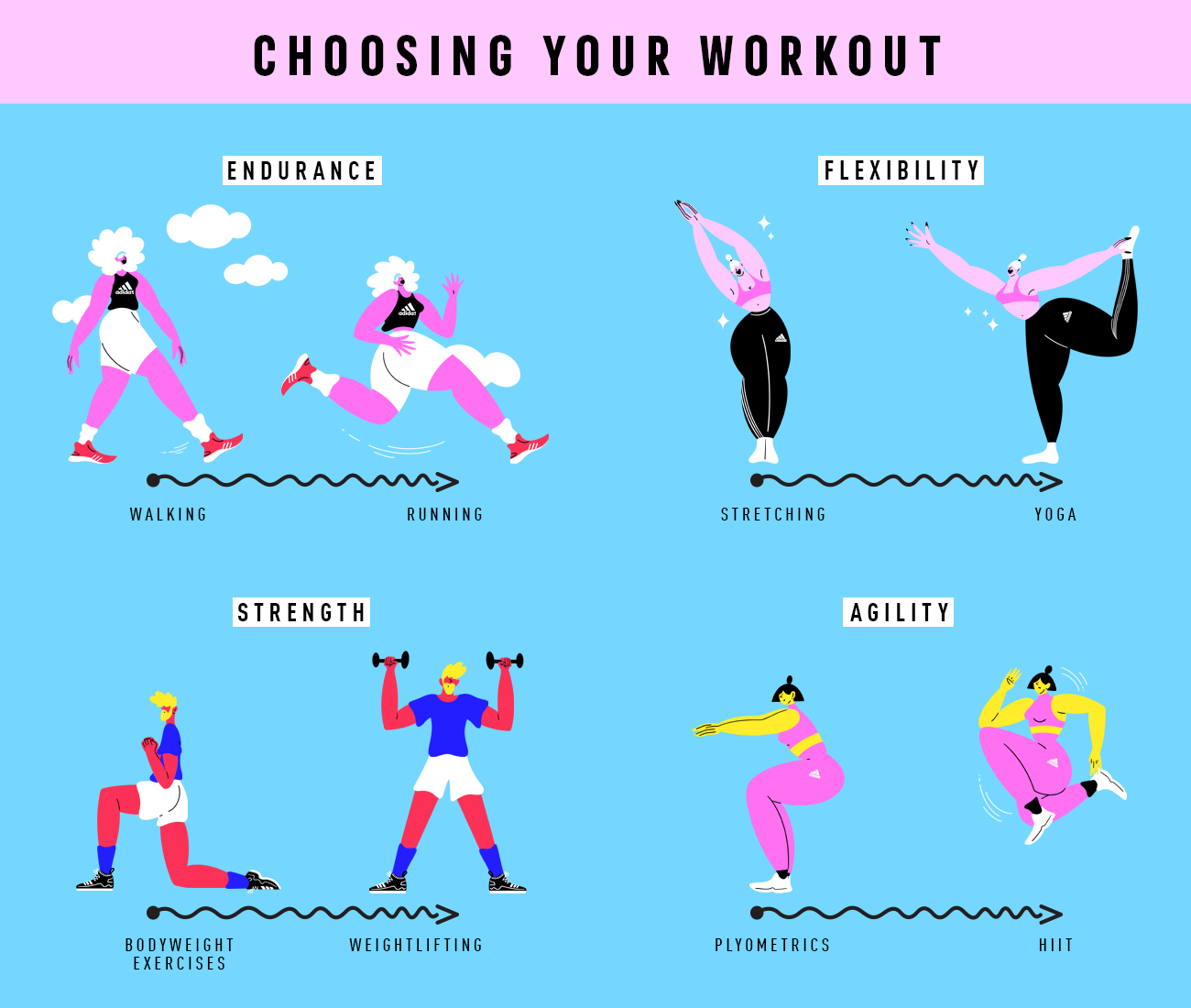
There are a few main types of exercise. A good starting workout plan might include a bit of each over time.
Cardio (Heart Health)
This kind gets your heart rate up. It helps your heart and lungs.
* Examples: Walking, gentle jogging, cycling, dancing, swimming.
* Aim to do this for 10-15 minutes at first, building up to 30 minutes or more.
* You should be able to talk, but not sing.
Strength (Muscle Health)
This makes your muscles stronger. Strong muscles help you do everyday things easily. They also protect your joints.
* Examples: Wall push-ups, chair squats, using light weights or soup cans, using resistance bands.
* Aim for 8-15 repetitions of each move.
* Rest for a minute between sets.
* Do this 2-3 days a week, but not on back-to-back days. Your muscles need rest to get stronger.
Flexibility (Stretching)
This helps your body move better. It can feel good.
* Examples: Simple stretches for your arms, legs, and back. Reaching for your toes, arm across your chest stretch.
* Hold each stretch gently for 15-30 seconds. Don’t bounce.
* It should feel like a pull, not pain.
* Do this most days, especially after your muscles are warm.
A simple home workouts routine can include all these types. For a beginner exercise routine, just pick one or two to start with.
Creating Your First Routine
Let’s put some easy exercises for beginners into a simple routine. This is a basic starting workout plan you can do at home.
h5 Example Simple Home Workout Routine
This routine takes about 20 minutes.
-
Warm-up (5 minutes):
- Gentle marching in place (2-3 minutes)
- Arm circles (forward and backward) (1 minute)
- Gentle leg swings (holding onto a chair) (1 minute)
-
Main Moves (10 minutes):
- Wall Push-Ups: 8-10 times
- Rest (30 seconds)
- Chair Squats: 8-10 times
- Rest (30 seconds)
- Leg Raises (Sideways): 10-12 times each leg
- Rest (30 seconds)
- Repeat these moves one more time.
-
Cool-down/Stretch (5 minutes):
- Arm across chest stretch (30 seconds each side)
- Overhead arm stretch (reach one hand up, bend elbow, gently pull with other hand) (30 seconds each side)
- Gentle hamstring stretch (sit on floor, one leg straight, reach for toes of that leg) (30 seconds each side)
- Deep breaths (1 minute)
This is a sample beginner exercise routine. You can change the number of times you do each move or the rest time. The goal is to start moving. This is a solid workout schedule for beginners looking for simple home workouts.
Keeping Your Energy Up: Exercise Motivation Tips
Starting is one thing. Keeping going is another. Many people find staying motivated hard. Here are some exercise motivation tips for your fitness journey start.
Make it Fun
If you don’t like it, it’s hard to keep doing it. Try different things.
* Listen to music or a podcast while you walk.
* Exercise with a friend or family member.
* Try a simple online class or video for beginners.
* Explore new places while walking.
Set Small, Achievable Goals
Big goals can feel too far away. Celebrate the small wins.
* Walk 5 minutes longer this week.
* Do 2 more wall push-ups.
* Exercise one extra day this month.
* Every small step is progress.
Track Your Progress
Write down what you do. This helps you see how far you’ve come.
* Use a simple notebook.
* Use a phone app.
* Note the date, what you did, and how long.
* Seeing your progress can be a big motivator.
Be Kind to Yourself
You will miss a workout sometimes. That’s okay! Don’t give up. Just start again next time. This is part of the journey. Your first time exercising tips should include self-kindness.
Think About Why You Started
Remember your initial goals. Why did you want to move more? Keep that reason in mind. Maybe put it on your mirror or fridge.
Reward Yourself (Not with Food!)
When you hit a goal, give yourself a treat.
* Buy a new book.
* Watch a movie.
* Take a relaxing bath.
* Get a massage.
Make the reward match the effort.
These exercise motivation tips can help you stick to your beginner exercise routine and keep your fitness journey start strong.
Listening to Your Body: First Time Exercising Tips
It’s very important to pay attention to how your body feels. This is especially true when you are just starting. These are key first time exercising tips.
Pain is Different from Effort
It’s normal to feel some muscle tiredness or a light burn when you exercise. This is okay. But sharp pain is a sign to stop. Don’t push through pain. It could mean you are doing too much or using the wrong form.
Take Rest Days
Your body needs time to recover and get stronger. Don’t exercise hard every single day. Include rest days in your workout schedule for beginners. Simple stretching or a very easy walk is okay on rest days.
Warm Up and Cool Down
Always start with a warm-up. This gets your muscles ready to move. End with a cool-down and stretches. This helps your muscles relax and can help stop them from getting too stiff later. The simple warm-up and cool-down in the routine example above are a good start.
Stay Hydrated
Drink water before, during, and after you exercise. Water helps your body work right.
Use Good Form
Try to do the moves the right way. It’s better to do fewer repeats with good form than many repeats with bad form. Bad form can lead to injury. Watch videos online or look at pictures if you are not sure. For easy exercises for beginners, good form is key to staying safe.
Don’t Compare Yourself to Others
Everyone starts somewhere. Your fitness journey is yours alone. Focus on your progress, not someone else’s.
Moving Beyond the Beginning
Once your beginner exercise routine feels easy, you can make it a little harder.
* Add more time (walk for 20 minutes instead of 15).
* Add more repeats (do 12 wall push-ups instead of 10).
* Try a harder version of a move (squat lower, or try push-ups on stairs instead of a wall).
* Add a new activity.
Keep your starting workout plan flexible. Change it as you get stronger. This is how you keep making progress in your fitness journey.
Interpreting Common Questions
Let’s answer some common questions people have when starting.
h4 How long until I see results?
It takes time. Don’t expect big changes in a week or two. Focus on how you feel. Do you have more energy? Are you sleeping better? Can you walk a bit further? These small changes happen first. Physical changes take longer, often weeks or months. Consistency is key.
h4 What should I eat?
Focus on simple, healthy foods. Lots of fruits, vegetables, lean protein (like chicken or beans), and whole grains. Drink lots of water. Don’t make big diet changes at the same time as starting exercise unless you are ready. Small steps are best for both.
h4 I’m sore. Is that normal?
Yes, some muscle soreness 1-2 days after exercising is normal, especially when you start. This is called DOMS (Delayed Onset Muscle Soreness). It usually goes away in a few days. Gentle movement, stretching, and rest can help. If the pain is sharp or lasts a long time, stop and rest, or talk to your doctor.
h4 What if I miss a workout?
Don’t worry about it! Life happens. Just get back to your workout schedule for beginners the next day you planned to exercise. Missing one day won’t undo your progress.
h4 Do I need a gym?
No! As this guide shows, there are many simple home workouts and easy exercises for beginners you can do anywhere. A gym can be helpful later if you want to use more machines or take classes, but it’s not needed to start.
h4 What if I feel too tired to exercise?
Sometimes rest is what your body needs. If you are truly exhausted, skip the hard workout and maybe just do a short, easy walk or some gentle stretching. If you always feel too tired, talk to your doctor.
h4 How do I know if I’m doing too much?
Signs you might be doing too much include:
* Extreme tiredness that doesn’t go away with rest.
* Pain that gets worse with exercise.
* Trouble sleeping.
* Getting sick often.
* Feeling very grumpy or stressed about exercise.
If you feel this way, ease back. Do less or take more rest days.
Frequently Asked Questions
Here are some common questions about starting exercise.
h4 What is the best time of day to exercise?
The best time is when you will actually do it. It doesn’t matter if it’s morning, noon, or night. Pick a time that works for your schedule.
h4 How do I stay safe exercising outside?
Tell someone where you are going. Wear bright clothes if it’s dim. Be aware of cars or bikes. Carry water. Use sunscreen.
h4 Should I stretch before or after exercising?
It’s often best to do a dynamic warm-up (like arm circles, leg swings) before exercising to get muscles ready. Static stretching (holding a stretch) is often best done after your workout when muscles are warm, or on a rest day.
h4 How should I breathe when exercising?
Don’t hold your breath! Breathe naturally. For strength moves, often you breathe out on the hard part (when lifting or pushing) and breathe in on the easy part (when lowering).
h4 What if I have old injuries?
This is why talking to your doctor is important. They can give you specific advice. You may need to avoid certain moves or change them to make them safe for you. Low impact beginner exercises are often a good starting point if you have joint issues.
h4 How do I make exercising a habit?
- Schedule it like any other appointment.
- Put your workout clothes out the night before.
- Have a simple routine you can do even when you don’t feel like it.
- Focus on showing up, even if it’s just for 10 minutes.
Making Exercise Part of Your Life
Starting to exercise doesn’t have to be hard or scary. By taking small steps, choosing simple activities, and listening to your body, you can build a beginner exercise routine that works for you. Focus on making it a regular part of your life, not a quick fix.
Your fitness journey start is personal. Celebrate every step you take. Be patient with yourself. With a simple starting workout plan and easy exercises for beginners, you are on your way to feeling better and stronger. Keep this beginners guide to fitness handy as you go! Remember these first time exercising tips and the exercise motivation tips to help you stay on track. You’ve got this!