Can I lose belly fat through exercise? Yes, you absolutely can lose belly fat through a combination of targeted exercise and a healthy lifestyle.
Losing belly fat, especially the stubborn visceral fat that surrounds your organs, is a common goal for many. It’s not just about aesthetics; excess belly fat is linked to a higher risk of health problems. While spot reduction (losing fat from just one area) is largely a myth, a strategic approach to exercise can significantly help you shed those extra inches from your waistline. This comprehensive guide will walk you through the most effective exercise strategies proven to help you achieve a flatter stomach.
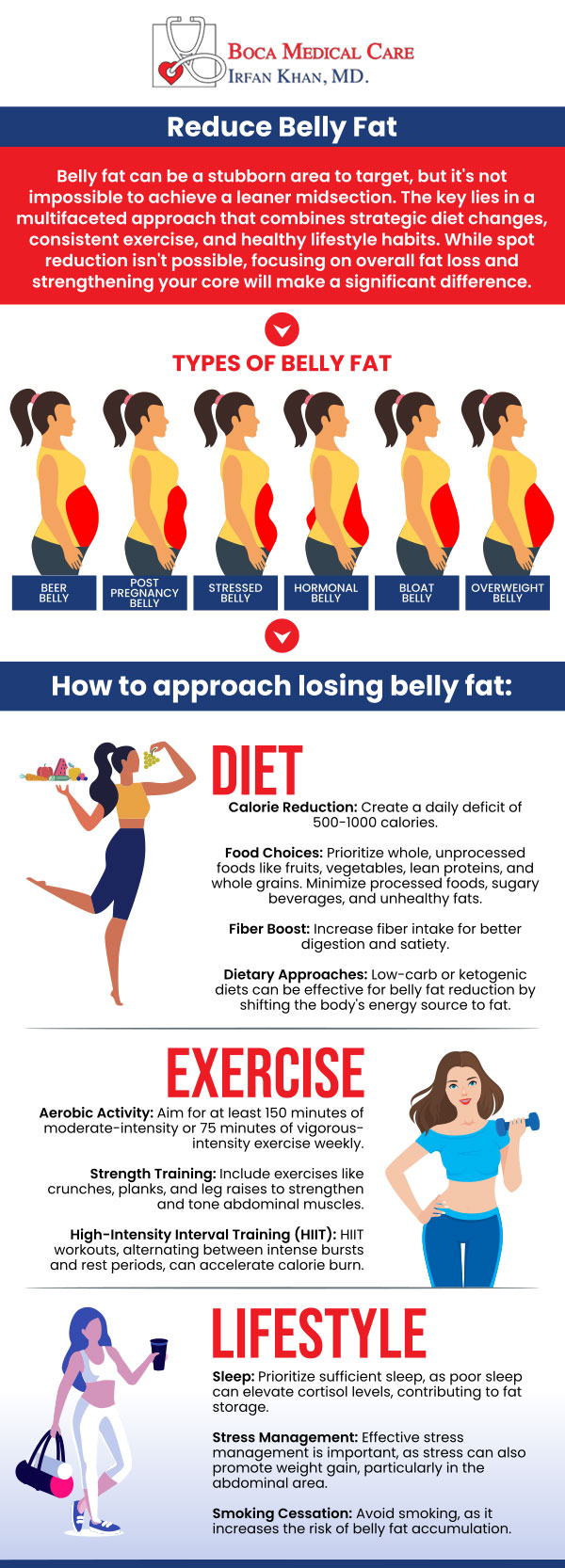
Image Source: www.bocamedicalcare.com
The Science Behind Belly Fat and Exercise
Before diving into the exercises, it’s crucial to grasp why belly fat accumulates and how exercise combats it. Belly fat, often referred to as abdominal fat, comes in two main types:
- Subcutaneous fat: This is the fat that lies just beneath your skin. You can pinch it.
- Visceral fat: This fat is deeper within your abdominal cavity, surrounding your organs like your liver, intestines, and heart. This type is more dangerous to your health.
Diet and exercise for belly fat work hand-in-hand. While exercise burns calories and builds muscle, a balanced diet is essential for creating the calorie deficit needed for overall fat loss. Exercise plays a pivotal role in losing visceral fat because visceral fat is often the first to go when you begin to lose weight.
The Pillars of Belly Fat Reduction Through Exercise
To effectively lose belly fat, your exercise routine should encompass a few key components:
1. Cardio for Fat Loss: Burning the Calories
Cardiovascular exercise is fundamental for burning calories, which is essential for creating the calorie deficit required to lose fat overall. When you burn more calories than you consume, your body starts using stored fat for energy, including belly fat.
Types of Cardio for Optimal Results:
-
Steady-State Cardio: This involves maintaining a moderate intensity for an extended period. Examples include jogging, cycling, swimming, and brisk walking. Aim for at least 150 minutes of moderate-intensity cardio per week.
- Benefits:
- Burns a significant number of calories during the workout.
- Improves cardiovascular health.
- Can be sustained for longer durations.
- Lower impact on joints, making it accessible to more people.
- Benefits:
-
High-Intensity Interval Training (HIIT): This involves short bursts of very intense exercise followed by brief recovery periods. HIIT is incredibly effective for calorie burning and has been shown to boost your metabolism for hours after the workout, a phenomenon known as EPOC (Excess Post-exercise Oxygen Consumption).
- Benefits:
- Burns more calories in less time.
- Significant EPOC effect, leading to continued calorie burn post-workout.
- Improves aerobic and anaerobic fitness.
- Can be very engaging and varied.
Sample HIIT Workout:
* Warm-up: 5 minutes of light jogging or jumping jacks.
* Intervals:
* 30 seconds of all-out sprinting or cycling.
* 60 seconds of active recovery (walking or slow pedaling).
* Repeat for 8-10 rounds.
* Cool-down: 5 minutes of stretching.Important Note: HIIT is demanding. Start with 2-3 sessions per week and gradually increase as your fitness improves. Always consult a doctor before starting a HIIT program if you have any underlying health conditions.
- Benefits:
2. Strength Training for Belly Fat: Building Muscle, Boosting Metabolism
While cardio burns calories during the workout, strength training offers long-term benefits for fat loss. Building muscle mass increases your resting metabolic rate, meaning you burn more calories even when you’re not exercising. This makes it a powerful tool for metabolism boosting exercises.
How Strength Training Helps Belly Fat:
- Increased Metabolism: Muscle tissue is metabolically active, burning more calories at rest than fat tissue. The more muscle you have, the higher your metabolism.
- Improved Body Composition: Strength training helps sculpt your body, leading to a leaner and more toned appearance, which can make your stomach look flatter.
- Hormonal Benefits: Resistance training can positively influence hormones that regulate body fat, such as insulin sensitivity.
Key Muscle Groups to Focus On:
When aiming for waistline reduction exercises, it’s beneficial to work your entire body. Compound movements that engage multiple muscle groups are particularly effective.
Table: Effective Strength Training Exercises for Overall Fat Loss and Metabolism Boost
| Exercise Type | Specific Exercises | Benefits for Belly Fat |
|---|---|---|
| Lower Body | Squats, Lunges, Deadlifts, Glute Bridges | Engages large muscle groups, burns significant calories, builds overall muscle mass. |
| Upper Body | Push-ups, Overhead Press, Rows, Pull-ups | Builds upper body strength, contributes to overall calorie expenditure and metabolism. |
| Full Body | Burpees, Kettlebell Swings, Thrusters | Highly efficient, engages multiple muscle groups simultaneously, calorie-intensive. |
| Core Specific | Plank variations, Russian twists, Leg raises | Strengthens the core muscles, improves posture, supports spinal health, can help flatten the stomach appearance. |
Frequency: Aim for 2-3 full-body strength training sessions per week, with at least one rest day between sessions.
3. Abdominal Exercises and Core Workouts: Strengthening and Toning
While abdominal exercises and core workouts won’t directly burn belly fat, they are crucial for strengthening the muscles that lie beneath the fat layer. A strong core can improve your posture, making your stomach appear flatter and more toned. These exercises also contribute to overall stability and performance in other physical activities.
Effective Core Strengthening Exercises:
-
Plank: This isometric exercise engages your entire core.
- How to: Start in a push-up position, but rest on your forearms instead of your hands. Keep your body in a straight line from head to heels, engaging your abs. Hold for 30-60 seconds.
- Variations: Side plank, forearm plank with leg lifts.
-
Crunches: A classic for targeting the upper abdominal muscles.
- How to: Lie on your back with knees bent and feet flat on the floor. Place your hands behind your head or across your chest. Engage your abs and lift your shoulders off the floor.
- Focus: Avoid pulling on your neck; focus on the abdominal contraction.
-
Leg Raises: Excellent for targeting the lower abdominal muscles.
- How to: Lie on your back with legs extended. Keep your lower back pressed into the floor. Slowly lift your legs towards the ceiling, then lower them without touching the floor.
- Modification: Bend your knees if straight leg raises are too difficult.
-
Russian Twists: Works the oblique muscles, which are on the sides of your abdomen.
- How to: Sit on the floor with knees bent and feet slightly lifted off the ground (for a greater challenge). Lean back slightly, keeping your back straight. Twist your torso from side to side, reaching your hands towards the floor on each side.
- Optional: Hold a weight (dumbbell, kettlebell, or medicine ball) for added resistance.
-
Bicycle Crunches: A dynamic exercise that targets both upper and lower abs, as well as obliques.
- How to: Lie on your back, knees bent. Place your hands behind your head. Bring your right elbow to your left knee while extending your right leg. Then, bring your left elbow to your right knee while extending your left leg, alternating sides in a pedaling motion.
-
Bird-Dog: Improves core stability and balance while engaging the back and glutes.
- How to: Start on your hands and knees. Extend your right arm forward and your left leg backward simultaneously, keeping your core engaged and hips level. Hold briefly, then return to the starting position and switch sides.
Why these are important for a flatter stomach: Performing these exercises to flatten stomach appearance and strengthen your core muscles will improve your posture, which can make your abdomen look flatter and more defined, especially once the layer of fat begins to reduce.
4. The Role of Diet and Exercise for Belly Fat
It’s impossible to talk about losing belly fat effectively without mentioning the crucial role of nutrition. Diet and exercise for belly fat are inextricably linked. You can’t out-exercise a bad diet.
Nutritional Strategies:
- Calorie Deficit: To lose any fat, you must consume fewer calories than you burn. Exercise helps increase the “calories burned” side of the equation.
- Protein Intake: Protein is satiating and helps preserve muscle mass during weight loss. Include lean protein sources like chicken, fish, beans, and tofu in your meals.
- Fiber-Rich Foods: Fruits, vegetables, and whole grains are high in fiber, which aids digestion and helps you feel full, reducing overall calorie intake.
- Healthy Fats: Avocados, nuts, seeds, and olive oil provide essential nutrients and can help with satiety.
- Limit Processed Foods and Sugary Drinks: These are often high in calories and low in nutrients, contributing to fat gain, especially around the abdomen.
- Hydration: Drinking plenty of water is vital for metabolism and overall health.
5. Consistency and Lifestyle Factors
- Sleep: Poor sleep can disrupt hormones that regulate appetite, leading to increased cravings and fat storage. Aim for 7-9 hours of quality sleep per night.
- Stress Management: Chronic stress can lead to elevated cortisol levels, which are linked to increased abdominal fat. Incorporate stress-reducing activities like yoga, meditation, or deep breathing exercises.
- Patience: Fat loss takes time. Be consistent with your exercise and diet, and don’t get discouraged by slow progress. Celebrate small victories!
Putting It All Together: A Sample Weekly Plan
Here’s a sample weekly plan that incorporates the key elements of exercise for belly fat reduction. Remember to adjust this based on your fitness level and preferences.
Monday:
* Morning (optional): 30 minutes of steady-state cardio (brisk walking, cycling).
* Evening: Full-body strength training session. Focus on compound movements like squats, deadlifts, push-ups, and rows. Include 2-3 core exercises like planks and leg raises.
Tuesday:
* Morning: HIIT workout (20-30 minutes).
* Evening: Rest or light active recovery (stretching, yoga).
Wednesday:
* Morning: 30-45 minutes of steady-state cardio.
* Evening: Core-focused workout. Include exercises like Russian twists, bicycle crunches, and bird-dogs.
Thursday:
* Morning: Full-body strength training session.
* Evening: Rest or light active recovery.
Friday:
* Morning: HIIT workout (20-30 minutes).
* Evening: Rest or light active recovery.
Saturday:
* Morning: Longer cardio session (45-60 minutes) at a moderate pace (e.g., hiking, long bike ride, jogging).
* Evening: Focus on stretching and mobility work.
Sunday:
* Rest: Complete rest day for muscle recovery and mental rejuvenation.
Progression: As you get fitter, gradually increase the duration, intensity, or resistance of your workouts.
Frequently Asked Questions (FAQ)
Q1: How long does it take to see results?
A1: Results vary greatly depending on individual factors like starting weight, genetics, diet adherence, and exercise consistency. However, with consistent effort, you might start noticing changes in your waistline and overall body composition within 4-8 weeks. Significant results typically take several months.
Q2: Can I target my belly fat with specific abdominal exercises only?
A2: While abdominal exercises strengthen your core, they do not directly burn fat from the abdominal area. Fat loss occurs throughout the body when you create a calorie deficit through diet and overall physical activity. Core workouts are vital for muscle tone, but they must be combined with cardio and a healthy diet for visible fat loss.
Q3: What is the best exercise for losing visceral fat?
A3: Losing visceral fat is best achieved through a combination of consistent cardio (especially HIIT for its metabolic benefits) and strength training, coupled with a balanced, calorie-controlled diet. There isn’t a single “best” exercise, but rather a well-rounded approach that prioritizes calorie expenditure and muscle building.
Q4: Do I need to go to the gym to lose belly fat?
A4: No, you don’t necessarily need a gym. Many effective exercises can be done at home with little to no equipment. Bodyweight exercises, running, cycling outdoors, and using resistance bands can all contribute to fat loss. The key is consistency and intensity.
Q5: How can I improve my metabolism for fat loss?
A5: Building muscle through strength training for belly fat is one of the most effective ways to boost your metabolism. High-intensity exercises like HIIT are also excellent metabolism boosting exercises due to the post-exercise calorie burn. Consuming enough protein and staying hydrated also plays a role.
Q6: Is it better to do cardio or strength training for belly fat?
A6: Both are crucial. Cardio is excellent for burning calories and improving cardiovascular health, while strength training builds muscle, which increases your resting metabolism. A program that includes both cardio and strength training will yield the best results for belly fat reduction.
Q7: What are some exercises to flatten stomach naturally?
A7: While “naturally” can mean without surgery, the most effective methods involve a lifestyle change. Focus on compound strength training, regular cardio, and core strengthening abdominal exercises like planks, Russian twists, and leg raises. Consistent effort combined with a healthy diet is key.
By integrating these scientifically proven methods into your routine, you can effectively target belly fat and work towards a flatter, healthier stomach. Remember that consistency, patience, and a holistic approach combining exercise, nutrition, and lifestyle factors are your greatest allies in this journey.