Losing stomach fat is a common goal. People often ask, “How can I lose fat specifically from my stomach?” The truth is, you cannot pick just one spot on your body to lose fat from. This is called spot reduction, and it does not work well. When you lose fat, you lose it from all over your body. Your stomach area may be the last place fat leaves for some people. But doing the right exercises as part of a full plan helps a lot. This plan includes cardio, strength training, and specific abdominal exercises. It also involves eating healthy food. Exercise burns calories. Burning more calories than you eat leads to weight loss, including fat around your middle.
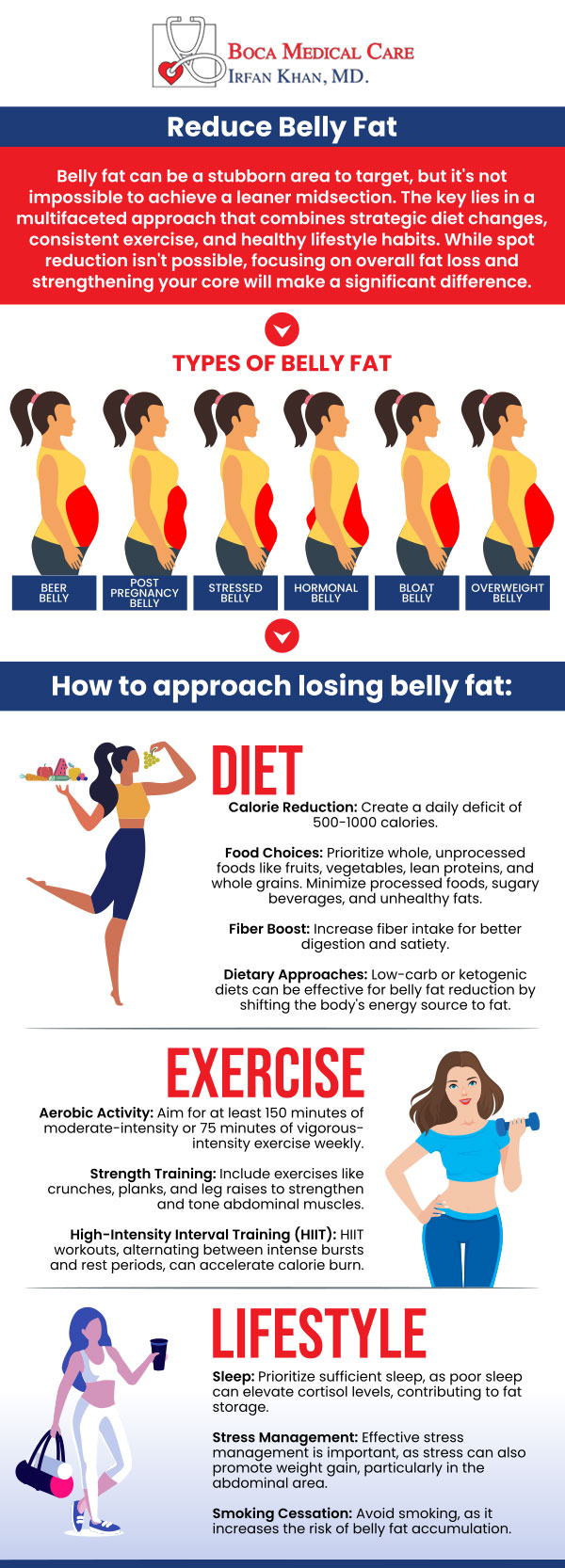
Image Source: www.bocamedicalcare.com
The Role of Exercise in Losing Belly Fat
Exercise is a key part of losing belly fat. It helps in two main ways. First, it burns calories. This creates a calorie deficit. A calorie deficit means you use more energy than you take in from food. This is needed for losing fat. Second, exercise builds muscle. Muscle uses more energy than fat, even when you are resting. More muscle helps your body burn more calories all day.
Think of it like this: Exercise is like using up energy from your body’s storage (fat). The more you move, the more energy you use. Different types of exercise burn calories at different rates. They also help your body in different ways.
Why You Need More Than Just Crunches
Many people think endless crunches will give them flat abs. This is not true on its own. Crunches are abdominal exercises. They work the muscles under the fat. But they do little to burn the layer of fat sitting on top of those muscles.
To see those strong ab muscles, you must reduce the fat covering them. This needs overall fat loss. Overall fat loss comes from burning lots of calories. This means doing exercises that work your whole body. These are often called fat burning exercises.
Cardio for Belly Fat: Burn Calories Fast
Cardio exercise is great for burning calories. It makes your heart beat faster and your lungs work harder. Doing cardio regularly is a must for losing belly fat. It is one of the most effective types of exercise routine for weight loss.
Different Kinds of Cardio
- Steady State Cardio: This is like jogging, cycling, or swimming for a longer time at a steady, moderate pace. It burns a good amount of calories during the workout. It is easy to do for many people.
- HIIT (High-Intensity Interval Training): This involves short bursts of very hard exercise. You follow these bursts with short rest periods. Then you repeat. A HIIT workout for fat loss burns many calories in a short time. It can also help your body keep burning calories even after you stop exercising. This is called the “afterburn effect.”
Both kinds of cardio help with losing belly fat. Doing a mix might be best for some people. Find what you enjoy so you stick with it.
How Much Cardio?
Most experts say to do at least 150 minutes of moderate cardio or 75 minutes of intense cardio each week. More might be needed for faster weight loss. You can spread this out over several days.
Strength Training Exercises: Build Muscle, Boost Metabolism
Strength training is lifting weights or using your own body weight. It is very important for losing fat. It helps build muscle. More muscle means your body burns more calories even when you are resting. This helps reduce fat over time.
Strength training exercises should work major muscle groups. This includes your legs, back, chest, and arms. Working large muscles burns more calories than working smaller ones like just your abs.
Importance of Full Body Moves
Focus on compound movements. These are exercises that use several joints and muscle groups at once. Examples include:
* Squats
* Deadlifts
* Push-ups
* Pull-ups (or rows)
* Overhead presses
These moves work your whole body. They build strength and muscle everywhere. This is a great part of any exercise routine for weight loss.
How Often?
Try to do strength training 2-3 times per week. Let your muscles rest for a day between sessions. This helps them grow stronger.
Core Workout: Strengthening the Middle
While cardio and strength training help burn the fat layer, a strong core is still important. Abdominal exercises build muscle strength and stability in your midsection. This helps with posture, preventing back pain, and making everyday tasks easier. When you lose the fat, these strong muscles will show.
Think of your core as the center of your body’s power. A strong core helps you do almost all other physical activities better. The best exercises for abs work different parts of your core.
Parts of the Core
Your core is not just your abs. It includes muscles in your lower back, hips, and sides (obliques). A good core workout hits all these areas.
Best Exercises for Abs and Core
Here are some effective exercises to build core strength and definition. Remember, these help build the muscle underneath the fat. Combine them with cardio and overall strength training for the best results in losing belly fat.
Classic Abdominal Exercises
- Crunches: Lie on your back with knees bent, feet flat. Place hands behind your head or crossed over your chest. Lift your upper back off the floor using your ab muscles. Keep your neck relaxed. Lower slowly.
- Leg Raises: Lie on your back, legs straight. Keep lower back pressed to the floor. Lift straight legs up towards the ceiling until hips lift slightly. Lower slowly without letting feet touch the floor. This works lower abs.
- Bicycle Crunches: Lie on your back, hands behind your head. Bring knees up to a 90-degree angle. Twist your body, bringing your right elbow towards your left knee while straightening your right leg. Switch sides, like pedaling a bike. This works obliques and upper/lower abs.
- Russian Twists: Sit on the floor, knees bent, feet flat or lifted slightly. Lean back slightly. Hold hands together or hold a weight. Twist your torso from side to side, touching the floor next to your hip. This works obliques.
Plank Variations for Full Core Strength
Planks are excellent for building core stability. They work your entire core as one unit.
- Forearm Plank: Start on hands and knees. Place forearms on the floor, elbows under shoulders. Extend legs back. Keep body in a straight line from head to heels. Do not let your hips sag or lift too high. Hold for time.
- Side Plank: Lie on your side. Prop your body up on one forearm, elbow under shoulder. Stack your feet or place one foot in front of the other. Lift hips off the floor, keeping body in a straight line. Hold for time. Repeat on the other side.
- Walking Plank: Start in a forearm plank. Push up onto one hand, then the other, to reach a push-up position. Then lower back down to forearms one arm at a time. Alternate which arm leads. This adds movement and works shoulders too.
Other Exercises to Reduce Belly Fat (by strengthening core)
These exercises involve more than just the core but require strong core muscles for stability.
- Mountain Climbers: Start in a push-up position. Quickly bring one knee towards your chest, then switch legs. Do this fast like running in place while keeping your core tight and hips down. This is also great cardio.
- Bird Dog: Start on hands and knees. Keep back straight and core tight. Extend one arm straight forward and the opposite leg straight back at the same time. Keep hips level. Hold briefly, then return to start. Repeat on the other side. Great for core stability and balance.
- Dead Bug: Lie on your back with arms straight up and knees bent at 90 degrees (tabletop position). Lower one arm towards the floor above your head and the opposite leg straight towards the floor. Keep your lower back pressed into the floor. Return to start and switch sides. Works core anti-extension strength.
These exercises for abs and core should be part of your lose belly fat exercise plan, but they should not be the only exercises you do.
Combining Exercise Types: A Lose Belly Fat Exercise Plan
The best way to lose stomach fat through exercise is to use a mix. Combine cardio for burning calories, strength training for building muscle, and core work for strengthening your middle. This creates a powerful exercise routine for weight loss.
Here is a sample plan you can follow:
Sample Weekly Exercise Routine
This plan mixes different types of workouts. Adjust it based on your fitness level and how much time you have.
| Day | Type of Exercise | Examples | Focus |
|---|---|---|---|
| Monday | Strength Training (Full Body) | Squats, Push-ups, Rows, Overhead Press, Lunges | Build muscle, boost metabolism |
| Tuesday | Cardio (Moderate) | Brisk walk, Cycling, Swimming | Burn calories, improve heart health |
| Wednesday | Active Rest or Light Core | Yoga, Stretching, Light Abdominal Exercises | Recovery, core strength, flexibility |
| Thursday | Strength Training (Full Body) | Deadlifts, Bench Press, Pull-ups, Leg Press | Build muscle, boost metabolism |
| Friday | HIIT Workout for Fat Loss | Sprinting intervals, Burpees, Jump Squats | Burn calories fast, afterburn effect |
| Saturday | Cardio (Moderate or Longer) | Jogging, Hiking, longer Cycling ride | Calorie burn, endurance |
| Sunday | Rest | Take a full break or light activity | Recovery, muscle repair |
This is just a sample. You can change the days or specific exercises. The key is to be active most days and include different types of movement. Aim for consistency.
How to Structure a Workout Session
- Warm-up (5-10 minutes): Light cardio like jogging in place, arm circles, leg swings. Get your body ready.
- Main Workout (30-60 minutes): Do your strength training, cardio, or core exercises.
- Cool-down (5-10 minutes): Stretching. Hold stretches gently.
Important Factors for Success
Just doing exercises is not enough for losing stomach fat. Several other things play a big role.
Diet is Key
You cannot out-exercise a bad diet. Eating healthy food is the most important part of losing fat. Focus on whole foods:
* Fruits and vegetables
* Lean protein (chicken, fish, beans)
* Whole grains
* Healthy fats (nuts, seeds, avocado, olive oil)
Reduce sugary drinks, processed foods, and too much unhealthy fat. Eating fewer calories than you burn is needed for fat loss. Exercise helps you burn more, making it easier to create that calorie deficit.
Consistency Wins
You must exercise regularly. Doing a lot of exercise for one week and then stopping will not work. Find an exercise routine for weight loss that you can stick to for months, not just weeks. Make it a habit.
Get Enough Sleep
Sleep is vital for recovery and overall health. Not getting enough sleep can affect hormones that control hunger and fat storage. Aim for 7-9 hours of quality sleep per night.
Manage Stress
High stress levels can also impact hormones, possibly leading to more fat stored around the middle. Find ways to manage stress like meditation, deep breathing, or hobbies.
Be Patient
Losing fat takes time. You will not see big changes in a week or two. Stay consistent with your exercise routine and healthy eating. Celebrate small successes. Progress might be slow, but it is happening.
Advanced Techniques: HIIT and Fat Burning Exercises
Let’s look deeper into HIIT and other fat burning exercises that are very effective.
HIIT Workout for Fat Loss
HIIT is effective because it is intense. It pushes your body hard. This high intensity burns many calories during the workout. It also creates an “afterburn effect” (called EPOC – Excess Post-exercise Oxygen Consumption). Your body uses extra energy to recover after a tough HIIT session.
Examples of HIIT exercises:
* Sprint (run fast) for 30 seconds, walk slowly for 60 seconds. Repeat 8-10 times.
* Burpees as fast as possible for 45 seconds, rest for 15 seconds. Repeat 5-8 times.
* Jumping jacks or high knees for 45 seconds, rest for 15 seconds. Repeat 8-10 times.
You can do HIIT with cardio (running, cycling) or bodyweight exercises (burpees, squats, push-ups).
Why HIIT is Great for Fat Burning
HIIT can help improve your body’s ability to use fat for energy. It also keeps your metabolism higher for hours after you finish. However, it is hard work. Start slowly and build up intensity. Do HIIT 1-3 times per week, mixing it with other exercise.
Strength Training: More Than Just Building Muscle
Strength training is also a fat burning exercise. Building muscle changes your body composition. It increases your resting metabolic rate (RMR). RMR is how many calories your body burns just to stay alive. More muscle means a higher RMR. This means you burn more calories all day, every day, even when doing nothing.
Best Strength Training for Fat Loss
Focus on lifts that use multiple large muscle groups. These are the compound movements mentioned before:
* Squats: Work legs, hips, core.
* Deadlifts: Work legs, back, hips, core.
* Overhead Press: Work shoulders, triceps, core.
* Rows: Work back, biceps, core.
* Push-ups/Bench Press: Work chest, shoulders, triceps, core.
Doing these lifts burns a lot of calories during the workout. It also builds the most metabolically active tissue (muscle).
How to Start Strength Training
If you are new, start with lighter weights to learn the correct form. Watch videos or work with a trainer if possible. Good form prevents injury and makes the exercise effective. Gradually increase the weight or the number of sets and reps as you get stronger.
Exercises to Reduce Belly Fat: Putting it Together
Let’s revisit the types of exercises and how they fit into a plan to reduce belly fat.
- Fat Burning Exercises (Cardio): Essential for creating a calorie deficit. Choose activities you enjoy. Aim for a mix of steady-state and HIIT.
- Strength Training Exercises: Builds muscle, boosts metabolism, burns calories during the workout. Focus on compound movements.
- Abdominal Exercises / Core Workout: Strengthens the muscles under the fat. Improves posture and stability. Do these as part of a balanced routine, not as your only exercise.
- Best Exercises for Abs: Planks, crunches, leg raises, bicycle crunches, Russian twists, mountain climbers, dead bugs.
A good lose belly fat exercise plan includes all these parts. It’s not just about doing hundreds of crunches. It’s about a full-body approach to fat loss and building a strong core.
Creating Your Own Plan
You can use the sample plan as a start. Adjust it to fit your life.
1. Choose activities you like: You are more likely to stick with exercise if you enjoy it.
2. Start slow: If you are new to exercise, do not try to do too much too soon. Build up gradually.
3. Schedule your workouts: Treat them like important appointments. Put them on your calendar.
4. Track your progress: Note down what you do, how long, and how it felt. This helps you see improvements.
5. Listen to your body: Rest when you need to. Do not push through pain.
Common Mistakes to Avoid
- Only doing ab exercises: This will not burn the fat on your stomach.
- Ignoring diet: Exercise alone is often not enough for significant fat loss.
- Not being consistent: Exercise needs to be a regular habit.
- Doing the same thing every time: Your body adapts. Change your routine to keep seeing results. Increase intensity, duration, or try new exercises.
- Not getting enough rest: Muscles need time to recover and grow.
- Expecting instant results: Fat loss takes time and effort.
The Role of Exercise for Long-Term Weight Management
Exercise is not just for losing fat now. It is vital for keeping it off. Regular physical activity helps maintain your weight loss. It keeps your metabolism higher and helps control appetite for some people. Making exercise a permanent part of your life is key for long-term success in managing your weight and keeping belly fat away.
Think about making activity part of your daily life. Take the stairs. Walk or bike instead of driving for short trips. Stand more during the day. These small changes add up. Combine them with structured workouts for the best results.
The Science Behind Fat Loss and Exercise
When you exercise, your body needs energy. It gets this energy from food you have eaten and from stored energy (fat and glycogen). To lose fat, your body must use its stored fat for energy.
Cardio exercise is very good at burning calories during the workout. When you do steady cardio for a longer time, your body uses more fat for fuel.
HIIT uses more glycogen (stored carbs) during the intense parts. But the high intensity and afterburn effect lead to a lot of calories burned overall, which helps tap into fat stores later. HIIT can also make your body better at using fat for energy over time.
Strength training uses calories during the lift. More importantly, it increases muscle mass. Muscle is more active than fat. It requires more energy to maintain. So, more muscle means more calories burned all day, every day. This consistent calorie burn helps reduce overall body fat, including stomach fat.
When you combine these, you get a powerful system for fat loss. You burn calories during cardio and strength training. You boost your metabolism by building muscle. And your body keeps burning extra calories after intense workouts. This triple approach is much more effective than just doing one type of exercise.
Customizing Your Exercise Routine
Everyone is different. What works best for one person might not be ideal for another.
* Beginners: Start with moderate cardio a few times a week and bodyweight strength training. Add core work slowly. Focus on learning good form.
* Intermediate/Advanced: Increase the duration or intensity of cardio. Add weight to strength training. Try more challenging core exercises or HIIT.
* Consider physical limits: If you have joint pain or other health issues, choose low-impact cardio like swimming or cycling. Work with a doctor or physical therapist if needed.
Remember, the best exercise is the one you will actually do. Find activities that fit your lifestyle and you enjoy.
The Importance of Tracking Progress
How do you know if your exercise plan is working?
* Measure your waist: Use a tape measure. This can show changes in belly fat even if the number on the scale does not move much (muscle weighs more than fat). Measure in the same place each time.
* Take progress photos: Pictures can show changes that you might not notice day-to-day.
* How your clothes fit: Do your pants feel looser around the waist?
* Performance: Can you run longer? Lift heavier weights? Do more reps? This shows you are getting fitter.
Do not rely only on the scale. Fat loss is the goal, and waist measurement or how clothes fit can be better signs of losing stomach fat than just your total weight.
Staying Motivated
Losing fat is a journey. There will be ups and downs. Stay motivated by:
* Setting clear, realistic goals.
* Finding a workout buddy.
* Trying new exercises or classes.
* Rewarding yourself (with non-food treats) for reaching milestones.
* Remembering why you started.
Consistency and patience are your best friends when working to lose stomach fat. Combine a smart exercise plan with healthy eating, sleep, and stress management. You have the tools to reach your goals.
Frequently Asked Questions (FAQ)
Q: Can I really target belly fat with specific exercises?
A: No, not directly. You cannot pick just your stomach to lose fat from. Exercises like crunches strengthen the muscles under the fat, but overall fat loss from your whole body is needed to reduce the fat layer on top. Cardio and strength training are vital for this overall fat loss.
Q: How long does it take to see results around the stomach area?
A: It varies greatly depending on your starting point, diet, consistency, and genetics. You might start noticing changes in how your clothes fit within a few weeks or months. Visible abs take longer and require a lower overall body fat percentage, which can take many months or even a year or more for some people. Be patient and consistent.
Q: Is running the best cardio for belly fat loss?
A: Running is a great fat burning exercise and burns many calories. But other cardio activities like cycling, swimming, dancing, or using an elliptical machine can be just as effective if done with enough intensity and duration. HIIT cardio is also very effective for burning fat in less time. Choose the cardio you enjoy most.
Q: Do I need to do exercises to reduce belly fat every day?
A: No, you do not need to exercise every day, especially not intense workouts. Muscles need rest to recover and grow. Aim for exercise most days (5-6 days a week) with rest days. Mix intense days with easier days. For example, do strength training 2-3 times a week, cardio 3-5 times a week, and include core work a few times a week.
Q: How important is diet compared to exercise for losing belly fat?
A: Diet is arguably more important for fat loss than exercise alone. You must create a calorie deficit (burn more calories than you eat) to lose fat. It is easier to eat fewer calories than to burn a very large number through exercise. However, exercise is crucial for burning extra calories, building metabolism-boosting muscle, and overall health. The best results come from combining healthy eating with a consistent exercise routine.
Q: Will strength training make me bulky around my stomach?
A: No, strength training builds muscle, but it will not make you “bulky” in a way that increases stomach size. Muscle takes up less space than fat. Building muscle, especially through full-body compound movements, helps you lose fat all over, which will make your stomach area smaller and firmer when combined with a proper diet. Women, in particular, do not easily build large muscles like men due to hormone differences.
Q: What’s the best way to start if I’m new to exercise?
A: Start slowly. Begin with moderate cardio like brisk walking for 20-30 minutes a few times a week. Add simple bodyweight strength training (squats, push-ups on knees, planks) 2-3 times a week. Focus on learning good form. Gradually increase the time, intensity, or resistance. Consistency is key when starting.
Losing stomach fat is a goal that is absolutely possible with the right approach. It requires more than just crunches. It needs a blend of effective exercise types – cardio to burn calories, strength training to build muscle, and core work to strengthen your middle. Combine this exercise routine for weight loss with healthy eating and good lifestyle habits, and you will be well on your way to reducing belly fat and getting stronger overall. Start today, stay consistent, and be patient with the process.