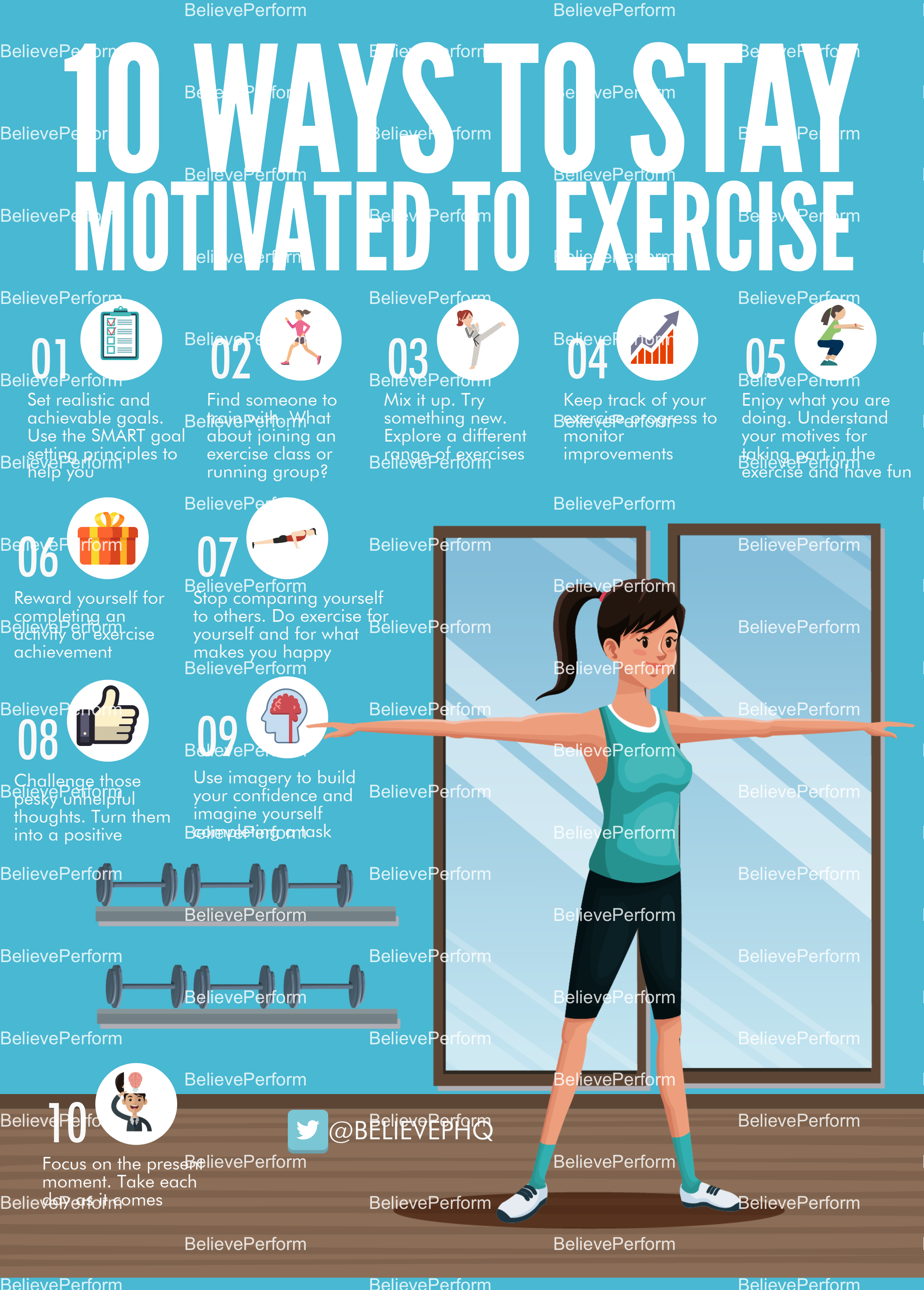
Image Source: members.believeperform.com
Your Guide: How To Stay Motivated To Exercise Daily
How can you stay motivated to exercise every day? It’s a common question, and the simple answer is that it takes more than just wanting to work out. Staying motivated to exercise daily is a skill you can build by creating good habits, finding activities you like, setting clear goals, and tracking your progress. It’s about making exercise a regular part of your life, like brushing your teeth. This guide will help you find ways to keep moving, even when you don’t feel like it, helping you build healthy exercise habits for the long run.
Grasping Why Motivation Matters
Thinking about staying active means first knowing why you need motivation. Motivation is the push that gets you started. It’s the feeling that makes you tie your shoes and head out the door or roll out your mat. But motivation can be like the weather; it changes. Some days you feel ready to run a marathon, others you just want to stay on the couch.
This is why relying only on motivation isn’t enough for maintaining exercise consistency. You also need discipline and good habits. Motivation gives you the initial spark. Discipline helps you keep going even when that spark is gone. Building healthy exercise habits means making fitness a natural part of your day, something you do without thinking too hard.
Setting Your Fitness Course
Why do you want to exercise? Having a clear reason helps a lot. Setting achievable fitness goals gives you something to work towards. It gives your effort meaning.
What Makes a Good Goal?
Good goals are not just wishes. They are like road signs guiding you.
- They are clear: Know exactly what you want to do. Instead of “I want to be fitter,” try “I want to walk for 30 minutes, 5 days a week.”
- You can measure them: You need to know if you met your goal. Walking for 30 minutes is easy to track.
- They are possible: The goal should be hard enough to make you work but not so hard you give up. Start small. If you don’t exercise now, walking 5 minutes daily is a good start. Not running a marathon next month.
- They fit your life: Your goal should matter to you. It should fit with what you want for your health and life.
- They have a time: Set a date to reach your goal. “I will walk 30 minutes daily by the end of next month.”
When you set goals this way, you can see your progress. Reaching small goals gives you a great feeling. It makes you want to keep going. It fuels your motivation. It helps with staying disciplined with fitness.
An Example Goal Table
| Goal Type | Vague Goal | Achievable Fitness Goal (Better) | Why it’s Better |
|---|---|---|---|
| Activity | Exercise more | Walk 20 minutes, 4 times a week | Clear, measurable, specific activity |
| Strength | Get stronger | Do 10 push-ups against a wall daily by Week 4 | Measurable, specific exercise, time limit |
| Flexibility | Be more flexible | Touch my toes by stretching for 10 minutes daily | Specific action, measurable outcome (eventually), time limit |
| Consistency | Exercise regularly | Exercise for 30 minutes, 3 days a week, for 1 month | Measurable frequency, time duration, time limit |
Start with one or two simple goals. Write them down. Put them where you see them often.
Making Movement a Habit
Motivation helps you start. Habits keep you going. Making exercise a routine is key for maintaining exercise consistency. It’s like building a muscle. The more you do it, the stronger it gets.
How Habits Work Simply
Habits have three parts:
1. The Cue: Something that reminds you to act. Like seeing your running shoes by the door.
2. The Routine: The action you take. Putting on your shoes and going for a run.
3. The Reward: How you feel or what you get after. Feeling good, having more energy, ticking it off your list.
To make exercise a habit, link it to something you already do. This is a strong cue.
- Maybe you exercise right after your first cup of coffee.
- Or perhaps you work out as soon as you get home from work.
- Maybe you do it before you eat breakfast.
Pick a time that works almost every day. Try to stick to that time. This helps your body and mind expect the exercise. It makes making exercise a routine easier over time.
Start Small and Build
Don’t try to go from zero exercise to 7 days a week, 2 hours a day. That’s too much too soon. Start with 10-15 minutes a few days a week. Do this consistently. Once that feels easy, add a few minutes or another day. This slow build helps in building healthy exercise habits without feeling overwhelmed.
Think about tiny habits. Can you do 5 push-ups when you see your toothbrush? Can you do 10 squats while your coffee brews? Small movements done regularly can add up. They build the habit muscle.
Plan for Bumps in the Road
Life happens. You will miss a day. That’s okay. Don’t let one missed day become two, or three. Just get back on track the next day. Building healthy exercise habits means being okay with not being perfect. Just aim for good consistency over time.
Discovering Joy in Motion
Nobody wants to do something they hate, especially every day. Finding enjoyable workout routines is super important for long-term motivation and overcoming workout boredom.
What Do You Actually Like?
Forget what you think you should do. What do you want to do?
- Do you like being outside? Try walking, running, hiking, or biking.
- Do you like being with other people? Join a sports team, a dance class, or a group fitness class.
- Do you like music? Try dancing, Zumba, or even just putting on headphones while you lift weights.
- Do you like quiet time? Yoga, swimming laps, or a solo walk might be for you.
- Do you like a challenge? Try rock climbing, a tough fitness class, or martial arts.
Try different things. Don’t just stick to running on a treadmill if you hate it. Maybe you would love swimming or playing tennis. Finding enjoyable workout routines keeps things fresh and fun. This directly helps with maintaining exercise consistency.
Mix It Up
Doing the same thing every single day can get boring. This is a big reason why people stop exercising. To avoid this, plan to do different things. This is key for overcoming workout boredom.
- Maybe three days a week you walk.
- One day you do yoga.
- One day you try a dance video online.
- On weekends, you go for a bike ride or hike.
Variety works your body in different ways too. It helps prevent injuries and makes you more well-rounded in your fitness. Finding enjoyable workout routines often means having a mix of activities.
Beating the Boredom Blues
Boredom is a motivation killer. If your workouts feel like a chore, it’s time for a change. Overcoming workout boredom needs some effort and creativity.
Simple Ways to Make It Fun
- Listen to something: Podcasts, audiobooks, or upbeat music can make time fly. Create different playlists for different moods or types of workouts.
- Change your route or location: If you walk or run, explore new paths or parks. If you work out at home, try a different room or go outside. If you go to the gym, use different machines or areas.
- Work out with a friend: Exercising with someone makes it more social and less like work. You can talk, laugh, and push each other. An accountability partner can also help with tips for consistent workouts.
- Take a class: Group energy can be very motivating. There are classes for everything: spinning, yoga, dance, boxing, boot camps.
- Use apps or videos: There are countless fitness apps and online videos. Try different trainers or styles. Some apps turn exercise into a game.
- Set mini-challenges: During a longer workout, set small goals. “I’ll push hard for the next 5 minutes,” or “I’ll do 10 more reps.”
- Focus on how you feel: Instead of just counting reps or minutes, pay attention to how your body feels. The strength you are building, the stress melting away.
Overcoming workout boredom is an active process. You have to try new things and be willing to switch it up when something isn’t working anymore.
Seeing Your Steps Forward
It can be hard to stay motivated if you don’t see results. Tracking fitness progress helps you see how far you’ve come. This is a powerful motivator. It shows your hard work is paying off.
Simple Ways to Track
You don’t need fancy gadgets (though they can help).
- Use a notebook: Write down what you did each day. The exercise type, how long, how it felt.
- Use a calendar: Put a big “X” on days you exercise. Seeing a chain of X’s is satisfying.
- Use fitness apps: Apps can track distance, speed, calories, workout types, and even guide you through routines. Many are free.
- Take pictures: Take a photo of yourself every few weeks. Sometimes visual changes are hard to see day-to-day but clear over time.
- Measure yourself: Check your waist, hips, or arms with a tape measure once a month.
- Test your fitness: Can you walk further? Run faster? Lift heavier? Do more reps? Re-test yourself every few weeks or months.
What Tracking Shows You
Tracking fitness progress does more than just record data.
* It shows you your consistency (or lack of it).
* It helps you see patterns (when you exercise most, what makes you skip).
* It proves you are improving, even if it’s slow.
* It highlights what works and what doesn’t for you.
* It gives you data to adjust your goals.
Seeing your progress, even small steps, boosts your motivation and helps you with staying disciplined with fitness.
Strengthening Your Discipline Muscle
Motivation is a feeling. Discipline is an action, a choice you make even when you don’t feel like it. Staying disciplined with fitness is important because motivation will not always be there.
Discipline is Not Punishment
Discipline is not about being hard on yourself. It’s about making a commitment and sticking to it. It’s choosing your long-term health goals over short-term comfort.
How to Build Discipline
- Start with a non-negotiable time: Block out your exercise time in your calendar like an important meeting. Don’t move it unless it’s truly necessary. This supports making exercise a routine.
- Prepare ahead: Lay out your workout clothes the night before. Pack your gym bag. Charge your headphones. Remove excuses the night before.
- Make a promise to yourself: Treat your workout like a promise you can’t break. You wouldn’t just skip a doctor’s appointment, would you?
- Use the 5-minute rule: Tell yourself you just have to exercise for 5 minutes. Often, once you start, you’ll keep going. If not, 5 minutes is better than zero.
- Remember your ‘why’: When it’s tough, think back to your goals. Why did you start? What are you working towards?
- Accept the discomfort: Sometimes exercise is uncomfortable, especially when you are tired or sore. Accept that feeling and push through it knowing it’s temporary and worth it.
- Reward your discipline: Not just for reaching a goal, but for sticking to the plan when it was hard. Acknowledge your effort.
Staying disciplined with fitness is a habit in itself. The more you choose discipline over ease, the easier it gets. It reinforces building healthy exercise habits.
The Mental Boost
Exercise does amazing things for your body. It also does amazing things for your mind. Knowing the psychological benefits of exercise can be a powerful motivator.
How Exercise Helps Your Brain and Mood
- Fights stress: Exercise is a great way to deal with stress. It helps your body manage stress hormones. It gives you a break from stressful thoughts.
- Lifts your mood: Ever feel better after a workout? Exercise releases feel-good chemicals in your brain. It can help with feelings of sadness or anxiety. This psychological benefit of exercise can make you feel more ready to face the day.
- Boosts energy: It sounds backward, but moving actually gives you more energy in the long run.
- Improves sleep: Regular exercise can help you fall asleep faster and sleep better.
- Increases focus: Exercise can help you think more clearly and concentrate better.
- Boosts self-esteem: Reaching fitness goals and feeling stronger makes you feel better about yourself.
Thinking about these mental benefits, not just weight loss or muscles, can help you stay motivated. Sometimes the feeling of stress relief or a clearer head is the best reward. This adds another layer to tips for consistent workouts.
More Hints for Staying on Track
Maintaining exercise consistency is a mix of planning, action, and mindset. Here are some extra tips for consistent workouts.
Accountability is Key
- Tell someone your plan: Share your fitness goals with a friend, family member, or colleague. Ask them to check in on you.
- Get an exercise buddy: Working out with someone else makes you less likely to skip. You don’t want to let them down.
- Join a community: Online groups, local clubs, or class regulars can provide support and motivation.
Listen to Your Body
- Rest is important: Don’t feel guilty about rest days. Your body needs time to recover and build. Overtraining can lead to injury or burnout.
- Sleep well: Good sleep helps your body perform and recover. It also affects your mood and motivation.
- Eat well: Fueling your body with good food gives you the energy for exercise.
Be Flexible, Not Perfect
- Life happens: There will be days you can’t do your planned workout. Be okay with that. Do a shorter workout, or reschedule for the next day. Don’t let a missed day become a reason to stop completely.
- Modify when needed: If you’re feeling low energy, do a lighter workout. A walk is better than nothing.
- Adjust your routine: Your fitness needs and interests may change. Be willing to change your routine to match.
Reward Your Efforts
- Celebrate milestones: When you reach a goal or complete a week of consistent workouts, give yourself a small, healthy reward. A new book, a massage, or a nice meal out (not tied to unhealthy food).
- Focus on non-scale victories: Did you feel stronger? Did you have more energy? Did your clothes fit better? These small wins are important parts of tracking fitness progress.
Tips for consistent workouts often involve finding what works best for you and building a support system. Building healthy exercise habits is easier with help.
Summing It Up: Your Path to Daily Movement
Staying motivated to exercise daily isn’t about being perfect or always feeling excited. It’s about building a system that supports you even when motivation fades.
Start by setting achievable fitness goals that truly matter to you. Make exercise a routine by linking it to your daily life and starting small. Find enjoyable workout routines that you look forward to, and actively work on overcoming workout boredom by trying new things and mixing it up.
Keep track of your fitness progress to see how far you’ve come. This visual proof is incredibly motivating. Work on staying disciplined with fitness by making commitments to yourself and preparing ahead. Remember the powerful psychological benefits of exercise – how it helps your mood, stress, and energy.
Use tips for consistent workouts like finding accountability, listening to your body, and being flexible. Building healthy exercise habits takes time and practice, but every step counts.
Your journey to maintaining exercise consistency starts now. Be patient with yourself, celebrate your wins, and keep moving forward, one day at a time.
Frequently Asked Questions
h4 What is the single most important thing for staying motivated?
The most important thing is finding your “why.” Why do you want to exercise? Connect your activity to that deep reason. Is it for health, energy, stress relief, or just to feel better? Keep that reason in mind, especially when motivation is low.
h4 How long does it take to make exercise a habit?
It varies for everyone. Some studies say around 66 days to form a habit. But don’t focus too much on a specific number. Just focus on showing up consistently. Even small, consistent efforts build a habit over time. The key is trying not to break the chain of days or weeks you planned to exercise.
h4 What if I hate all forms of exercise?
It’s unlikely you hate all movement. Maybe you just haven’t found the right fit yet. Think broadly. Exercise isn’t just gyms or running. Do you like dancing in your living room? Playing with your kids or pets? Gardening? Walking in nature? Try many different things until something clicks. Focus on finding enjoyable workout routines that feel less like “exercise” and more like fun movement.
h4 I’m too tired to exercise after work. What should I do?
Try moving your workout time. Can you exercise in the morning before work? During lunch? Right after work before you sit down? Also, regular exercise often increases your energy over time. Stick with it for a few weeks, and you might find you feel more energetic after work, not less. Short bursts of activity are also better than nothing. A 15-minute brisk walk can make a difference.
h4 How can I stay motivated when I don’t see results quickly?
Focus on things other than just weight or body changes. Are you stronger? Can you walk further? Do you have more energy? Are you sleeping better? Is your mood improved (the psychological benefits of exercise)? These are all results. Track your fitness progress in many ways, not just the scale. Seeing progress takes time. Be patient and celebrate the small wins. Maintaining exercise consistency is key to seeing results eventually.