Yes, you can absolutely swim for exercise, and it’s a fantastic way to get fit! Swimming for fitness is a low-impact, full-body workout that offers numerous health benefits. Can you swim for weight loss? Yes, swimming burns a significant number of calories, making it highly effective for weight management. Who can swim for exercise? Almost anyone, regardless of age or fitness level, can enjoy the benefits of swimming as a form of exercise.
Swimming is more than just a recreational activity; it’s a powerful tool for improving your overall health and well-being. Whether you’re looking to shed pounds, build strength, boost your cardiovascular health, or simply de-stress, the water offers a unique and effective environment for exercise. This guide will delve into the many advantages of swimming for fitness, explore different types of swimming workouts, and provide you with the knowledge to create a successful swimming training plan.
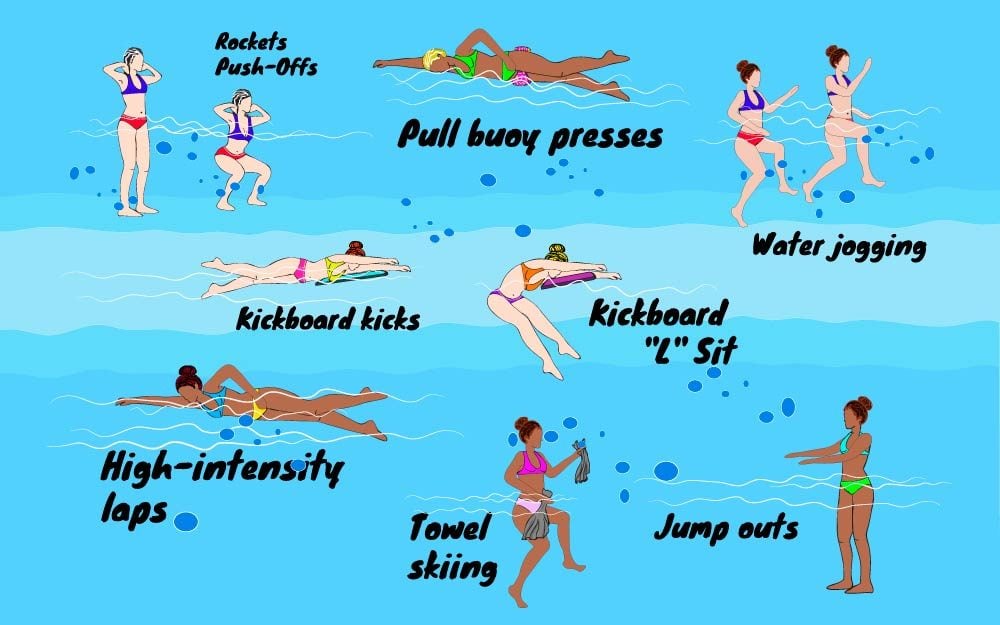
Image Source: www.thehealthy.com
The Many Benefits of Swimming for Fitness
Swimming engages nearly every muscle group in your body, providing a comprehensive workout that traditional land-based exercises often miss. The resistance of the water amplifies the effort required, leading to increased muscle strength and endurance.
Cardiovascular Health Champion
Swimming is an exceptional form of cardiovascular exercise swimming. When you swim, your heart rate increases, strengthening your heart and lungs. Regular swimming can:
- Lower blood pressure: The rhythmic nature of swimming helps to relax blood vessels.
- Improve cholesterol levels: It can help raise HDL (good cholesterol) and lower LDL (bad cholesterol).
- Reduce the risk of heart disease and stroke: A stronger heart is less prone to these conditions.
- Increase lung capacity: Your lungs become more efficient at taking in oxygen.
Strength Training in Water
Don’t underestimate the power of water as a resistance medium. Strength training in water builds lean muscle mass without the high impact associated with weights. As you move through the water, you’re constantly pushing against its resistance. This:
- Builds and tones muscles: From your arms and shoulders (stroke work) to your legs (kicking) and core (stability), every area gets a workout.
- Improves joint mobility: The buoyancy of water supports your body, allowing for a greater range of motion in your joints without strain. This is particularly beneficial for individuals with arthritis or joint pain.
- Enhances core strength: Maintaining a streamlined position in the water requires constant engagement of your abdominal and back muscles.
Weight Loss Swimming
For those aiming for weight loss swimming is a calorie-burning powerhouse. The amount of calories you burn depends on the intensity and duration of your swim, as well as your body weight. However, a moderate swimming session can burn as many calories as a similar intensity run.
- High Calorie Burn: Freestyle swimming at a moderate pace can burn upwards of 400-500 calories per hour.
- Metabolic Boost: Building muscle through swimming can also boost your resting metabolism, meaning you burn more calories even when you’re not exercising.
- Reduced Cravings: Some studies suggest that swimming can help regulate appetite hormones, potentially reducing cravings for unhealthy foods.
Low Impact, High Reward
One of the most significant advantages of swimming is its low-impact nature. The buoyancy of water supports up to 90% of your body weight, dramatically reducing stress on your joints. This makes it an ideal exercise for:
- People with injuries: Recovering from a sprain, fracture, or surgery? Swimming can help you stay active without aggravating your injury.
- Individuals with joint conditions: Arthritis, fibromyalgia, and other conditions that cause joint pain can be managed more effectively with swimming.
- Pregnant women: The water provides support and relief from pregnancy discomforts, making it a safe and beneficial exercise.
- Seniors: It’s a gentle yet effective way to maintain fitness and mobility as you age.
Mental Health Boost
The benefits of swimming extend beyond the physical. The rhythmic motion and the sensation of being in the water can have a profoundly calming effect.
- Stress Reduction: The repetitive movements and the focus required can act as a form of meditation, reducing stress and anxiety.
- Improved Mood: Exercise, in general, releases endorphins, which are natural mood boosters. Swimming is no exception.
- Better Sleep: Regular physical activity, including swimming, can lead to improved sleep quality.
Getting Started: Your Beginner Swimming Workout
If you’re new to swimming for exercise, the thought of diving in might seem daunting. But fear not! A beginner swimming workout can be simple, effective, and enjoyable. The key is to start slow and build gradually.
Essential Gear
Before you hit the pool, ensure you have the right gear:
- Swimsuit: Choose a comfortable, well-fitting swimsuit that allows for freedom of movement.
- Goggles: Protect your eyes from chlorine and improve visibility.
- Swim Cap: Keeps hair out of your face and protects your hair from chlorine.
Pool Etiquette
Familiarize yourself with basic pool etiquette to ensure a pleasant experience for everyone:
- Shower before entering: This helps keep the pool clean.
- Use the correct lane: Fast swimmers usually stay in the middle lanes, while slower swimmers use the outer lanes.
- Pass on the left: When overtaking another swimmer, pass on their left.
- Respect others: Be mindful of other swimmers and their space.
Your First Swimming Session: A Sample Beginner Workout
This workout focuses on getting comfortable in the water and building basic endurance.
Warm-up (5-10 minutes):
- Light walking or jogging in the shallow end: Get your body moving.
- Arm circles (forward and backward): 10-15 circles each direction.
- Leg swings (forward and backward, side to side): 10-15 swings each leg, each direction.
- Gentle kicking with a kickboard (2 lengths): Focus on a relaxed, consistent kick.
Main Set (15-20 minutes):
- Swim freestyle (or your preferred stroke) for 2 lengths: Rest for 30-60 seconds.
- Repeat this 4-6 times. Focus on breathing and maintaining a steady pace. If you need to stop and rest, that’s perfectly fine.
- Kick with a kickboard (2 lengths): Focus on keeping your legs straight and your kicks coming from your hips. Rest for 30-60 seconds.
- Repeat this 2-3 times.
Cool-down (5 minutes):
- Easy swimming or walking in the water: Allow your heart rate to return to normal.
- Gentle stretching: Focus on arms, shoulders, and legs.
Important Tips for Beginners:
- Focus on breathing: This is often the biggest challenge for new swimmers. Exhale fully underwater and turn your head to the side to inhale.
- Don’t worry about speed: Focus on form and consistency.
- Listen to your body: If you feel tired or experience pain, take a break.
- Stay hydrated: Drink water before and after your swim.
Elevating Your Swimming: Intermediate and Advanced Workouts
As you become more comfortable and your fitness improves, you can start incorporating more variety and intensity into your swimming routine. This is where you’ll truly experience the power of swimming for fitness.
Lap Swimming: Building Endurance and Speed
Lap swimming is the cornerstone of many swimming fitness routines. It involves swimming continuous lengths of the pool.
Interval Training
Interval training involves alternating between periods of high-intensity swimming and periods of rest or low-intensity swimming. This is a highly effective way to improve cardiovascular fitness and speed.
Sample Intermediate Interval Workout (30-40 minutes):
- Warm-up (10 minutes): As per beginner warm-up, perhaps adding some longer swims.
- Main Set (20 minutes):
- Swim 4 x 100 meters freestyle at a challenging pace. Rest for 60 seconds between each 100.
- Swim 4 x 50 meters backstroke or breaststroke at a moderate pace. Rest for 30 seconds between each 50.
- Swim 2 x 200 meters freestyle at a steady, sustainable pace. Rest for 90 seconds between each 200.
- Cool-down (5 minutes): Easy swimming.
Fartlek Swimming
Fartlek, a Swedish term meaning “speed play,” involves unstructured bursts of speed mixed with easier swimming. It’s a great way to break up monotony and challenge your body in different ways.
Sample Fartlek Session:
- Warm-up (10 minutes):
- Main Set (20-25 minutes): Swim continuous laps, incorporating:
- Sprint for 1 length, then swim easy for 2 lengths.
- Swim at race pace for 50 meters, then slow down for 100 meters.
- Pick a landmark (e.g., the end of the pool) and swim as fast as you can to it, then recover.
- Cool-down (5 minutes):
Improving Swimming Technique
To maximize your efficiency and prevent injury, focusing on your improve swimming technique is crucial. Even small adjustments can make a big difference.
Freestyle Technique Tips
- Body Position: Keep your body as horizontal as possible in the water. Engage your core to prevent your hips and legs from sinking.
- Rotation: Rotate your body with each stroke. This helps you engage your core and allows for a more powerful arm pull.
- Arm Stroke: Focus on a high-elbow catch. As your hand enters the water, keep your elbow bent and high, pulling the water back towards your feet.
- Breathing: Turn your head to the side, keeping one goggle in the water. Inhale quickly and return your face to the water. Try to exhale slowly underwater.
- Kick: A consistent, flutter kick from your hips is most efficient. Keep your ankles relaxed.
Breaststroke Technique Tips
- Kick: The “whip kick” is essential. Bring your heels towards your buttocks, then push your feet outwards and backwards in a circular motion.
- Arm Pull: Pull your hands downwards and outwards, keeping your elbows relatively high.
- Timing: Coordinate your arm pull with your kick. Your arms recover forward while your legs are extending backwards. Breathe as your head rises during the pull.
Backstroke Technique Tips
- Body Position: Keep your hips high and your body flat on the surface.
- Arm Stroke: One arm should be recovering out of the water while the other is pulling through. Keep your arms relatively straight during the pull.
- Kick: A consistent flutter kick is important for balance and propulsion.
- Breathing: Breathe naturally as your body rotates.
Water Aerobics: A Fun Alternative
Water aerobics offers a fantastic way to incorporate swimming principles into a structured, low-impact workout that can be done in a group setting or individually.
Benefits of Water Aerobics:
- Full-Body Workout: Many routines incorporate movements that target arms, legs, core, and even your face and neck.
- Cardiovascular Improvement: Moving through water resistance elevates your heart rate.
- Strength Building: The water’s resistance provides a natural way to build muscle.
- Joint-Friendly: The buoyancy of the water reduces impact, making it ideal for those with joint issues.
- Stress Relief: The rhythmic movements and aquatic environment can be very relaxing.
Sample Water Aerobics Moves:
- Jumping Jacks: Perform traditional jumping jacks in waist-deep water.
- High Knees: March in place, bringing your knees up towards your chest.
- Butt Kicks: Kick your heels towards your glutes.
- Leg Swings: Swing your legs forward and backward, or side to side.
- Arm Circles and Punches: Mimic arm movements against the water’s resistance.
- Water Walking/Jogging: Simply moving through the water with purpose.
You can find many water aerobics classes at local gyms or community centers, or even follow online videos.
Creating Your Swimming Training Plan
A well-structured swimming training plan will help you achieve your fitness goals and prevent boredom. Consider these elements when designing your plan:
Setting Goals
What do you want to achieve?
- Weight Loss: Focus on calorie-burning sessions and consistency.
- Cardiovascular Health: Incorporate interval training and longer, steady-state swims.
- Strength and Endurance: Mix in resistance exercises and varied stroke work.
- Stress Relief: Prioritize relaxed, longer swims with an emphasis on breathing.
Frequency and Duration
- Beginners: Aim for 2-3 sessions per week, 30-45 minutes each.
- Intermediate: Increase to 3-4 sessions per week, 45-60 minutes each.
- Advanced: 4-6 sessions per week, 60+ minutes each.
Variety is Key
To avoid plateaus and keep your motivation high, mix up your workouts. Incorporate different strokes, speeds, and exercises.
Progressive Overload
To continue seeing results, gradually increase the challenge over time. This could mean:
- Swimming longer distances.
- Increasing the intensity of your intervals.
- Reducing rest periods.
- Adding more challenging drills.
Sample Weekly Swimming Training Plan (Intermediate)
This is a sample; adjust it based on your fitness level and goals.
| Day | Focus | Workout Details | Duration |
|---|---|---|---|
| Monday | Freestyle Endurance | Warm-up, 6 x 200m freestyle (steady pace), focus on consistent breathing, Cool-down. | 50 min |
| Tuesday | Speed and Intervals | Warm-up, 10 x 50m sprint with 30 sec rest, 5 x 100m moderate with 45 sec rest, Cool-down. | 45 min |
| Wednesday | Active Recovery/Water Aerobics | Light swimming, kicking with board, or a water aerobics class. Focus on mobility and gentle movement. | 40 min |
| Thursday | Technique and Drills | Warm-up, various drills (e.g., kick on side, catch-up drill, single arm drills), Cool-down. | 50 min |
| Friday | Mixed Strokes/Endurance | Warm-up, 4 x 100m freestyle, 4 x 100m backstroke, 4 x 100m breaststroke (steady pace), Cool-down. | 60 min |
| Saturday | Longer Swim/Fartlek | Warm-up, continuous swim with 4-6 bursts of speed, Cool-down. | 60 min |
| Sunday | Rest |
Advanced Training: Aiming for Competitive Swimming Training
For those who have truly embraced swimming for fitness and are looking to push their limits, competitive swimming training principles can be adapted. This involves meticulous attention to detail, advanced techniques, and rigorous conditioning.
Advanced Drills for Technique Refinement
- Fist Drills: Swim with clenched fists to focus on forearm engagement and early vertical forearm positioning.
- Sculling Drills: Various sculling positions (high, mid, low) help develop water feel and subtle propulsion.
- Underwater Kick Drills: Focus on powerful dolphin kicks underwater to improve streamlining and speed off the walls.
Periodization in Training
Competitive swimmers often use periodization, dividing their training year into phases with different focuses (e.g., base building, strength, power, tapering). While not strictly necessary for general fitness, adopting some of these principles can help prevent burnout and optimize progress.
Strength and Conditioning
Beyond the pool, a strong dry-land program complements swimming. This includes:
- Core Strengthening: Planks, Russian twists, and leg raises are vital.
- Shoulder and Back Strength: Exercises like pull-ups, rows, and resistance band work are beneficial.
- Leg Strength: Squats, lunges, and calf raises improve kicking power.
Nutrition and Recovery
For peak performance, proper nutrition and recovery are paramount. This includes adequate protein intake for muscle repair, carbohydrates for energy, and sufficient rest.
Frequently Asked Questions (FAQ)
Q1: How often should I swim for exercise?
For general fitness, aim for 2-3 times per week. If your goal is significant weight loss or improved athletic performance, you might swim 4-5 times per week, ensuring adequate rest days.
Q2: What is the best stroke for exercise?
Freestyle (front crawl) is generally considered the most efficient and best for cardiovascular conditioning. However, incorporating breaststroke, backstroke, and butterfly (if comfortable) provides a more comprehensive full-body workout and prevents overuse injuries.
Q3: Can I swim if I’m a beginner and don’t know how to swim well?
Absolutely! Start with lessons from a certified instructor. Many pools offer adult learn-to-swim programs. Once you have basic water competency, you can begin with gentle, shallow-water exercises or focus on kicking with a kickboard.
Q4: How long does it take to see results from swimming?
Visible results vary greatly depending on your starting fitness level, diet, and the consistency of your swimming. However, many people report feeling stronger and having more energy within 2-4 weeks of regular swimming. Changes in weight or muscle tone might take longer, typically 1-3 months.
Q5: Is swimming good for weight loss?
Yes, swimming is an excellent exercise for weight loss. It burns a high number of calories due to the full-body engagement and the resistance of water. Combined with a healthy diet, consistent swimming can lead to significant weight loss.
Q6: What are the best swimming drills for beginners?
For beginners, focus on drills that improve breathing and body position. Kickboard drills help develop a consistent kick. Side-kicking drills enhance body rotation and breathing. Simple “catch-up” drills can help with arm stroke timing.
Q7: Can swimming help with back pain?
Yes, swimming is often recommended for people with back pain. The buoyancy of the water supports your body, reducing pressure on the spine. Strengthening your core muscles through swimming also provides better support for your back. However, consult your doctor before starting any new exercise program if you have back pain.
Swimming offers a unique and powerful avenue for achieving your fitness goals. Its low-impact nature, full-body engagement, and numerous health benefits make it a truly exceptional workout. So, grab your goggles, head to the pool, and discover the transformative power of swimming for fitness. Your body will thank you!