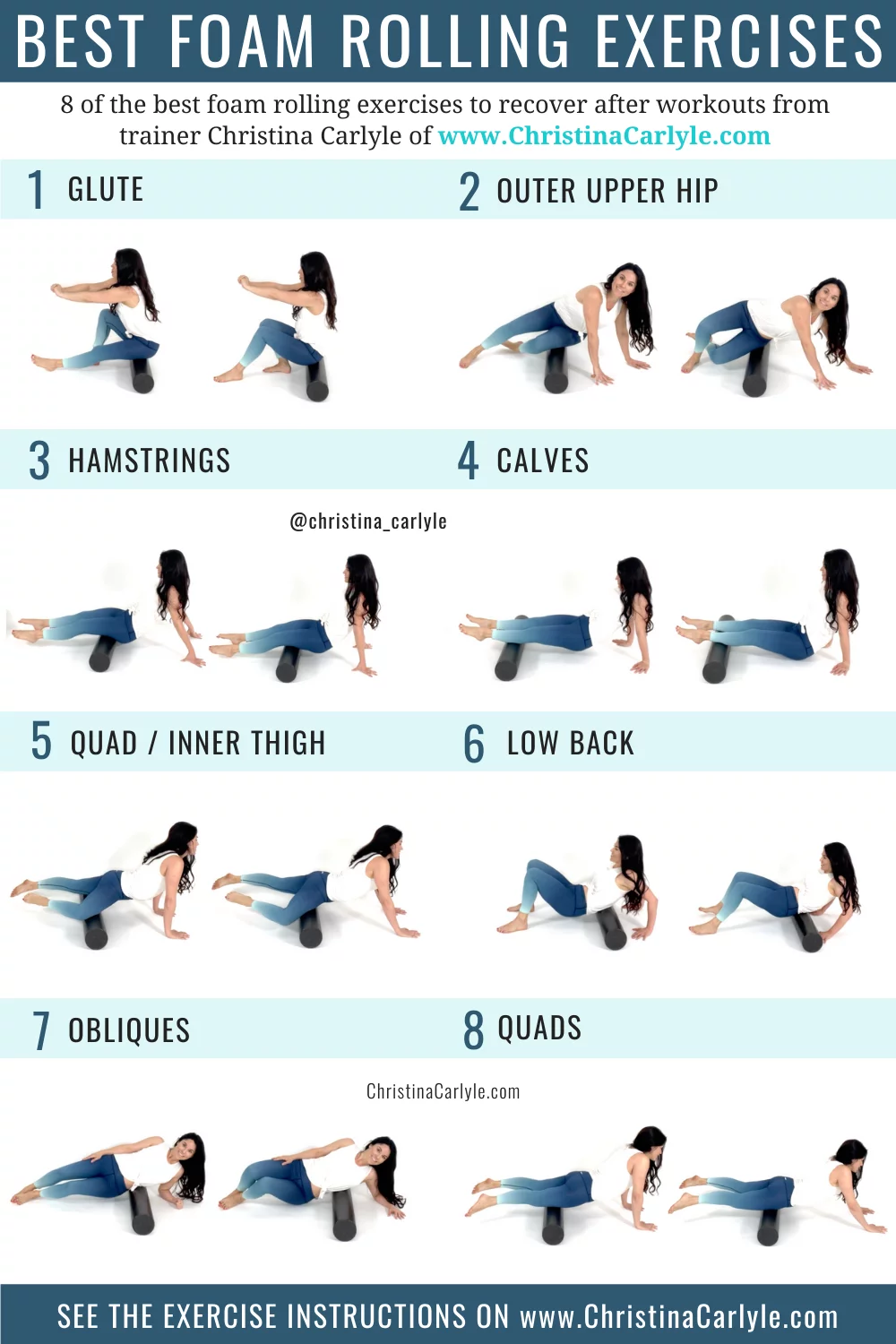
Image Source: www.christinacarlyle.com
Simple Steps: How To Use An Exercise Foam Roller Effectively
An exercise foam roller is a tool used to help release muscle tightness and improve flexibility. People use it for a type of self-massage called myofascial release. This can ease pain, help muscles feel better after exercise, and improve how you move. Think of it as a way to give yourself a deep tissue massage. Using a foam roller is simple once you learn how, and it can be a big help for anyone who wants their body to move more freely and feel less stiff. It’s a great tool for muscle recovery.
Why Use a Foam Roller? Getting the Benefits
Foam rollers offer many good things for your body. They work by putting pressure on tight spots in your muscles. This pressure helps the muscle tissue relax and release tension.
- Helps Muscles Recover: After you work out, your muscles can get sore. Using a foam roller helps blood flow better to these muscles. This can speed up muscle recovery and make you feel less sore the next day. It’s a popular muscle recovery roller.
- Releases Tight Spots: Sometimes, muscles develop knots or trigger points. These can feel sore and stiff. A foam roller works like a self massage tool to apply pressure directly to these spots, helping them loosen up. This is called trigger point release.
- Boosts Flexibility: When muscles are tight, they can limit how far you can move. Foam rolling can help stretch and lengthen muscles, which can improve your overall flexibility. Many flexibility exercises can be done with a foam roller.
- Eases Pain: By releasing muscle tension, foam rolling can help reduce pain, especially in common problem areas like the back and legs. Foam rolling for back pain is a common use.
- Better Movement: When your muscles are relaxed and flexible, your body can move more efficiently and freely. This can improve your performance in sports or just make everyday movements easier.
It’s clear that a foam roller is a powerful tool for anyone looking to take care of their body. Learning how to use an exercise foam roller is a simple step towards feeling better and moving better.
Different Types of Foam Rollers
Not all foam rollers are the same. They come in different sizes, shapes, and densities. Choosing the right one can make a difference.
- Smooth Rollers: These are often the first kind people use. They have a flat, smooth surface. They give even pressure and are good for beginners or for general muscle work.
- Textured Rollers: These rollers have bumps or ridges. They are designed to mimic a deep tissue massage roller. The bumps can target specific points more intensely. These can feel more uncomfortable at first, but they can be very effective for getting into tight spots.
- Short Rollers: These are usually 12-18 inches long. They are good for smaller areas like the arms or calves, or for travel.
- Long Rollers: These are typically 36 inches long. They are better for rolling larger areas like the back or legs all at once. They also offer more stability.
- Firmness: Rollers come in different firmness levels. Softer rollers are gentler. Firmer rollers give more intense pressure. Beginners often start with a softer or medium roller.
Most of the time, a standard 36-inch medium-firm smooth or lightly textured roller is a good place to start.
Key Ideas for Effective Foam Rolling
Before you start rolling, it helps to know some basic rules. These rules will help you use your foam roller safely and get the most out of it.
- Go Slow: Do not rush. Move your body slowly over the roller. This lets you find tight spots and apply pressure correctly.
- Find Tender Spots: As you roll, you will likely find areas that feel more sore or tight than others. These are often trigger points.
- Hold on Tender Spots: When you find a tender spot, stop rolling. Apply steady pressure to that spot for about 20-30 seconds. Breathe deeply and try to relax. The discomfort should lessen as the muscle releases.
- Roll Short Distances: Instead of rolling the entire length of a muscle at once, focus on small sections. Roll back and forth over a few inches at a time.
- Breathe Deeply: It is easy to hold your breath when it hurts. But breathing deeply helps your muscles relax and can make the process easier.
- Do Not Roll Directly on Joints: Avoid putting the foam roller directly under joints like your knees, elbows, or ankles. The pressure should be on the muscles.
- Avoid Rolling Over Bone: Do not roll directly on bones, like your shin bone or collarbone. Stick to muscle tissue.
- Listen to Your Body: Foam rolling can be uncomfortable, but it should not cause sharp or intense pain. If something feels very wrong, stop.
- Stay Hydrated: Drinking water before and after foam rolling can help your muscles recover.
- Consistency is Key: Like exercise, foam rolling works best when you do it regularly. Aim for a few times a week.
These simple steps are the foundation of using an exercise foam roller effectively.
How to Foam Roll Specific Body Parts
Now, let’s look at how to use your foam roller on different parts of your body. These are common foam roller exercises.
How to Foam Roll Legs
Rolling your legs is very important, especially if you run, cycle, or do activities that use your legs a lot. Many LSI keywords fit here: ‘how to foam roll legs’, ‘IT band foam rolling’, ‘myofascial release techniques’, ‘muscle recovery roller’.
H5 Quadriceps (Front of Thigh)
- Lie on your stomach. Place the foam roller under your hips.
- Rest your weight on your forearms or hands.
- Slowly roll the foam roller down towards your knees, then back up towards your hips.
- Roll one leg at a time if you want more pressure. Bend the other leg out to the side.
- Find any sore spots and hold for 20-30 seconds.
- Repeat on the other leg.
H5 Hamstrings (Back of Thigh)
- Sit on the floor with the foam roller under your thighs.
- Place your hands on the floor behind you for support.
- Slowly roll the foam roller from your hips down towards your knees, then back up.
- For more pressure, cross one leg over the other.
- Find sore spots and hold.
- Repeat on the other leg.
H5 Calves (Lower Leg)
- Sit on the floor with the foam roller under your calves.
- Place your hands on the floor behind you for support.
- Roll from your ankles up to below your knees, then back down.
- To focus on different parts of the calf, turn your legs inward or outward.
- For more pressure, cross one leg over the other.
- Find sore spots and hold.
- Repeat on the other leg.
H5 IT Band (Side of Thigh)
The IT band (iliotibial band) is a thick band of tissue on the outside of your thigh. It can get very tight, especially in runners and cyclists. IT band foam rolling is known for being intense, but it can help a lot.
- Lie on your side with the foam roller under your hip.
- Use your forearm and hand on the floor for support.
- Place your top leg in front of your bottom leg or keep it stacked. Stacked is harder.
- Slowly roll down the side of your thigh to just above your knee, then back up.
- This area can be very sensitive. Go very slowly and put only as much weight as you can handle.
- Find sore spots and hold.
- Repeat on the other side.
It is important to remember that ‘how to foam roll legs’ includes all these areas. Using these myofascial release techniques on your legs can make a big difference in how they feel.
Foam Rolling for Back Pain
Foam rolling your back needs care. The lower back (lumbar spine) is more delicate. It is generally best to roll the upper and middle back, but avoid direct, heavy pressure on the lower back. This uses the foam rolling for back pain keyword.
H5 Upper and Middle Back (Thoracic Spine)
- Sit on the floor with the foam roller placed behind you, across your back, around the middle.
- Lie back onto the roller, with your knees bent and feet flat on the floor.
- Cross your arms over your chest or put your hands behind your head. This helps spread your shoulder blades.
- Lift your hips slightly off the floor.
- Slowly roll up and down your upper and middle back, from your shoulder blades down to the bottom of your rib cage.
- Avoid rolling onto your neck or lower back.
- Find sore spots and hold.
H5 Lower Back (Lumbar Spine)
Some experts recommend avoiding direct foam rolling on the lower back because it can sometimes cause the muscles to tense up more, or even harm the spine if done incorrectly. If you have lower back pain, it’s often better to focus on the muscles that connect to it, like the glutes, hip flexors, and upper back. If you do roll your lower back, use a very soft roller and very gentle pressure, perhaps only on the large muscles to the sides of the spine, never directly on the spine itself. It is safer to see a physical therapist for lower back issues.
Other Important Areas for Foam Rolling
You can use a foam roller on many other muscles as well. These are more foam roller exercises.
H5 Glutes (Buttocks)
Tight glutes can cause problems in the hips and lower back.
- Sit on the foam roller.
- Cross one ankle over the opposite knee (like sitting cross-legged on one side). This puts more weight on the glute you want to roll.
- Lean into the hip of the crossed leg.
- Roll back and forth over that side of your glute.
- Find sore spots and hold.
- Repeat on the other side.
H5 Adductors (Inner Thigh)
Tight inner thighs can affect hip and knee movement.
- Lie on your stomach. Extend one leg out to the side, bent at the knee, with the foam roller placed under the inner thigh of the extended leg.
- Roll back and forth from the groin area down towards the knee.
- Find sore spots and hold.
- Repeat on the other leg.
H5 Chest and Upper Back (Pec Minor & Rhomboids)
Some people use smaller rollers or balls for these areas, but a standard roller can work. Releasing tightness here can help with posture and shoulder movement.
- Pec Minor (Upper Chest/Shoulder): Lie on your side or angle your body towards the floor. Place the roller under the upper chest/shoulder area (just below the collarbone). Lean into it gently and roll slightly side to side.
- Rhomboids (Upper Back between Shoulder Blades): Similar to upper back rolling, but you can angle your body to target one side between the spine and shoulder blade.
Remember, these are just some examples of myofascial release techniques you can do with a foam roller.
Table of Common Foam Rolling Exercises
Here is a quick guide to some basic foam roller exercises:
| Body Part | Starting Position | Rolling Motion | Key Focus Areas | Notes |
|---|---|---|---|---|
| Quadriceps | Lie face down, roller under hips | Hip to knee, front of thigh | Entire front thigh | Roll one leg at a time for more pressure |
| Hamstrings | Sit, roller under thighs | Hip to knee, back of thigh | Entire back thigh | Cross legs for more pressure |
| Calves | Sit, roller under calves | Ankle to below knee, back of lower leg | Entire back calf | Turn legs inward/outward; Cross legs for pressure |
| IT Band | Lie on side, roller under hip | Hip to just above knee, outside of thigh | Outside of thigh | Can be very sensitive; use supporting arm/leg |
| Upper/Mid Back | Sit, roller across back, lie back | Shoulder blades to bottom ribs, back of torso | Between spine and shoulder blades | Avoid neck and lower back; Cross arms |
| Glutes | Sit on roller, cross one ankle over opposite knee | Roll over the glute of the crossed leg | Buttocks | Lean into the hip being rolled |
| Adductors | Lie face down, one leg out, roller under inner thigh | Groin area down towards knee, inner thigh | Entire inner thigh | Use supporting leg/arms |
This table helps organize some common techniques for using your self massage tool.
When to Use Your Foam Roller
Timing can matter when it comes to foam rolling.
- Before Exercise: A short foam rolling session (5-10 minutes) before working out can help warm up your muscles and improve flexibility. It can help prepare the tissue for movement. Think of it as part of your warm-up, like dynamic stretching. It can help with flexibility exercises.
- After Exercise: Foam rolling after a workout is great for muscle recovery. It helps reduce soreness and release any tightness that built up during your activity. This is where it truly shines as a muscle recovery roller. A longer session (10-20 minutes) can be good here.
- On Rest Days: You can use a foam roller on days you do not work out. This can help maintain flexibility and address any lingering muscle tightness or trigger points. It’s a good part of an active recovery routine.
Some people also use it just to relax and relieve stress, which can cause muscles to tense up.
Possible Risks and What to Watch For
Foam rolling is safe for most people, but there are times you should be careful or avoid it.
- Avoid Injuries: Do not roll directly on injured areas like sprains, strains, or broken bones. Give your body time to heal.
- Avoid Open Wounds or Bruises: Do not roll over damaged skin.
- Certain Medical Conditions: If you have conditions like blood clots, varicose veins, or certain circulatory issues, talk to your doctor before foam rolling.
- Sharp Pain: Foam rolling can be uncomfortable, but it should not be sharply painful. If you feel a sharp, shooting, or worsening pain, stop immediately.
- Swelling or Bruising: If you notice swelling or significant bruising after foam rolling, you might be using too much pressure or rolling too aggressively.
Always listen to your body. Start gently, especially if you are new to foam rolling or have tight muscles. As you get used to it, you can increase pressure slowly. Using the foam roller effectively means using it safely.
Combining Foam Rolling with Other Care
Foam rolling works well as part of a larger self-care plan.
- Stretching: Foam rolling can make stretching more effective by releasing tight spots before you stretch. Combining myofascial release techniques with stretching can improve flexibility even more.
- Hydration and Nutrition: Good nutrition and staying hydrated are key to muscle recovery and overall health. Foam rolling supports these efforts.
- Rest: Adequate sleep and rest are crucial for muscles to repair and grow stronger. Foam rolling helps the body relax, which can support better rest.
- Warm-up/Cool-down: Foam rolling fits perfectly into warm-up and cool-down routines, preparing muscles for exercise or helping them recover afterward.
Using a foam roller effectively means seeing it as one piece of your health and fitness puzzle.
Common Questions About Foam Rolling
Here are answers to some questions people often ask about using a foam roller.
H4 Can I foam roll every day?
Yes, you can foam roll every day if you feel it helps and does not cause pain. Some people find daily short sessions helpful, while others prefer longer sessions a few times a week. Listen to your body and see what works best for you. If a muscle is very sore from rolling, give it a day to recover before rolling that area again.
H4 How long should I spend on each muscle group?
Aim for about 30-60 seconds per muscle group. If you find a particularly tight or sore spot (a trigger point), you can hold pressure on that spot for 20-30 seconds before moving on. The total time for a full body session might be 10-20 minutes.
H4 Why does foam rolling hurt so much?
It can hurt because you are applying pressure to tight, sore, or sensitive muscle tissue and trigger points. Think of it like getting a deep tissue massage – it can be uncomfortable as the muscle releases tension. The pain should be manageable and lessen as you continue breathing and holding pressure on a tight spot. If the pain is sharp or unbearable, reduce pressure or stop. It gets easier over time as your muscles loosen up.
H4 Can foam rolling help with cellulite?
While some people claim foam rolling helps improve the appearance of cellulite by improving circulation and lymphatic drainage, there is no strong scientific evidence to prove this. Foam rolling’s main benefits are related to muscle tissue health, recovery, and flexibility.
H4 What is the difference between a foam roller and a massage stick?
A foam roller is a cylinder you lie or lean on, using your body weight to apply pressure. A massage stick is a handheld tool that allows you to apply pressure to muscles using your hands. Massage sticks are better for smaller areas, for controlling the amount of pressure more precisely, and for reaching certain spots like the shins or forearms. Both are types of self massage tools and can be used for myofascial release techniques.
H4 Should I use a foam roller before or after stretching?
Many people find it helpful to foam roll before stretching. By releasing some of the tension and trigger points in the muscle, foam rolling can help the muscle lengthen more effectively when you stretch. Combining them can improve your flexibility exercises with foam roller.
H4 Is foam rolling better than stretching?
Neither is “better.” They are different tools that work well together. Foam rolling focuses on releasing muscle tightness and knots (myofascial release), while stretching focuses on lengthening the muscle fibers. Using both can give you better results than using just one.
H4 Can I use a foam roller for my neck?
It is generally not recommended to use a standard foam roller directly on your neck. The neck area is delicate and requires more controlled pressure. You might use a smaller, softer ball or roller specifically designed for the neck and shoulders, and use extreme caution. If you have neck pain, it is best to seek advice from a healthcare professional.
H4 What is a trigger point?
A trigger point is a tight spot or knot within a muscle fiber. It can be painful when pressed and can sometimes cause pain in other parts of the body (referred pain). Foam rolling, especially using a deep tissue massage roller or a textured roller, can help release these trigger points.
H4 Can beginners use a firm or textured roller?
Beginners can use a firm or textured roller, but they might find it very uncomfortable at first. Starting with a softer or medium-firm smooth roller is often easier for beginners. As your muscles become less sensitive and you learn how to control the pressure, you can move to a firmer or textured roller if you want more intense work.
Final Thoughts on Using Your Foam Roller
Using an exercise foam roller effectively is a skill that gets easier with practice. It’s a powerful self massage tool for myofascial release techniques. By slowly rolling over your muscles, finding tight spots, and applying gentle pressure, you can help your muscles recover faster, improve flexibility, and reduce pain. Remember to go slow, breathe deeply, and listen to your body. Whether you are focused on how to foam roll legs, foam rolling for back pain, or working on trigger point release anywhere else, consistency is important. Add foam roller exercises to your routine a few times a week, and you will likely feel the benefits of better muscle recovery and improved movement. It’s a simple step that can make a big difference in how your body feels.