Can I workout after Botox? The short answer is no, not right away. You usually need to wait at least 24 hours before doing any hard exercise after getting Botox shots. This is a key part of your post-Botox care. Doing exercise too soon can sometimes make the Botox not work as well or cause problems.
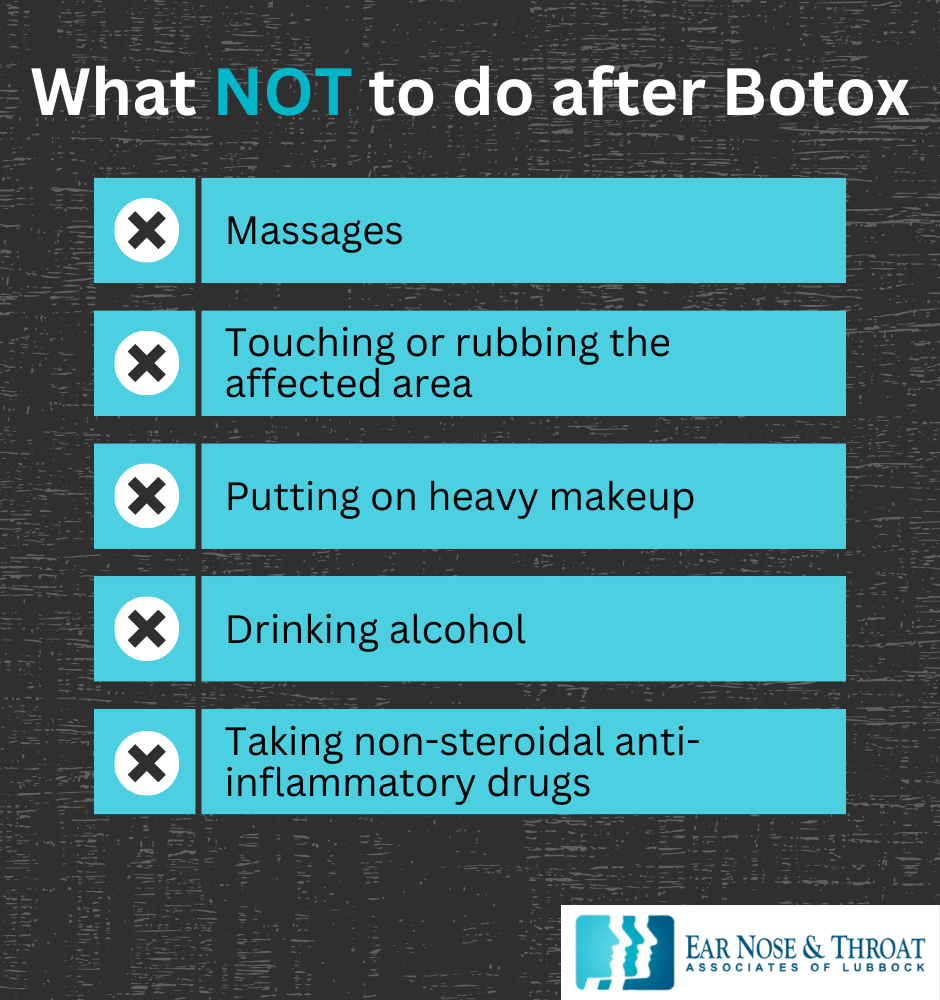
Image Source: www.entlubbock.com
Why You Need to Wait
It might seem okay to just get up and go after your appointment. But there are important reasons why you should not exercise right after getting Botox. Botox is a special medicine. A doctor puts small amounts of it into certain muscles in your face. This makes the muscles relax, which smooths out lines and wrinkles. The medicine needs time to settle in and start working in the right spots.
Learning About How Botox Works
Botox is a type of medicine that stops signals from your nerves to your muscles. When the nerve signal stops, the muscle cannot move. This is how it makes wrinkles less visible. Think of it like turning off a light switch for a muscle. When Botox is put in, it needs time to connect to the nerve endings in the muscle. This process takes a few hours.
Why Movement Matters Right Away
After the shots, the Botox is sitting in a small area where the doctor put it. It’s a liquid at first. If you move around a lot or do hard exercise too soon, you could make the liquid move to a different spot. This is called migration. If the Botox moves, it could affect muscles you didn’t want to relax. This could cause uneven results or even drooping in places like an eyelid or eyebrow.
The Important Waiting Time
So, how long should you really wait? Most doctors tell you to wait at least 24 hours. Some might say 4 to 6 hours is okay for light activities, but 24 hours is the standard safe waiting period for exercise after Botox. This waiting time helps make sure the Botox stays where it was put. It gives the medicine a chance to start working in the correct muscle fibers.
- First 4-6 Hours: Keep your head upright. Avoid lying down. Avoid touching or rubbing the treated areas. Very gentle activities like slow walking might be okay, but check with your doctor.
- First 24 Hours: Avoid all hard exercise. Do not go to the gym. Do not do yoga or pilates where your head might be down. Avoid anything that makes you sweat a lot or gets your heart pumping very fast. This is a critical time for post-Botox exercise restrictions.
- After 24 Hours: Usually, it is safe to go back to your normal exercise routine. This is the start of your recovery after Botox exercise.
Finding Out the Right Time for You
The exact time you need to wait can be slightly different for each person. It can also depend on:
- How much Botox you got.
- Which areas were treated.
- How your body heals.
- The specific type of product used (though different brands like Xeomin, Dysport, Jeuveau work similarly).
Always listen to the exact advice your doctor or nurse gives you. They know your case best. Their exercise recommendations after Botox are the most important to follow.
Why Certain Exercises Are Worse Than Others
Not all physical activity after Botox is the same. Some activities are more likely to cause problems than others.
High-Intensity Exercise and Sweating
Activities like running, cycling fast, high-intensity interval training (HIIT), or heavy weightlifting get your heart rate up very high. This sends a lot of blood flow to your face. More blood flow can potentially help move the Botox before it has settled. Also, these activities make you sweat a lot. Sweating after Botox can sometimes make the treated areas sting or feel uncomfortable, although it is less likely to cause major problems like migration compared to increased blood flow and pressure.
Exercises Where Your Head is Down
Yoga, pilates, and some strength training moves (like downward dog or push-ups) involve putting your head below your heart. This increases blood pressure in your head and face. Increased pressure could also possibly push the Botox product away from the target muscle. Avoid these types of movements during the waiting period for exercise after Botox.
Activities That Cause Bouncing
Running or jumping can cause a lot of movement and bouncing, especially in the face. While less likely to cause migration than pressure or blood flow, it’s still better to avoid vigorous bouncing activity right after the shots.
Gym Workout After Botox
A typical gym workout after Botox involves many things you should avoid in the first 24 hours:
* Heavy lifting (increases blood pressure)
* Cardio machines like treadmills or ellipticals (increase heart rate and blood flow, cause sweating)
* Classes like spin or Zumba (high intensity, sweating)
* Floor exercises like yoga or pilates (head down positions)
So, hitting the gym is usually a no-go for the first day. Your post-Botox exercise restrictions mean taking a break from the weights and cardio machines.
What Could Happen If You Exercise Too Soon?
Exercising too soon after Botox can lead to some unwanted side effects or make your results less effective.
- Botox Migration: This is the biggest worry. If the Botox moves to nearby muscles, it can cause:
- Drooping eyelid (ptosis)
- Drooping eyebrow
- Weakness in unintended facial muscles
- Uneven smile
- These issues are usually temporary but can last for several weeks.
- Increased Bruising: Exercise increases blood flow. This can make any small bruises from the injection bigger or last longer.
- Increased Swelling: More blood flow can also lead to more swelling in the treated areas.
- Less Effective Results: If the product doesn’t stay exactly where it was placed, it might not relax the target muscle as much as it should, leading to less smoothing of wrinkles.
- Faster Metabolism of Botox: Some theories suggest that significantly increased metabolism from intense exercise might potentially cause the Botox to break down slightly faster, though this is less certain than the risk of migration or bruising.
What Can You Do During the Waiting Period?
Just because you can’t do a full gym workout after Botox doesn’t mean you have to sit completely still. Here are some safe activities you can do during your Botox aftercare exercise phase:
- Rest: This is a great time to relax and let your body recover.
- Light Walking: Gentle walking is usually okay, especially after the first few hours, as long as you keep your head upright and don’t get your heart rate up too high. Think a leisurely stroll, not a power walk.
- Normal Daily Activities: Things like working at a computer, cooking, or watching TV are fine. Just avoid bending over a lot or putting pressure on your face.
- Keeping Your Head Upright: Avoid lying flat on your back or putting your face down for prolonged periods. This helps prevent pressure and potential migration.
This short list highlights that safe physical activity after Botox during the waiting period is very limited and low-key.
When Can You Go Back to Normal Exercise?
After the crucial 24-hour waiting period, most people can safely go back to their regular exercise routines. The Botox should be settled enough by then that physical activity is unlikely to cause migration.
However, it is still wise to ease back in. If you experience any unusual swelling, redness, or discomfort, stop exercising and contact your provider.
The recovery after Botox exercise mainly involves patiently waiting that first day. Once that waiting period is over, you should be good to go. This includes resuming your usual gym workout after Botox, running, yoga, or whatever physical activity you enjoy.
Listening to Your Provider is Key
Every doctor or nurse who gives Botox has specific instructions they want you to follow. These exercise recommendations after Botox are based on their experience, the product they use, and your individual treatment.
- Ask Questions: Before you leave your appointment, ask specifically about exercise. “When can I exercise after injectables?” is a perfect question to ask.
- Get Written Instructions: If possible, get written aftercare instructions. This helps you remember everything.
- Call if Unsure: If you forget the instructions or are unsure about a specific activity, call the clinic. It’s always better to be safe than sorry.
Following their guidance is the best way to ensure you get the best results from your Botox treatment and avoid complications. They are the experts on your specific treatment and your post-Botox exercise restrictions.
Other Aftercare Tips Related to Exercise
Besides avoiding exercise, there are a few other aftercare steps that indirectly relate to why exercise is restricted:
- Avoid Touching/Rubbing the Treated Area: Just like exercise, rubbing can potentially move the product.
- Avoid Lying Down for a Few Hours: This helps prevent pressure on the injection sites.
- Avoid Heat: Hot baths, saunas, hot tubs, and intense sun exposure should be avoided for 24 hours. Heat increases blood flow and can worsen swelling or bruising, similar to exercise. This is another reason why sweating after Botox from a hot environment is not ideal.
These tips, combined with the exercise waiting period for exercise after Botox, form your basic Botox aftercare exercise plan.
Summing Up the Waiting Game
Waiting to exercise after Botox is a small sacrifice for great results. That short 24-hour break from your normal physical activity after Botox helps make sure the medicine stays exactly where your provider put it. This gives you the best chance for smooth, even results without unwanted side effects like drooping or unevenness.
Remember the key points:
- No hard exercise for 24 hours.
- Avoid activities where your head is down.
- Avoid anything that causes heavy sweating after Botox or makes your face hot.
- Listen to your provider’s specific instructions.
- Gentle walking is usually okay after a few hours, but check first.
Following these simple steps for recovery after Botox exercise is crucial. Don’t rush back to your gym workout after Botox. Your face will thank you!
Frequently Asked Questions (FAQ)
Here are some common questions people ask about exercise after getting Botox shots.
h4 What is the main reason I can’t exercise after Botox?
The main reason is to prevent the Botox product from moving away from the area where your doctor put it. Intense physical activity, especially in the first 24 hours, increases blood flow and pressure in your face. This can cause the liquid Botox to spread to nearby muscles you didn’t intend to treat.
h4 How long after getting Botox can I workout?
Most doctors recommend waiting at least 24 hours before doing any strenuous exercise or physical activity. Some might say 4-6 hours is enough for very light activities, but 24 hours is the widely accepted safe waiting period for exercise after Botox to minimize risks.
h4 Can I do yoga or pilates after Botox?
No, you should avoid yoga, pilates, or any activity that involves putting your head below your heart for at least 24 hours after getting Botox. These positions increase blood pressure in your head and face, which could cause the Botox to migrate.
h4 Is light walking okay after Botox?
Gentle walking is often okay a few hours after treatment, as long as it doesn’t significantly raise your heart rate or blood pressure and you keep your head upright. Avoid fast walking or power walking. Always confirm with your provider. This is part of knowing safe Botox aftercare exercise options.
h4 What happens if I accidentally exercise too soon after Botox?
If you exercise too soon, there is a risk that the Botox could move to unintended muscles, potentially causing side effects like a drooping eyelid or eyebrow, or uneven results. It can also increase bruising and swelling at the injection sites. It doesn’t always happen, but the risk is higher.
h4 Can I go to the gym after Botox?
You should avoid a full gym workout after Botox for at least 24 hours. Gyms often involve strenuous activity, heavy lifting, or machines that increase blood flow and cause sweating after Botox, which are all things to avoid initially. Follow your post-Botox exercise restrictions carefully.
h4 Why is sweating after Botox a concern?
While sweating itself is less likely to cause Botox migration than increased blood flow or pressure, intense activity that causes heavy sweating also usually involves increased heart rate and blood flow. Sweat can also make the treated areas feel irritated or sting. Avoiding sweating after Botox for the first day is part of general aftercare to keep the area clean and calm.
h4 When can I resume my normal exercise recommendations after Botox?
You can usually resume your normal exercise routine after 24 hours. By this time, the Botox has typically started to bind to the nerve endings, making it less likely to move. This marks the safe return to regular physical activity after Botox.
h4 Does exercising too soon make Botox wear off faster?
Some people wonder if intense exercise increases metabolism and makes Botox wear off faster. While a very high metabolism might theoretically play a small role over the long term, the main concern with exercising too soon is the immediate risk of the product moving and causing poor results or side effects, not necessarily making it wear off faster overall.
h4 What is the absolute minimum waiting period for exercise after Botox?
While some providers might say 4-6 hours for very light, non-strenuous activity keeping the head upright, the most recommended and safest waiting period for exercise after Botox to avoid complications is 24 hours for any significant physical activity. Always default to your provider’s specific advice.
h4 Are there any specific physical activities after Botox I should avoid longer than 24 hours?
Generally, after 24 hours, most activities are fine. However, if you experienced significant bruising, avoid activities that might worsen bruising (like heavy lifting straining) until the bruising resolves. But for the Botox itself, 24 hours is usually sufficient for the risk of migration related to movement, blood flow, and pressure to pass.
h4 How does this relate to recovery after Botox exercise?
The 24-hour period is the main recovery period as far as exercise is concerned. Recovery after Botox exercise simply means getting through that initial waiting period safely so you can return to your normal routine without compromising your results.
h4 Can I stretch after Botox?
Gentle stretching that doesn’t involve putting your head down, bending over a lot, or putting pressure on your face is usually okay after a few hours. Avoid any stretching that increases blood flow significantly or puts your body in positions explicitly forbidden (like head below heart) during the 24-hour waiting period for exercise after Botox.
h4 Should I wait longer than 24 hours if I had a lot of areas treated?
The amount of Botox or number of areas treated doesn’t typically change the standard 24-hour waiting period for exercise. The mechanism of action and the time it takes to settle are similar regardless. However, always follow your specific provider’s post-Botox exercise restrictions, as they might have personal protocols.
h4 Does the type of injectable matter (Botox, Dysport, Xeomin)?
The recommendation to avoid exercise for 24 hours applies generally to all neurotoxin injectables like Botox, Dysport, Xeomin, and Jeuveau. They all work in a similar way by relaxing muscles and need time to settle into the muscle tissue. So, when considering when to exercise after injectables, assume the 24-hour rule applies across the board unless your provider says otherwise for a specific reason.
h4 Is it okay to walk on a treadmill after Botox?
A leisurely walk on a flat treadmill after a few hours might be okay, but a brisk walk or run that gets your heart rate up significantly should be avoided for 24 hours. It falls under the category of gym workout after Botox that is generally restricted immediately following treatment.
h4 What about swimming after Botox?
Swimming involves physical exertion and often putting your head down in the water. It also exposes the treated area to pool chemicals. It’s best to avoid swimming for the first 24 hours due to the exercise component (increased heart rate/blood flow) and potentially longer if you have open injection sites that could get infected by water. Stick to the post-Botox exercise restrictions and avoid the pool initially.
h4 Can I lift light weights after Botox?
Even light weightlifting can increase blood pressure and cause you to hold your breath, which affects pressure in the head. It’s safer to avoid all weightlifting as part of your gym workout after Botox for the first 24 hours. Prioritize the waiting period for exercise after Botox over your workout routine.
h4 Is it okay to just sit in a sauna or hot tub after Botox?
No, you should avoid saunas, hot tubs, and even very hot showers or baths for at least 24 hours. These activities increase body temperature and blood flow, which can worsen swelling and bruising, and are part of the general heat exposure to avoid, similar to the heat generated by intense sweating after Botox.
h4 When can I expect full recovery after Botox exercise restriction?
The recovery after Botox exercise is complete after the recommended waiting period, usually 24 hours. At that point, you can typically return to all your normal physical activities. The full results of the Botox itself will develop over the next 1-2 weeks, but the restriction on exercise is just for the first day.