Image Source: cdn-assets-eu.frontify.com
Your Guide: How To Do Kegel Exercises For Women Correctly
Kegel exercises are a simple way to make the muscles in your pelvic floor stronger. You might ask, “How do I do Kegel exercises for women?” This guide will show you the right way to do them. These exercises help many women with things like bladder control and recovery after having a baby. By reading this, you will learn what Kegels are, how to find the right muscles, and how to do the exercises correctly for the best results.
Knowing Your Pelvic Floor
Let’s talk about your pelvic floor muscles. These muscles are like a hammock. They sit at the bottom of your pelvis. They run from your tailbone at the back to your pubic bone at the front. They also go from one sit bone to the other.
The Job of Your Pelvic Floor Muscles
These muscles have a very important job.
- Holding Things Up: They support your bladder, bowels, and uterus (womb).
- Controlling Pee and Poop: They wrap around your urethra (where pee comes out) and your anus (where poop comes out). When you squeeze them, you close these openings. This helps you hold in pee and poop until you get to a toilet.
- Sexual Health: They play a role in feeling during sex. Strong
pelvic floor musclescan make sex better. - Supporting Your Core: They work with your back and tummy muscles to keep your body stable.
When these muscles get weak, problems can happen. This is where pelvic floor exercises, like Kegels, come in.
What Kegels Help With
Doing kegel benefits a woman’s body in many ways. Making your pelvic floor muscles strong can fix or make many issues better.
Stopping Leaks
One of the biggest benefits is help with urinary incontinence. This is when pee leaks out without you wanting it to. There are different types of leaks.
- Stress Incontinence: This happens when you cough, sneeze, laugh, jump, or lift something heavy. The pressure on your bladder makes pee leak out. Strong
pelvic floor musclessqueeze tighter to stop the leak. This is a main reason women do Kegels. They really help withstress incontinence. - Urge Incontinence: This is when you suddenly feel a strong need to pee and might not make it to the toilet in time. Kegels can help you hold on longer.
Help After Having a Baby
Pregnancy and childbirth can stretch and weaken your pelvic floor muscles. This is normal. Doing Kegel exercises is a key part of postpartum recovery. They help bring strength back to these muscles. This can help with pee leaks that start after birth. It can also help with healing. Strengthening pelvic floor after birth is very important for future health too.
Supporting Organs
Weak pelvic floor muscles can lead to pelvic organ prolapse. This is when one of your organs (like your bladder or uterus) drops down into your vagina. Strong muscles help keep your organs in their right place.
Better Sex
Strong pelvic floor muscles can increase feeling during sex. They can also help with reaching orgasm. Exercising these muscles can also boost blood flow to the area.
Before and During Pregnancy
Doing Kegels before and during pregnancy can help your body handle the weight of the baby. It can also make delivery easier and aid recovery faster. Always talk to your doctor before starting any new exercise during pregnancy.
Finding Your Kegel Muscles
Before you can do the exercises, you need to find the right muscles. This is a very important step. If you squeeze the wrong muscles, the exercises won’t work. Finding kegel muscles can be a little tricky at first, but here are ways to do it.
Trying While You Pee
The most common way to find the muscles is to try and stop the flow of urine while you are peeing.
- Sit on the toilet.
- Start to pee.
- Mid-stream, try to stop the flow of urine.
- The muscles you squeeze to stop the flow are your
pelvic floor muscles.
Important: Only do this to find the muscles. Do not make a habit of stopping and starting your pee flow often. Doing this regularly can hurt your bladder. Just do it once or twice to find the feeling.
Squeezing Like You’re Stopping Gas
Another way is to imagine you are trying not to pass gas.
- Sit or lie down.
- Try to squeeze the muscles around your anus.
- Pull these muscles up and in.
- You should feel a lift inside. These are your
pelvic floor muscles. Make sure you are not squeezing your bottom muscles (glutes).
Using a Finger
You can also use a clean finger.
- Wash your hands well.
- Lie down and put one or two clean fingers into your vagina.
- Try to squeeze your vaginal muscles around your fingers.
- You should feel a squeeze and a lift on your fingers. These are your
pelvic floor muscles.
What It Should Feel Like
When you squeeze the right muscles, it should feel like a lifting and squeezing inside. You should not squeeze your:
- Tummy muscles
- Leg muscles
- Bottom muscles (glutes)
Your breathing should stay normal. Your body above the waist should be relaxed. If you feel yourself holding your breath or tightening your tummy or bottom, you are not using the right muscles.
Once you know how the squeeze feels, you can do the exercises anytime, anywhere. You don’t need to be on the toilet or use your finger each time.
The Right Way to Do Kegels
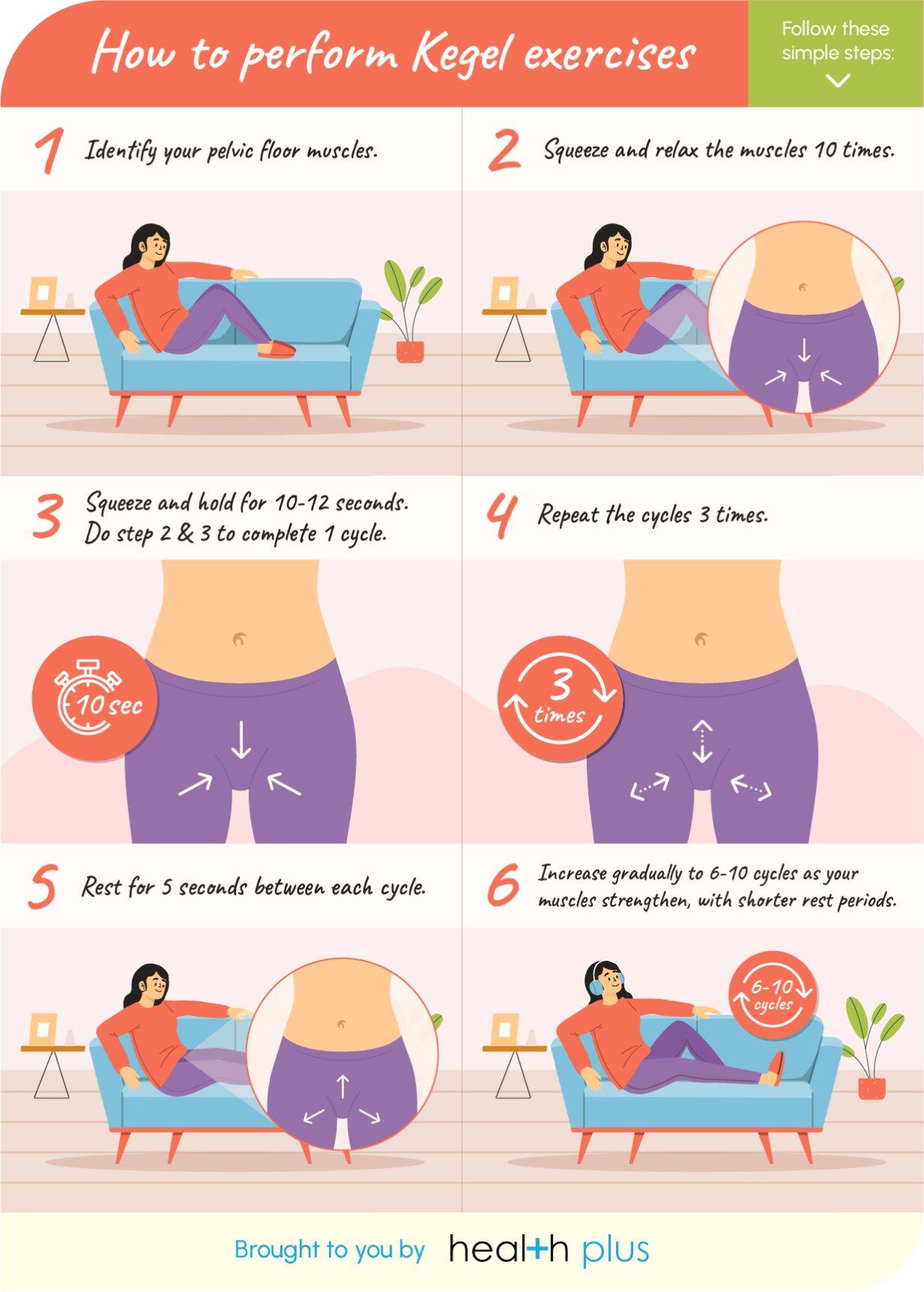
Now that you know how to find the muscles, let’s talk about the kegel exercise technique. Doing them correctly is key to getting the kegel benefits.
Basic Kegel Exercise Steps
Here is the basic way to do a Kegel exercise:
- Get Ready: Find a comfortable place to sit or lie down. At first, lying down might be easiest. Your muscles are relaxed.
- Find Your Muscles: Locate your
pelvic floor musclesusing one of the methods above or just remembering the feeling. - Squeeze: Squeeze the
pelvic floor muscles. Pull them up and in. Imagine you are trying to stop pee and stop gas at the same time. - Hold: Hold the squeeze for a few seconds. Start with just 2 or 3 seconds.
- Release: Slowly let go of the squeeze. Relax the muscles completely.
- Rest: Rest for the same amount of time you held the squeeze. If you held for 3 seconds, rest for 3 seconds.
- Repeat: Do this squeeze, hold, release, and rest many times. This is one set of Kegels.
Making the Hold Longer
As your muscles get stronger, you can hold the squeeze for longer. Try to work up to holding for 10 seconds.
- Squeeze and pull up.
- Hold for a count of 10.
- Slowly release.
- Rest for a count of 10.
This is a good goal, but it takes time to get there. Start slow and build up.
How Many and How Often?
It’s best to do many repetitions (repeats) in a set.
- Aim for 10 to 15 squeezes in one set.
- Do at least 3 sets every day.
So, you might do one set in the morning, one in the afternoon, and one in the evening. Doing them daily is important. Consistency is key for strengthening pelvic floor.
Where to Do Them
You can do Kegels almost anywhere! Once you know how they feel, you can do them:
- While sitting at your desk.
- While watching TV.
- While waiting in line.
- While driving.
- While lying in bed.
No one will know you are doing them!
Other Types of Kegels
Besides the slow squeeze and hold, there are other ways to work your pelvic floor muscles. These help different muscle fibers.
Quick Flicks
This type works on quickly tightening and releasing the muscles. This is helpful for stopping sudden leaks when you cough or sneeze (stress incontinence).
- Squeeze your
pelvic floor musclesquickly. - Let go right away.
- Do not hold the squeeze.
- Rest for just a second.
- Repeat quickly 10 to 20 times.
You can add quick flicks to your routine after you are good at the slow holds.
The Elevator
Imagine your vagina is an elevator shaft.
- Slowly lift the elevator up floor by floor, squeezing a little more at each level (hold at level 1, squeeze more for level 2, more for level 3).
- Hold at the top floor for a few seconds.
- Slowly lower the elevator floor by floor, relaxing a little at each level until you are fully relaxed.
This helps you learn to control the muscles more deeply.
When Will You See Results?
Everyone is different. But if you do your pelvic floor exercises correctly and regularly, you should start to see results in about 4 to 12 weeks. It takes time for muscles to get stronger. Don’t get sad if you don’t see changes right away. Keep doing them every day.
Keep Going!
Kegels are not a one-time fix. To keep the benefits, you need to keep doing the exercises even after you see improvement. Think of them like brushing your teeth for your pelvic floor muscles.
Avoiding Common Mistakes
Doing Kegels the wrong way won’t help and could even cause problems. Here are mistakes to watch out for:
- Squeezing the Wrong Muscles: This is the most common mistake. Do not squeeze your stomach, legs, or bottom. Focus only on the muscles that stop pee flow.
- Holding Your Breath: You should breathe normally while doing Kegels. Holding your breath puts pressure on your abdomen, which works against the exercise.
- Pushing Down: You should be pulling the muscles up and in, not pushing them down. Pushing down is like straining and can weaken the
pelvic floor muscles. - Doing Too Many Too Soon: Just like any muscle, your
pelvic floor musclescan get tired. Start with shorter holds and fewer repeats. Build up slowly to avoid tiredness or strain. - Not Being Regular: Doing Kegels once in a while won’t do much. You need to do them daily for them to work.
- Peeing While Doing Them: Do not stop and start your pee flow often. Only do this once or twice to find the muscles. Regular stop-start peeing can hurt your bladder’s normal function.
If you are not sure you are doing them right, don’t worry! Many women find it hard at first.
Getting Help If You Need It
What if you try the tips for finding kegel muscles and still aren’t sure? Or what if you do the exercises regularly but don’t see any change in your urinary incontinence or other issues?
It is a good idea to talk to a doctor or a physical therapist.
- Your Doctor: Tell your doctor about your symptoms (like pee leaks). They can check for other causes and may suggest seeing a specialist.
- Pelvic Floor Physical Therapist: These therapists are experts in
pelvic floor muscles. They can teach you exactly how to find and squeeze the muscles using special methods. They can make sure yourkegel exercise techniqueis correct. They can also create a special exercise plan just for you. Sometimes, they use tools like biofeedback, which uses sensors to show you on a screen if you are squeezing the right muscles. This can be very helpful.
Don’t be shy to ask for help. It’s very common, and there are experts who can guide you.
What About Kegel Weights?
You might have heard of kegel weights. These are small weights or cones that you put into your vagina. You then try to hold them in by squeezing your pelvic floor muscles.
- How They Work: They add a little weight or challenge for your muscles to hold onto. This can help you feel the muscles you need to squeeze. It can also add more work for your
strengthening pelvic floor. - Are They Necessary? No, you can get great results from doing Kegels without weights. Weights are an extra tool.
- When to Use Them: Some people use them after they are already good at basic Kegels and want more challenge.
- Be Careful: It’s important to use
kegel weightscorrectly. If used the wrong way, they could cause harm or make problems worse. It is often best to use them under the guidance of apelvic floorphysical therapist. They can show you the safe way to use them and the right weight to start with.
Start with basic Kegels first. Master the kegel exercise technique without weights. If you think weights might help later, talk to a healthcare provider first.
Making Kegels a Habit
Adding Kegels to your daily life makes it easier to remember to do them.
- Tie Them to Other Habits: Do them every time you brush your teeth, or every time you are stopped at a red light, or every time you check your email.
- Use an App: There are many phone apps that can remind you to do your Kegels and help you track your progress.
- Set Alarms: Set silent alarms on your phone a few times a day to remind you.
Find what works best for you to remember to do your 3 sets every day.
Table: Sample Weekly Kegel Plan
Here is a simple plan you can follow to start.
| Day | Set 1 (Morning) | Set 2 (Afternoon) | Set 3 (Evening) | Notes |
|---|---|---|---|---|
| Mon | 10 slow holds (start at 3-5 secs) | 10 quick flicks | 10 slow holds (start at 3-5 secs) | Focus on finding the right muscles. |
| Tue | 10 slow holds | 10 quick flicks | 10 slow holds | Remember to breathe normally. |
| Wed | 10 slow holds | 10 quick flicks | 10 slow holds | Make sure not to squeeze tummy/bottom. |
| Thu | 10 slow holds | 10 quick flicks | 10 slow holds | Try holding slightly longer if you can. |
| Fri | 10 slow holds | 10 quick flicks | 10 slow holds | Rest fully between squeezes. |
| Sat | 10 slow holds + 10 quick flicks | Rest or Light Activity (Walking) | 10 slow holds + 10 quick flicks | Combine types if comfortable. |
| Sun | 10 slow holds + 10 quick flicks | Rest or Light Activity (Walking) | 10 slow holds + 10 quick flicks | Good job staying consistent! |
Adjust hold times and number of repeats based on your ability. Slowly increase as you get stronger.
What If I Don’t Feel Anything?
It’s okay if you don’t feel a strong squeeze or lift at first. Finding kegel muscles takes practice for some women.
- Keep Trying: Use the methods (like stopping pee or using a finger) often at first to really get the feeling.
- Be Patient: It takes time to build awareness of these muscles.
- Talk to a Pro: If after a few weeks you still can’t feel the muscles working, ask your doctor to suggest a
pelvic floorphysical therapist. They are trained to help you connect with these muscles.
Remember, you are not alone if you find this part difficult.
Kegels During Pregnancy
Doing Kegels when you are pregnant is a great idea. They can help your body support the growing baby. They can help you manage pressure on your bladder (stress incontinence). Strong muscles may help during delivery. They can also make postpartum recovery easier.
- How to Do Them: The
kegel exercise techniqueis the same. Find the muscles, squeeze, hold, release, repeat. - Listen to Your Body: If doing them feels uncomfortable at any point during pregnancy, stop and talk to your doctor.
Kegels are a simple, safe way to help your body prepare for and recover from birth. They are an important part of strengthening pelvic floor during this time.
Kegels and Sex
Strong pelvic floor muscles can make sex better for many women.
- Increased Sensation: When the muscles are strong, they can squeeze more tightly during sex. This can feel good for both you and your partner.
- Easier Orgasm: Some women find it easier to reach orgasm when their
pelvic floor musclesare strong and they can control them. - Less Pain: For some types of pain during sex, relaxing the
pelvic floor musclesis key. While Kegels are about squeezing, learning to control these muscles also means learning to relax them. Apelvic floorphysical therapist can help with this.
So, working on strengthening pelvic floor can have positive effects on your sexual health and pleasure.
Kegels for Life
Your pelvic floor muscles change over time. Childbirth, aging, and changes in hormone levels (like during menopause) can weaken them. This is why pelvic floor exercises are helpful throughout a woman’s life.
- Preventing Problems: Doing Kegels regularly can help prevent problems like
urinary incontinenceand prolapse from starting or getting worse later in life. - Staying Strong: Just like any other muscle group, if you don’t use your
pelvic floor muscles, they can get weak. Keeping them strong helps support your body as you age.
Think of Kegels as a long-term investment in your health and comfort.
Frequently Asked Questions (FAQ)
Here are some common questions about Kegel exercises for women.
How long should I do Kegels every day?
Aim for about 5 minutes total per day. This is typically doing 3 sets of 10-15 squeezes. A set might take 1-2 minutes depending on your hold time.
Can I do Kegels too much?
Yes. Doing too many Kegels or holding the squeeze for too long without rest can tire the muscles. This can lead to muscle pain or make symptoms like urinary incontinence worse. Stick to the suggested number of sets and repeats. Rest between squeezes and between sets.
Can men do Kegel exercises?
Yes! Men also have pelvic floor muscles. Kegels can help men with bladder control, bowel control, and sexual health issues. The technique is similar.
Do Kegels help with back pain?
Sometimes. The pelvic floor muscles work with your deep tummy and back muscles. Strengthening pelvic floor can improve core stability, which can help some types of lower back pain.
I feel pain when doing Kegels. What should I do?
Stop doing the exercises. Pain is a sign that something is not right. You might be squeezing the wrong muscles, pushing down, or your muscles might be too tight already. See a doctor or a pelvic floor physical therapist.
I leak pee when I cough or sneeze. Will Kegels help?
Yes, absolutely. This is stress incontinence, and pelvic floor exercises are the main treatment doctors recommend for it. Doing the quick flick Kegels is very helpful for these sudden moments of pressure.
I just had a baby. When can I start Kegels?
You can often start doing gentle Kegels within a few days of giving birth, as long as it doesn’t cause pain. Start very slowly. If you had a difficult birth or tearing, talk to your doctor before you start. Kegels are a big part of postpartum recovery.
Should I use Kegel weights?
You don’t need weights to do Kegels. Many women get great results without them. If you are thinking about using kegel weights, it’s best to talk to a pelvic floor physical therapist first. They can show you how to use them safely and correctly.
In Closing
Doing pelvic floor exercises correctly can make a big difference in your health and comfort. They help with issues like urinary incontinence, especially stress incontinence. They are key for postpartum recovery and strengthening pelvic floor throughout life.
Remember the main steps: finding kegel muscles, using the correct kegel exercise technique (squeeze, hold, release), doing enough repeats and sets, and being consistent. Don’t squeeze the wrong muscles. Breathe normally. Pull up and in, don’t push down.
If you have trouble finding the muscles, aren’t sure you’re doing it right, or don’t see results, don’t hesitate to ask your doctor or a pelvic floor physical therapist for help. They can give you expert guidance.
Make Kegels a regular part of your day. Your pelvic floor muscles will thank you! It might take time, but the kegel benefits are worth the effort. Good luck!