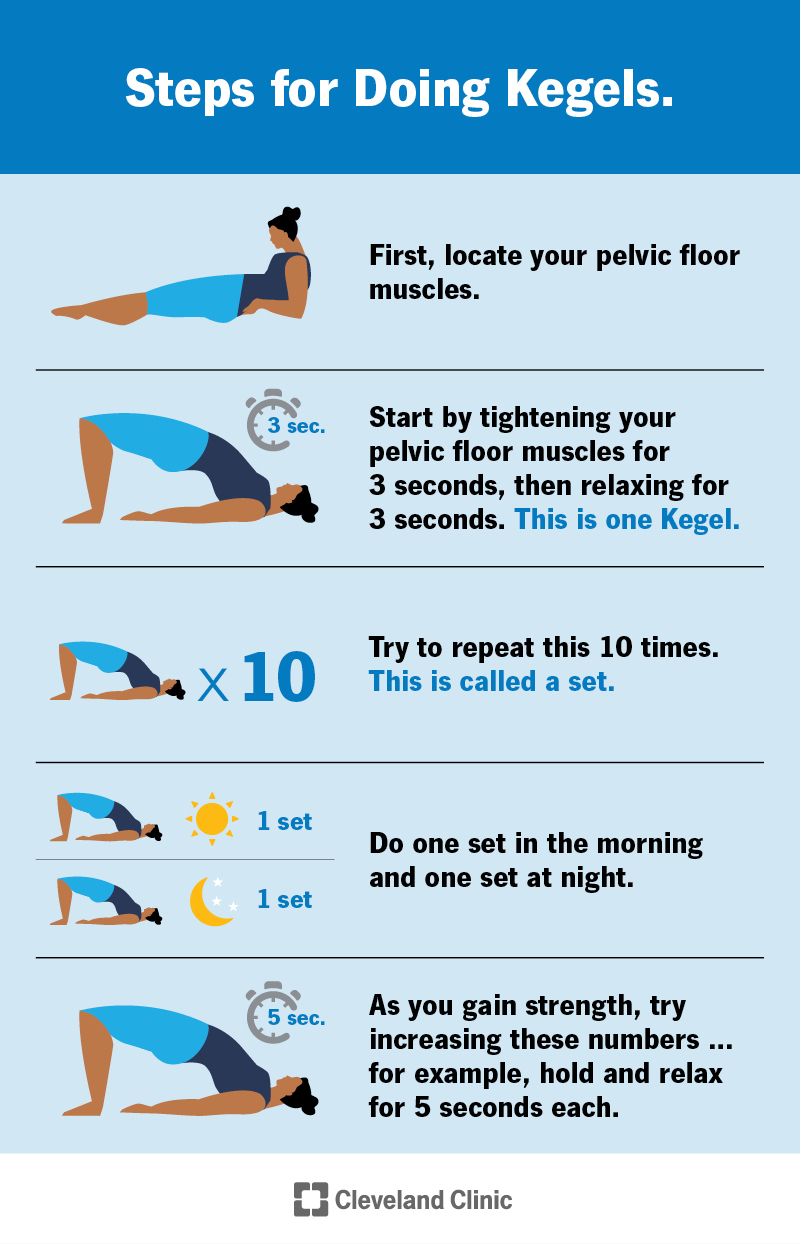
Image Source: my.clevelandclinic.org
How To Do Pelvic Floor Exercises for Strong Pelvic Health
Do you wonder about exercises that help with bladder control or maybe you’ve heard of Kegel exercises but don’t know what they are or how to do them? Pelvic floor exercises, often called Kegel exercises, are simple squeeze-and-release movements you can do to make the muscles under your pelvis stronger. These muscles are very important for things like stopping leaks when you cough or laugh, supporting your organs, and even improving sexual health. People of all ages and genders can benefit from doing these exercises, especially if they have symptoms like leaking pee, a feeling of heaviness down below, or trouble holding in gas. Doing Kegel exercises regularly can help fix or prevent these problems and lead to stronger pelvic health.
Comprehending the Pelvic Floor Muscles
What exactly are these pelvic floor muscles? Think of them as a hammock or a sling made of muscles and tissues. This hammock stretches across the bottom of your pelvis, from your tailbone at the back to your pubic bone at the front. It also goes from one sitting bone to the other.
These muscles have big jobs:
* They support your organs, like your bladder, bowels, and uterus (for women). They keep these organs from pressing down too much or falling out of place.
* They wrap around the tubes that leave your body – the urethra (where pee comes out) and the anus (where poop comes out). By squeezing these muscles, you can close off these tubes. This helps you control when you pee, poop, or pass gas.
* They play a part in sexual function for both men and women.
When these muscles are strong and work well, they do their jobs easily. But if they get weak, they can’t hold things up or close things off as well. This can cause problems that make life uncomfortable.
Why Pelvic Floor Strength Matters
Why should you care about having strong pelvic floor muscles? A strong pelvic floor is key to avoiding many common and often embarrassing issues.
Weak pelvic floor muscles can lead to specific problems:
* Urinary Incontinence: This means you leak pee by accident. It can happen when you cough, sneeze, laugh, jump, or lift something heavy (called stress incontinence). It can also happen if you suddenly feel a strong urge to pee and can’t make it to the toilet in time (called urge incontinence). Weak muscles can make both types worse. This is a very common reason people start doing Kegel exercises.
* Pelvic Organ Prolapse: This happens when one or more of your pelvic organs (like the bladder, uterus, or rectum) drop down into the vagina or press against the vaginal wall. It can feel like a heaviness or bulging down there. In some cases, it can even cause pain or problems with sex. Strong pelvic floor muscles help hold these organs in place.
* Fecal Incontinence: This is leaking poop or not being able to control gas. The pelvic floor muscles help close off the anus. If they are weak, this control is harder.
* Sexual Problems: For women, strong muscles can help with sensation and make orgasms stronger. For men, they can help with erections and control during ejaculation. Pain during sex can sometimes be linked to pelvic floor issues (though this can be from muscles being too tight, not just weak).
Many people experience weak pelvic floor symptoms after events that put strain on the area. These events include:
* Pregnancy and childbirth (especially vaginal birth).
* Getting older (muscles naturally lose some strength).
* Weight gain or obesity.
* Frequent coughing (from smoking, asthma, or bronchitis).
* Frequent heavy lifting.
* Surgery in the pelvic area (like prostate surgery in men).
* Constipation and straining to poop.
The benefits of Kegel exercises are clear when you look at these problems. Doing Kegels can:
* Improve or stop urinary incontinence.
* Help prevent or reduce pelvic organ prolapse.
* Improve bladder control.
* Help with bowel control.
* Improve sexual feeling and function.
* Support your core and lower back.
Regular Kegel exercises are a simple, non-surgical way to take control of your pelvic health and prevent these issues or make them much better.
Discovering Your Pelvic Floor Muscles
Before you can do Kegel exercises, you need to know which muscles to squeeze. This is a very important first step. Many people accidentally squeeze other muscles, like their stomach, bottom, or thigh muscles. Squeezing the wrong muscles won’t help your pelvic floor.
Here is how to find pelvic floor muscles in a few simple ways:
Method 1: Stopping the Flow of Pee
* The easiest way for most people to find pelvic floor muscles is while peeing.
* When you are on the toilet, start peeing.
* Then, try to stop the flow of pee mid-stream.
* The muscles you use to do this are your pelvic floor muscles.
* You should feel a squeeze and a lift around the area where the pee comes out.
* Important: Only use this method to find the muscles. Do not stop and start your pee flow regularly as an exercise. Doing this often can actually weaken the bladder or cause problems with emptying it fully. Just use it one time to get the feeling.
Method 2: Feeling the Squeeze
* Lie down or sit comfortably.
* Pretend you are trying to stop yourself from passing gas. You should feel a squeeze around your anus.
* Now, pretend you are trying to stop yourself from peeing. You should feel a squeeze around your urethra (the tube pee comes out of).
* Try to squeeze both areas at the same time. You should feel a lifting or tightening inside your pelvis.
* Place your fingers lightly on the skin between your anus and scrotum (for men) or on the skin between your anus and vagina (for women). When you squeeze the pelvic floor muscles, you should feel a gentle lift or pull inward. You should not feel your stomach or butt muscles tightening.
Method 3: Using a Finger (Mainly for Women)
* With clean hands, gently insert one or two fingers into your vagina.
* Try to squeeze your pelvic floor muscles as if you are stopping pee.
* You should feel the muscles tighten and gently squeeze around your fingers. You should also feel a lift upward inside your pelvis.
Method 4: Using a Mirror (Mainly for Women)
* Use a hand mirror to look at the area between your vagina and anus (the perineum).
* When you squeeze your pelvic floor muscles, you should see the skin in this area pull inward slightly.
Once you have felt the correct muscles, try to squeeze only those muscles. Relax your stomach, bottom, and leg muscles. Don’t hold your breath. Just focus on the squeeze and lift feeling inside your pelvis. It takes a little practice to isolate these muscles. Don’t worry if you can’t do it perfectly at first. Just keep trying to feel that squeeze and lift.
How to Do Pelvic Floor Exercises (Kegels)
Okay, you know how to find the muscles. Now, let’s talk about how to do pelvic floor exercises, or Kegels, correctly. Consistency and correct form are more important than squeezing as hard as you can.
Here are the basic steps for performing Kegel exercises:
Step 1: Find the Right Position
* You can do Kegels in almost any position, but it’s often easiest to start by lying down. This way, gravity isn’t working against your weak muscles.
* Lie on your back with your knees bent and feet flat on the floor.
* As you get stronger, you can try sitting in a chair or standing up.
Step 2: Empty Your Bladder
* It’s best to do Kegel exercises with an empty bladder. A full bladder can make the exercise uncomfortable or even make you pee a little.
Step 3: Perform the Squeeze
* Breathe in gently.
* As you breathe out, squeeze your pelvic floor muscles.
* Remember that feeling of stopping pee and gas at the same time? Do that squeeze.
* Focus on lifting the muscles up and inward, towards your belly button.
* Make sure you are only squeezing the pelvic floor muscles. Your stomach, bottom, and thigh muscles should stay relaxed.
Step 4: Hold the Squeeze
* Once you are squeezing, hold the contraction.
* Start by holding for just a few seconds, like 2 or 3 seconds.
* As your muscles get stronger, gradually increase the hold time. Work up to holding for 10 seconds.
Step 5: Relax Completely
* After you hold the squeeze, release the muscles completely.
* Let go of all the tension in your pelvic floor.
* It’s just as important to relax the muscles as it is to squeeze them. Letting go allows the muscles to rest and get ready for the next squeeze.
* Rest for the same amount of time you held the squeeze (e.g., rest for 3 seconds if you held for 3 seconds).
Step 6: Repeat
* This is one repetition: Squeeze, Hold, Relax.
* Do a set of these repetitions. Aim for 10 to 15 repetitions in one set.
* Try to do at least 3 sets of 10-15 repetitions each day. This means doing 30 to 45 Kegels daily.
Step 7: Maintain Regularity
* Do your sets of Kegels every day.
* Consistency is key. You likely won’t see results overnight. It can take several weeks or even a few months of daily practice to notice improvements in bladder control or other symptoms.
Remember to breathe normally while you do the exercises. Don’t hold your breath. Just focus on the gentle, controlled squeeze and lift.
Different Types of Pelvic Floor Exercises
Once you’re comfortable with the basic squeeze-and-hold, you can add variations to work the muscles in different ways. Pelvic floor exercises often combine quick squeezes and longer holds.
1. Short Holds (Quick Flicks)
* These work the muscles needed for sudden support, like when you cough or sneeze.
* Squeeze your pelvic floor muscles quickly.
* Immediately release the squeeze.
* Don’t hold it for a long time. It’s just a fast squeeze and let go.
* Do 10 to 20 of these quick flicks in a set.
2. Long Holds
* These work the muscles for endurance and sustained support, important for overall bladder control and preventing prolapse.
* Squeeze your pelvic floor muscles and lift them up.
* Hold the squeeze for as long as you comfortably can, aiming to work up to 10 seconds.
* Release the squeeze completely and rest for the same amount of time.
* Do 10 to 15 of these long holds in a set.
Combining the Types:
A good pelvic floor workout often includes both types of contractions. For example, a typical set might look like this:
* 10 quick flicks
* Rest for a moment
* 10 slow holds (holding each for 5-10 seconds, with a rest of the same length between holds)
* Repeat this set 3 times a day.
Listen to your body. Don’t push yourself too hard, especially when you start. If your muscles feel tired, take a break. It’s better to do fewer correct squeezes than many incorrect ones.
Making Kegels Part of Your Day
Finding time to do Kegel exercises every day can be tricky. But they are easy to do anywhere, anytime, and nobody else will know you’re doing them!
Here are some ideas to help you remember and fit them into your routine:
* Link them to daily tasks: Do a set while brushing your teeth, washing dishes, sitting at red lights, or waiting in line.
* Set reminders: Use your phone to set reminders several times a day.
* Do them during downtime: Squeeze while watching TV, reading a book, or listening to music.
* Connect them to bathroom breaks: After you empty your bladder, do a set of Kegels.
* Make it a habit: Treat your Kegels like any other healthy habit, like taking vitamins or exercising.
The goal is to make them automatic. You don’t need special equipment or a lot of space. Just the ability to focus on those inner muscles for a few minutes spread throughout the day.
Common Mistakes to Avoid
Doing Kegel exercises the wrong way won’t help and might even cause problems. Watch out for these common mistakes:
- Holding Your Breath: You should breathe normally while doing Kegels. Holding your breath can increase pressure in your abdomen, which works against strengthening the pelvic floor.
- Using Other Muscles: Don’t squeeze your stomach, butt, or thigh muscles. Focus only on the pelvic floor lifting up and inward. If you feel your belly pushing out or your bottom clenching hard, you’re using the wrong muscles.
- Pushing Down: You should feel a squeeze and a lift up and in, not a push down or out. Pushing down is the opposite of what you want to do and can weaken the muscles.
- Doing Too Many at Once: Doing too many repetitions or sets, or squeezing too hard, can tire out the muscles. This makes them less effective and can even cause soreness. It’s better to do 3 sets spread out than trying to do 100 all at once.
- Not Relaxing Completely: The relaxation phase is just as important as the squeeze. Allow the muscles to fully release between contractions. This helps them recover and get stronger.
- Doing Kegels While Peeing (Except to Find Muscles): As mentioned before, stopping and starting your urine flow regularly can confuse your bladder and sphincter muscles and potentially lead to problems emptying your bladder fully. Only use this once or twice to identify the muscles.
If you’re unsure if you’re doing them correctly, don’t hesitate to seek help. A doctor or a pelvic floor physical therapist can check your technique.
Pelvic Floor Exercises for Specific Groups
While the basic how to do pelvic floor exercises is the same for everyone, there are specific reasons why certain groups benefit greatly.
Kegel Exercises for Women
- Pregnancy: Pregnancy puts extra weight and strain on the pelvic floor. Doing Kegel exercises during pregnancy can help support the growing uterus, prevent or reduce urinary incontinence, and potentially make labor and recovery easier.
- Postpartum: Childbirth can stretch and sometimes injure the pelvic floor muscles. Starting Kegels soon after birth (get the OK from your doctor first, especially if you had stitches) is crucial for recovery, regaining bladder control, and supporting organs.
- Menopause: Lower hormone levels during menopause can cause pelvic floor tissues to become thinner and weaker. Regular Kegel exercises can help counter these effects and prevent problems like urinary incontinence and pelvic organ prolapse.
- General Health: For women of all ages, strong pelvic floor muscles contribute to good bladder control, prevent pelvic organ prolapse, and can improve sexual health and sensation.
Kegel Exercises for Men
- After Prostate Surgery: Surgery for prostate cancer, especially removal of the prostate gland (prostatectomy), can often lead to urinary incontinence. Kegel exercises for men are a standard part of recovery. Starting them before surgery is often recommended. Strengthening the muscles that control the urethra helps regain bladder control.
- Bladder Control: Men can also experience urinary incontinence due to aging, nerve conditions, or other issues. Kegels help strengthen the external sphincter muscle, which helps control the flow of urine.
- Bowel Control: Kegels can help men improve control over gas and bowel movements by strengthening the muscles around the anus.
- Sexual Function: Some men find that stronger pelvic floor muscles help with erectile function and can improve control during ejaculation.
The technique for Kegel exercises for men is the same as for women: squeeze and lift the muscles you use to stop pee and gas.
Grasping the Benefits Over Time
It’s important to have realistic expectations. You won’t likely see a huge difference in your weak pelvic floor symptoms after just one day or even one week of doing Kegel exercises.
Here’s what you should know about seeing results:
* Consistency is Key: You must do them regularly, ideally every day or most days of the week.
* Takes Time: It usually takes several weeks, often 6-12 weeks, of consistent daily practice before you start to notice clear improvements.
* Keep Going: The benefits of Kegel exercises continue as long as you keep doing them. If you stop, your muscles may weaken again, and symptoms could return.
* Not a Cure-All: While Kegels are very helpful for many people, they don’t fix every pelvic floor problem. If your symptoms are severe or don’t get better with Kegels, you might need other treatments.
Think of Kegels like going to the gym for any other muscle group. You don’t build strong biceps after one workout. It takes time, effort, and regular practice to build strength. Be patient with yourself and stick with it. Many people find that with consistent effort, their bladder control gets much better, the feeling of heaviness from pelvic organ prolapse lessens, and their overall pelvic health improves.
When to Seek Help
While Kegel exercises are safe and helpful for many people, they are not the answer to every pelvic floor issue. Sometimes, you need extra help.
Consider seeing a healthcare professional if:
* You are unsure if you are doing Kegels correctly.
* You don’t notice any improvement in your weak pelvic floor symptoms after 3-4 months of doing Kegels regularly and correctly.
* Your symptoms (like urinary incontinence or feeling of prolapse) get worse.
* You experience pain in your pelvic area, especially when trying to do Kegels or during sex. Sometimes the pelvic floor muscles are too tight instead of weak, and Kegels are not the right treatment in that case.
* You have severe symptoms like constant leaking, significant prolapse where tissue bulges outside the body, or difficulty emptying your bladder or bowels completely.
A doctor can check for other causes of your symptoms. They might recommend seeing a specialist, such as a urologist (for bladder problems), a gynecologist (for women’s pelvic health), or a colorectal surgeon.
A pelvic floor physical therapist is a specialist trained to assess and treat pelvic floor problems. They can:
* Check if you are using the correct muscles.
* Help you learn how to find pelvic floor muscles if you are struggling.
* Teach you how to do Kegels properly.
* Use tools like biofeedback (where sensors show you on a screen if you are squeezing the right muscles) to help you learn.
* Figure out if your muscles are weak or too tight.
* Create a personalized exercise plan for you.
* Offer other treatments if needed.
Seeing a pelvic floor physical therapist is one of the most effective steps you can take if you are having trouble with Kegels or your symptoms are not improving.
Maintaining Strong Pelvic Health
Doing Kegel exercises is a cornerstone of good pelvic health, but other things you do also matter.
Here are some tips for keeping your pelvic floor healthy:
* Avoid Straining: Try not to strain when having a bowel movement. If you are constipated, eat more fiber and drink more water. Get treatment for long-term coughs. Avoid heavy lifting or lift with proper form (bend your knees, keep your back straight, exhale on the lift).
* Manage Your Weight: Keeping a healthy weight reduces pressure on your pelvic floor muscles.
* Drink Enough Water: This helps prevent constipation and keeps your bladder healthy. Limit drinks that can irritate the bladder, like caffeine, alcohol, and fizzy drinks, if they make your incontinence worse.
* Avoid “Just in Case” Peeing: Don’t go to the toilet to pee just because you are going out. Only go when your bladder feels full. Emptying your bladder too often can make it hold less over time.
* Pee with Proper Posture: Sit fully on the toilet seat (don’t hover). Lean slightly forward and rest your hands on your thighs. Relax your pelvic floor muscles completely to allow your bladder to empty fully. Don’t push or strain to pee.
* Regular Exercise: Keeping your whole body active supports overall health, including the pelvic floor. Low-impact exercises are generally good.
By combining regular Kegel exercises with these healthy habits, you give your pelvic floor muscles the best chance to stay strong and healthy for life.
Frequently Asked Questions (FAQ)
h4: How often should I do Kegel exercises?
Most experts suggest doing 3 sets of 10-15 repetitions (both quick and slow holds) every day. You can spread these sets out throughout the day.
h4: How long does it take to see results from Kegels?
It usually takes 6 to 12 weeks of doing the exercises correctly and consistently to start noticing improvement in symptoms like urinary incontinence.
h4: Can I do Kegels while pregnant?
Yes! Doing Kegel exercises during pregnancy is highly recommended. It can help support your pelvic floor, prevent or reduce urinary incontinence during pregnancy and after birth, and may help with recovery.
h4: Can men benefit from Kegel exercises?
Absolutely. Kegel exercises for men are very effective for improving bladder control, especially after prostate surgery, and can help with bowel control and potentially sexual function.
h4: What if I don’t feel like I’m squeezing the right muscles?
This is very common when starting. Try the tips in the “Discovering Your Pelvic Floor Muscles” section. If you’re still unsure after trying for a week or two, see a doctor or a pelvic floor physical therapist. They can help you find the muscles and learn the correct technique.
h4: Can doing too many Kegels be harmful?
Yes, doing too many or squeezing too hard can tire the muscles out and make them less effective. In rare cases, it could potentially cause muscle soreness or tightness. Stick to the recommended number of sets and reps.
h4: Do Kegel exercises help with pelvic organ prolapse?
Yes, Kegel exercises can help prevent pelvic organ prolapse or reduce symptoms for those who already have it, especially mild to moderate prolapse. Strong muscles provide better support for the organs. However, they are not a cure for severe prolapse, which might require other treatments.
Conclusion
Kegel exercises are a simple, powerful tool for maintaining and improving pelvic health. By learning how to do pelvic floor muscles exercises correctly and doing them regularly, you can take control of issues like urinary incontinence, prevent or reduce pelvic organ prolapse, and improve your quality of life. Whether you are doing Kegel exercises for women or Kegel exercises for men, the technique involves finding the right muscles – the ones that stop the flow of pee and hold back gas – and then squeezing, holding, and relaxing them. Make these easy exercises a part of your daily routine. Be patient, be consistent, and don’t be afraid to ask for help from a healthcare professional if you need guidance. Your pelvic floor muscles do a lot for you every day; giving them a little attention can make a big difference.