So, how can you exercise your forearm effectively? You can do this by working the muscles that bend your wrist (flexors) and the muscles that straighten your wrist (extensors). Using simple tools like weights or bands helps. Doing different moves makes your forearms stronger and bigger. This also makes your grip better. Grip strength matters a lot for lifting weights, playing sports, and doing everyday things. Let’s look at the best ways to train these important muscles.
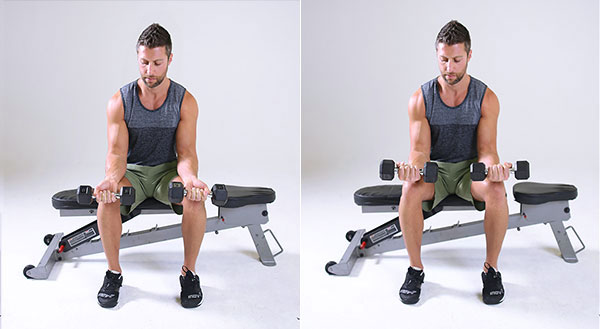
Image Source: bod-blog-assets.prod.cd.beachbodyondemand.com
Why Strong Forearms Matter
Your forearms are the lower part of your arm. They go from your elbow to your wrist. Many small muscles are in your forearms. These muscles help you move your wrist, hand, and fingers.
Strong forearms are helpful for many things. They make your grip strong. A strong grip helps you lift heavier weights. Think about deadlifts or pull-ups. Your grip is often the first thing to give out. Better grip means you can lift more and get stronger overall.
Strong forearms also help in sports. Tennis, baseball, rock climbing, and martial arts all need good grip and wrist power. Even everyday tasks like carrying heavy bags or opening a tight jar are easier with strong forearms.
Also, strong forearms can make your arms look more balanced. If you work your biceps and triceps, adding forearm work helps your arms look complete.
Learning About Forearm Muscles
Your forearms have many muscles. We can think of them in two main groups.
Muscles on the Palm Side
These muscles bend your wrist down toward your palm. They also help you close your hand tightly. These are called forearm flexor exercises.
Muscles on the Back of Your Hand Side
These muscles straighten your wrist. They bend it back toward the top of your hand. These are called forearm extensor exercises.
Working both groups is important. This helps your forearms get strong all around. It also helps keep your wrists healthy.
Best Exercises For Your Forearms
You can use different tools to work your forearms. Dumbbells, barbells, resistance bands, and even your own body weight work well. Here are some great moves. These are some of the best forearm exercises.
Wrist Curls
This is a classic move for the forearm flexors. It works the muscles that bend your wrist down.
How to Do Wrist Curls
- Sit on a bench or chair.
- Hold a dumbbell in each hand. You can also use one dumbbell or a barbell.
- Rest your forearms on your legs. Let your wrists hang off the edge of your knees. Your palms should face up.
- Let the weight pull your hands down. Feel a stretch in your forearm.
- Now, curl your wrist up. Lift the weights using only your hands and wrists.
- Hold for a quick second at the top. Squeeze your forearm muscles.
- Slowly lower the weights back down. Let your wrists drop again.
- Repeat this move for reps.
Tips for Wrist Curls
- Keep your forearms still on your legs. Only your hands and wrists should move.
- Use a weight you can control. Don’t let the weights drop too fast.
- You can also do this while kneeling. Rest your forearms on a bench in front of you.
Reverse Wrist Curls
This move works the forearm extensors. These muscles straighten your wrist. They balance the work from wrist curls.
How to Do Reverse Wrist Curls
- Sit on a bench or chair.
- Hold a dumbbell in each hand. You can also use one dumbbell or a barbell.
- Rest your forearms on your legs. Let your wrists hang off the edge of your knees. Your palms should face down this time.
- Let your hands hang down. Feel a stretch on the back of your forearm.
- Now, curl your wrist up. Lift the weights toward the sky. Use only your hands and wrists.
- Hold briefly at the top.
- Slowly lower the weights back down. Let your wrists drop again.
- Repeat for reps.
Tips for Reverse Wrist Curls
- Use lighter weights than you do for regular wrist curls. The extensor muscles are usually weaker.
- Keep the movement slow and controlled.
- Again, keep your forearms steady. Only move your hands.
These wrist curl exercises with dumbbells are great ways to start working your forearms.
Hammer Curls
This exercise works your biceps. But it also works a forearm muscle called the brachioradialis. This muscle is on the thumb side of your forearm near the elbow. Working it can help build bigger forearms.
How to Do Hammer Curls
- Stand or sit. Hold a dumbbell in each hand.
- Let your arms hang at your sides. Your palms should face your body. Your thumbs should point forward. This is like holding a hammer.
- Keep your elbows close to your body.
- Curl the weights up toward your shoulders. Keep your palms facing your body the whole time.
- Squeeze your biceps and forearm at the top.
- Slowly lower the weights back down.
- Repeat for reps.
Tips for Hammer Curls
- Don’t swing the weights. Use your muscles to lift them.
- Focus on the muscle working. Feel the forearm helping the biceps.
Farmer’s Walk
This is a great grip strength exercise. It works your entire body, but puts a lot of demand on your forearms and grip.
How to Do a Farmer’s Walk
- Get two heavy weights. These can be dumbbells, kettlebells, or special farmer’s walk handles.
- Stand between the weights.
- Bend your knees and back straight. Pick up the weights.
- Stand tall. Hold the weights at your sides. Keep your shoulders back. Your chest should be up.
- Walk a set distance or for a set time. Walk with short, quick steps.
- Keep holding the weights tightly. Try not to let them swing too much.
- Put the weights down carefully. Bend your knees and keep your back straight.
Tips for Farmer’s Walk
- Use the heaviest weight you can hold for the distance or time.
- Focus on keeping a strong grip. Squeeze the handles.
- Keep your core tight. This helps your body stay stable.
Dead Hangs
This is another simple but very effective grip strength exercise. It builds endurance in your grip muscles.
How to Do Dead Hangs
- Find a pull-up bar or sturdy overhead bar.
- Jump up or step up to reach the bar.
- Grab the bar with both hands. Your palms can face away or toward you. Use an overhand grip (palms away) for a standard hang.
- Let your body hang freely. Your feet should not touch the ground.
- Hold on for as long as you can.
- When your grip gives out, let go safely.
Tips for Dead Hangs
- Start by holding for short times. Try 10-15 seconds. Build up as you get stronger.
- You can also do weighted dead hangs. Hold a dumbbell between your feet or wear a weight belt. This makes it harder.
- Focus on squeezing the bar tightly.
Plate Pinches
This exercise really works the part of your grip that pinches things. It’s excellent for overall grip strength exercises.
How to Do Plate Pinches
- Get two weight plates. Flat plates with no rim work best.
- Put the smooth sides of the plates together.
- Hold the plates between your thumb and fingers. Pinch them together tightly.
- Lift the plates off the ground. Let your arms hang at your sides.
- Hold the plates for as long as you can.
- Put the plates down carefully.
Tips for Plate Pinches
- Start with light plates. Even 2.5 lb or 5 lb plates can be hard at first.
- Try to pinch with just your fingers and thumb. Don’t let the plates rest on your palm.
- You can also walk while holding the plates. This is a tough challenge.
Zottman Curls
This exercise works your biceps, but it also hits your forearms in two ways. It works the biceps when you curl up. It works the forearm extensors when you turn your wrists on the way down.
How to Do Zottman Curls
- Stand or sit. Hold a dumbbell in each hand.
- Let your arms hang straight down. Your palms should face forward.
- Curl the weights up to your shoulders. This is like a regular biceps curl.
- At the top, turn your wrists. Your palms should now face down. This is like holding the dumbbells the way you would for reverse wrist curls.
- Slowly lower the weights back down with your palms facing down. Keep your elbows close to your body.
- At the bottom, turn your wrists back. Your palms should face forward again.
- Repeat the move.
Tips for Zottman Curls
- Control the movement, especially on the way down. The wrist turn is key here.
- Don’t use weights that are too heavy. Focus on the form and the wrist turn.
Resistance Band Forearm Exercises
Resistance bands are great for working your forearms. They give constant tension. They are easy on your joints. They are also portable.
How to Do Resistance Band Forearm Curls (Flexors)
- Sit on a chair.
- Step on one end of a resistance band with your foot.
- Hold the other end of the band in the hand on the same side.
- Rest your forearm on your leg. Your palm should face up. Your wrist should hang off your knee.
- Curl your wrist up against the band’s pull.
- Slowly let your wrist go back down.
- Repeat for reps. Do this on both arms.
How to Do Resistance Band Reverse Forearm Curls (Extensors)
- Sit on a chair.
- Step on one end of the resistance band with your foot.
- Hold the other end of the band in the hand on the same side.
- Rest your forearm on your leg. Your palm should face down. Your wrist should hang off your knee.
- Curl your wrist up against the band’s pull.
- Slowly let your wrist go back down.
- Repeat for reps. Do this on both arms.
How to Do Resistance Band Pronation and Supination
These moves work the muscles that twist your forearm.
- Sit or stand. Hold a resistance band handle in one hand.
- Keep your elbow bent at your side.
- Hold your forearm straight out in front of you. Your palm can face down or up to start.
- Hold the band end. The band should pull from the side. You might need to step on the band or loop it around something.
- Twist your forearm. Turn your palm from facing down to facing up (supination). Or turn it from facing up to facing down (pronation). Do this against the band’s pull.
- Slowly twist back to the start.
- Repeat for reps. Make sure the band pulls sideways to resist the twist.
These resistance band forearm exercises add good variety to your workout.
Leverage Holds
This exercise uses a weight on the end of a bar or handle. It works the forearms very hard. It is good for building strength that resists twisting and bending forces.
How to Do Leverage Holds
- You need a weight club, a sledgehammer, or a handle with a weight on one end. You can also use a dumbbell held at one end.
- Hold the handle with one hand. Keep your arm straight out in front of you.
- Hold the weight steady. Try not to let it drop or twist.
- Hold this position for as long as you can.
- You can also move the weight slowly up and down, side to side, or in circles. This works the muscles in different ways.
- Repeat on the other arm.
Tips for Leverage Holds
- Start with a light weight or a hammer with a shorter handle. This exercise is harder than it looks.
- Keep your wrist straight and strong. Don’t let it bend too much.
How To Build Bigger Forearms
Some people seem to have big forearms naturally. Others have to work harder. Genetics play a part. But you can still build bigger forearms with the right plan.
Consistency is Key
Train your forearms often. You can train them a few times a week. They are small muscles. They can often recover faster than big muscles like your legs.
Use Different Exercises
Don’t just do wrist curls. Use a mix of moves. Include forearm flexor exercises, forearm extensor exercises, and grip strength exercises. Use dumbbells, bands, and bodyweight. Variety helps work all the muscles.
Lift Hard Enough
Use weights that challenge you. For reps like 10-15, the last few reps should be hard to finish. For grip holds, try to hold until your muscles are tired.
Progressive Overload
Make your workouts harder over time. This is how muscles grow.
- Use slightly heavier weights.
- Do more reps or sets.
- Hold grip exercises for longer.
- Walk further in the Farmer’s Walk.
- Rest for shorter times between sets.
Eat Right and Rest
Your muscles need good food and rest to grow. Eat enough protein. Get enough sleep.
Putting Together A Forearm Workout Routine
You can add forearm work to your current gym plan. Here are some ways to do it.
Add to Arm Day
Many people train forearms after biceps and triceps. This works well. Your arms are already warmed up.
Add to Back Day
Back exercises like rows and pull-ups already work your grip hard. Adding forearm work after your back workout makes sense. It hits the grip and forearms when they are ready.
Do Forearms Separately
You can do a short forearm workout on its own day. Or add it to a rest day if you feel ready. Just make sure you don’t overtrain.
Sample Forearm Workout
Here is an example of a simple forearm workout routine.
| Exercise | Sets | Reps / Hold Time | Focus |
|---|---|---|---|
| Wrist Curls | 3 | 12-15 reps | Forearm Flexors |
| Reverse Wrist Curls | 3 | 12-15 reps | Forearm Extensors |
| Hammer Curls | 3 | 10-12 reps | Forearms/Biceps |
| Farmer’s Walk | 3 | Walk 30-60 secs | Grip Strength |
| Dead Hangs | 3 | Hang as long as you can | Grip Strength |
You can change this. Choose 3-5 exercises. Do 2-4 sets of each.
Warm-up First
Always warm up before working out. Do some light cardio for 5-10 minutes. Move your wrists in circles. Gently stretch your forearms. This gets blood flowing and gets your muscles ready.
Listen to Your Body
If your wrists or forearms hurt, stop. Don’t push through sharp pain. Rest if you need to.
Grasping Common Questions
People often ask questions about forearm training.
How often should I train forearms?
Two or three times a week is usually good. Give your muscles a day off between workouts.
Can I train forearms every day?
Most people should not train forearms every day. They need time to rest and grow. Overtraining can lead to injury.
Will forearm exercises help my grip strength?
Yes! Forearm exercises, especially grip strength exercises like farmer’s walks and dead hangs, will make your grip much stronger.
Do I need special equipment?
No. You can use dumbbells, barbells, bands, or even things around your house. A bucket filled with sand or rice can be used for hand and wrist exercises.
How long does it take to see results?
You might feel your grip getting stronger in a few weeks. Seeing bigger forearms might take longer, maybe a few months. It depends on how often you train and your body.
What are the best forearm exercises for mass?
To build mass (make them bigger), focus on exercises like wrist curls, reverse wrist curls, hammer curls, and Zottman curls using weights. Progressive overload is key for size.
My wrists hurt when I do forearm exercises. What should I do?
Make sure your form is correct. Don’t use weights that are too heavy. Warm up well. If pain continues, stop and see a doctor or physical therapist.
Summing It Up
Training your forearms is a great idea. It helps your grip strength. It helps with lifting and sports. It also makes your arms look stronger.
Use different exercises. Work both the muscles that bend your wrist and the muscles that straighten it. Add grip strength moves. Use tools like dumbbells, bands, or just your body weight.
Be consistent. Train hard enough, but use good form. Make your workouts harder over time. Eat well and get enough rest.
With regular training, you can improve your grip. You can build stronger, bigger forearms. Start simple and stick with it. You will see good results.