How long must you wait after eating to exercise? Most people should wait about 1 to 3 hours after a full meal before exercising. After a small snack, you might only need to wait 30 minutes to an hour. This waiting time helps your body digest food properly and avoid stomach discomfort exercising after eating. The best time to exercise after meal depends a lot on the size of the meal and the kind of exercise you plan to do. Eating before workout recommendations often suggest small, easy-to-digest snacks close to the workout, but larger meals need more digestion time before exercise. Exercising too soon after eating can cause problems like exercise after eating cramps nausea.
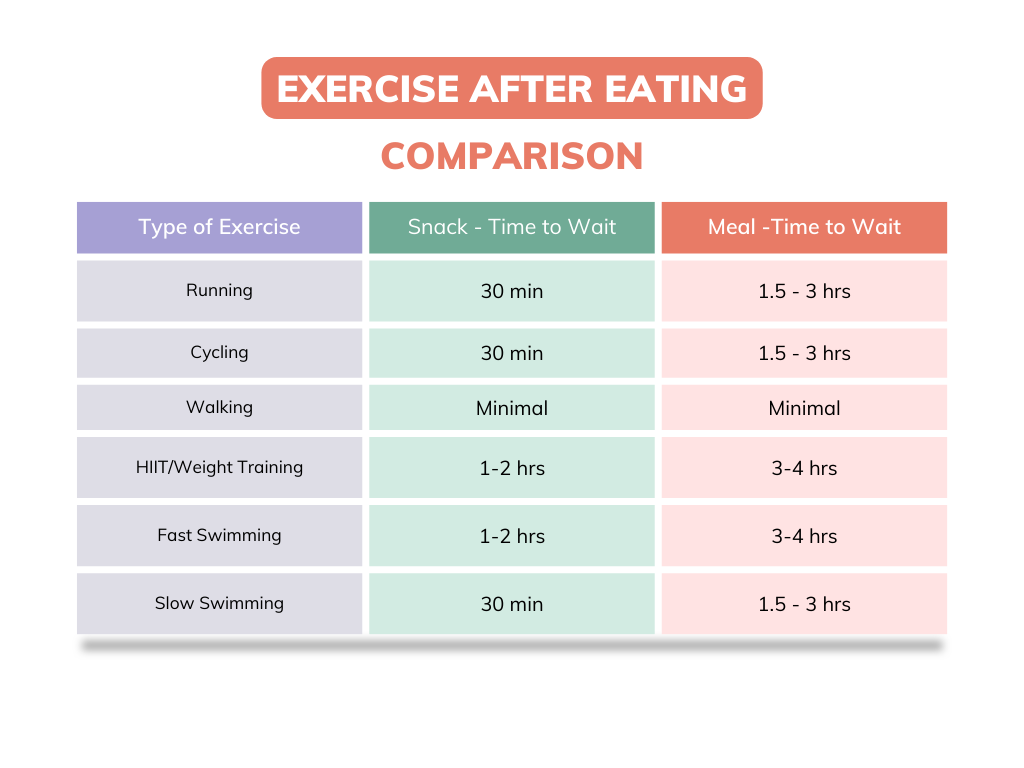
Image Source: images.squarespace-cdn.com
Why Waiting Matters
Your body works hard to break down food. When you eat, blood goes to your stomach and intestines. This blood helps your body get nutrients from the food. It’s like your digestive system needs the blood’s help to do its job. This means less blood is ready to go to your muscles.
When you exercise, your muscles need a lot of blood. This blood carries oxygen and fuel to them. If you start exercising too soon after eating, your body is trying to send blood to two places at once: your stomach for digestion and your muscles for the workout. This split causes problems.
Blood Flow During Digestion and Exercise
Think about it this way: Your body has a certain amount of blood circulating. When you’re digesting a meal, a big chunk of that blood goes to your digestive tract. This helps process the food you just ate. Your stomach and intestines are busy breaking things down and absorbing nutrients.
When you start exercising, especially hard exercise, your muscles need a lot of blood. They need oxygen and energy fast. Your heart beats faster to pump blood to them.
If you exercise right after eating, your body is in a tough spot. It’s trying to send blood to your gut and to your muscles at the same time. There isn’t enough blood to do both jobs well. This can make digestion slow down, and it can make your muscles not get enough oxygen. This is a key reason for stomach discomfort exercising after eating.
Deciphering Digestion Time Before Exercise
The time it takes to digest food before workout is not the same for everyone or for every meal. Many things change how fast your body processes food.
What Affects Digestion Time?
- What you ate: Some foods break down faster than others. Simple carbs (like white bread, fruit) are quicker. Protein and fat take much longer. Meals high in fat and fiber slow down digestion the most.
- How much you ate: A small snack goes through your system much faster than a large, heavy meal. A big meal needs more time and more blood flow to digest fully.
- You as a person: Everyone’s digestive system is a little different. Some people digest food faster than others. Your age, how active you are usually, and even stress can play a part.
- Exercise intensity: Harder exercise needs more blood flow to muscles. This means you need to wait longer after eating before doing intense activity. Light exercise might be okay sooner.
General Waiting Times
Here is a simple guide for waiting time after eating before exercise. Remember, these are just general ideas. You need to figure out what works best for you.
| Meal Size | Type of Food | Suggested Waiting Time | Exercise Intensity |
|---|---|---|---|
| Small Snack | Fruit, energy bar, slice of toast | 30 minutes to 1 hour | Light to Moderate |
| Light Meal | Small sandwich, soup, salad | 1 to 2 hours | Moderate |
| Full Meal | Pasta with sauce, chicken/rice | 2 to 3 hours or more | Moderate to High |
| Large/Heavy Meal | High fat, high protein, lots of food | 3 to 4 hours or more | Any (better to wait) |
This table gives you a starting point. For example, waiting time after eating before running might be shorter after a small, easy-to-digest snack, but you’ll need much longer after a big pasta dinner before a long run.
Eating Before Workout Recommendations
What you eat before exercising is important, not just when you eat it. The goal of eating before a workout is often to give your body energy without upsetting your stomach.
Best Foods Before Exercise (When Eaten at the Right Time)
- For Quick Energy (30-60 minutes before):
- A piece of fruit (like a banana or apple)
- A small handful of crackers or rice cakes
- A small energy bar (check sugar content)
- A little bit of sports drink
- These provide quick carbs for fuel.
- For Sustained Energy (1-2 hours before):
- Toast with jam
- Small bowl of oatmeal
- Small plain bagel
- Yogurt with a little fruit
- These have carbs that give energy for longer.
- For Longer Workouts (2-3 hours before):
- A meal with complex carbs and some protein.
- Chicken breast with rice or a sweet potato.
- Pasta with a light sauce.
- Salmon with quinoa and vegetables.
- This gives your body time to process everything and have fuel ready for a longer time.
Foods to Be Careful With Before Exercise
- High-Fat Foods: Fried foods, greasy burgers, creamy sauces. Fat takes a long time to digest. Eating too much fat before a workout is a main cause of stomach discomfort exercising after eating.
- High-Fiber Foods: Large amounts of raw vegetables, beans, lentils, bran cereals. Fiber is great for you, but it can cause gas and bloating, especially when exercising.
- Lots of Protein: While important, a very high-protein meal right before exercise can be slow to digest and might make you feel heavy.
- Spicy Foods: Can cause heartburn or stomach upset in some people.
- Sugary Drinks (not sports drinks): Soda, fruit juice. These can cause a sugar crash or stomach upset.
Eating the right kinds of food is part of the eating before workout recommendations for avoiding problems.
Exercise After Eating Cramps Nausea and Other Problems
Exercising too soon after eating is a common reason for feeling bad during a workout. The most common problems are:
- Cramps: Often felt in the stomach area or side (side stitch). This might be because blood is diverted from the diaphragm and other muscles needed for breathing and movement, or simply due to the physical presence of undigested food bouncing around.
- Nausea: Feeling sick to your stomach. This can happen because your body is trying to digest while also dealing with the physical stress of exercise.
- Bloating: Feeling full and uncomfortable in your stomach. This can happen from gas created during digestion or simply the food sitting there.
- Heartburn or Acid Reflux: Stomach acid coming back up. Lying down or bending over during some exercises can make this worse if you have food in your stomach.
- Feeling Heavy or Sluggish: You just don’t feel like you have energy because your body is busy digesting.
These issues are directly linked to the conflict between digestion and exercise needs, specifically the blood flow during digestion exercise problem we talked about.
How Exercise Intensity Changes the Waiting Game
The kind of exercise you do makes a big difference in how long you need to wait after eating.
Light Exercise
If you’re doing light activity, like a gentle walk, easy cycling, or light yoga, you might not need to wait as long. Your body doesn’t demand as much blood flow to your muscles. You could possibly do light exercise 30 minutes to an hour after a small meal or snack. Some people can even do very light activity right after eating without issues.
Moderate Exercise
This includes things like brisk walking, moderate cycling, dancing, or general gym work. For moderate exercise, it’s usually best to wait at least 1-2 hours after a light meal and 2-3 hours after a full meal. Your body needs more blood for muscles now, so giving your stomach time to empty a bit helps.
High-Intensity Exercise
This means running fast, swimming hard, lifting heavy weights, intense sports, or interval training. High-intensity exercise puts a lot of stress on your body and requires a lot of blood for your working muscles. Trying this too soon after eating is very likely to cause exercise after eating cramps nausea. You really need to wait 2-3 hours after a normal meal, and potentially 3-4 hours or more after a large or heavy meal. The waiting time after eating before running, especially fast running, is usually on the longer side of the scale.
Strength Training vs. Cardio
Does it matter if you lift weights or do cardio? Generally, high-intensity strength training requires significant blood flow to muscles, similar to intense cardio. So, the waiting times are similar for intense weightlifting and intense running. Lighter strength training might be okay sooner, like moderate cardio. The up-and-down and bouncing motion of running or jumping can sometimes feel worse on a full stomach than lifting weights, but the core issue is the blood flow conflict and the physical presence of food.
Grasping Waiting Time After Snack to Exercise
Snacks are different from meals. They are usually smaller and contain foods that are easier to digest. How long wait after snack to exercise?
- Very Small, Simple Snack (e.g., Half a banana, a few crackers): You might only need to wait 15-30 minutes. This is usually okay for a quick energy boost before a moderate workout.
- Small Snack (e.g., A whole banana, a small energy bar, a slice of toast): Wait 30 minutes to 1 hour. This gives your stomach a little time.
- Larger Snack (e.g., Yogurt, small amount of oatmeal): Wait 1 hour or a bit more. These have a bit more to digest.
The type of snack matters a lot. A handful of gummy bears (mostly simple sugar) will leave your stomach very quickly. A handful of nuts (fat and protein) will take much longer. Stick to simple carbs for quick pre-workout snacks if you’re exercising soon.
Fathoming Individual Differences and Listening to Your Body
All the times mentioned above are just guides. Your body is unique. What works for one person might not work for you.
- Listen to your body: If you feel stomach discomfort exercising after eating, you probably didn’t wait long enough, or you ate the wrong thing. Pay attention to these signals.
- Experiment: Try different waiting times and different foods before your workouts. Keep a simple log if it helps. Note what you ate, when you ate it, when you exercised, and how you felt.
- Hydration: Being well-hydrated is always important, but don’t chug a huge amount of water right before a run if your stomach is already full of food. Sip water.
- Medical Conditions: If you have digestive issues like IBS, GERD, or other stomach problems, you might need to be extra careful and wait longer. Talk to a doctor if you have concerns.
The goal is to find your personal best time to exercise after meal and your optimal eating before workout recommendations that work for you. It takes some trial and error.
Exercise Timing Around Meals: Planning Your Day
Instead of just asking “how long must you wait?”, it can be helpful to think about exercise timing around meals in the context of your whole day.
Exercising Before Eating
Some people prefer to exercise before eating anything, especially in the morning. This is often called “fasted cardio” or exercising in a “fasted state”.
- Pros: No food in the stomach, so no digestion conflict or stomach issues. Your body might use fat stores for energy (though this is debated for fat loss efficiency). It can be convenient.
- Cons: You might feel low on energy, especially for longer or harder workouts. Your performance might not be as good. There’s a slightly higher risk of feeling dizzy or lightheaded for some people.
If you exercise first thing in the morning, you don’t have to worry about digestion time before exercise. You can eat your breakfast or recovery meal after you finish.
Exercising Between Meals
This is often the easiest approach. You eat a meal, wait the appropriate time (1-3 hours), then exercise before your next meal. This gives your body time to digest the first meal and then you can refuel with the next meal afterward. This is where most people find their best time to exercise after meal.
Exercising After a Meal (with sufficient waiting)
As discussed, this requires planning. If you exercise in the late afternoon or evening, you’ll need to ensure your lunch was eaten early enough, or your pre-workout snack was timed correctly.
Planning your exercise timing around meals helps you avoid the rush and ensures you are properly fueled without the discomfort.
Common Mistakes to Avoid
- Eating a Big Meal and Exercising Soon After: This is the most common mistake leading to exercise after eating cramps nausea. Remember the blood flow conflict.
- Eating Fatty or Very High-Fiber Foods Right Before Exercising: Even if it’s a small amount, these foods are slow to digest and can cause stomach issues.
- Not Drinking Enough Water: Dehydration can also cause cramps and fatigue. Drink water throughout the day.
- Drinking Too Much Water Right Before Exercise on a Full Stomach: Sip, don’t chug, especially if you just ate.
- Copying Someone Else’s Timing: Your friend might be able to eat a full meal and run 30 minutes later, but that doesn’t mean you can. Find what works for your body.
- Trying New Foods or Timing Before an Important Event: If you have a race or big game, stick to what you know works for you regarding eating before workout recommendations and timing.
Deciphering the Science Behind the Wait
We’ve talked about blood flow, but let’s look a little deeper at why digestion time before exercise is so crucial.
When you eat, your body starts a complex process. Your stomach uses acid and enzymes to break down food. Then, the partially digested food moves into your small intestine, where most nutrients are absorbed. This process takes time and energy. Your body uses muscles in your digestive tract to move food along (peristalsis).
If you start exercising vigorously, especially activities that involve bouncing or impact (like running) or core work (like lifting weights), several things happen:
- Blood Rerouting: As mentioned, blood is pulled away from the gut and sent to your muscles. This slows down the digestive process significantly. Food sits in your stomach longer.
- Physical Movement: The bouncing and jarring from exercise can physically upset the stomach, especially if it’s full. This can lead to sloshing, discomfort, and nausea.
- Hormone Changes: Exercise causes your body to release certain hormones (like adrenaline). These hormones can affect digestion, often slowing it down.
All these factors together explain why stomach discomfort exercising after eating is so common and why waiting time after eating before running (or any intense activity) is important. Your digestive system needs relatively calm conditions to do its job efficiently. Exercise creates the opposite of calm.
How Digestion Speed Varies by Nutrient
- Carbohydrates: Simple carbs (sugars) are digested and absorbed very quickly, often within 30-60 minutes. Complex carbs (starches) take longer, maybe 1-2 hours for a moderate amount.
- Protein: Takes longer than carbs, typically 2-3 hours for a significant amount. Protein needs more complex breakdown processes.
- Fats: Take the longest to digest, often 3-4 hours or more, especially for large amounts. Fats require bile from the liver and enzymes from the pancreas and small intestine, and they move very slowly through the digestive tract.
This is why a high-fat meal requires a much longer waiting time before exercise than a meal focused on simple carbohydrates. It directly impacts digestion time before exercise.
Planning for Different Types of Workouts
Let’s look at specific scenarios for exercise timing around meals.
Early Morning Workout (Fasted or Light Snack)
- Option 1 (Fasted): Wake up and exercise. Drink water. Eat breakfast after your workout. No waiting needed before exercise.
- Option 2 (Light Snack): Wake up, have a small, easily digested carb snack (banana, toast). Wait 30-60 minutes. Then exercise. Eat breakfast after.
Midday Workout
- Eat a normal breakfast.
- Have a light lunch or main meal.
- Wait 2-3 hours.
- Exercise.
- Have a snack or smaller meal after your workout. This fits the best time to exercise after meal for many people.
Evening Workout
- Eat a normal breakfast.
- Eat a normal lunch.
- Have a substantial snack or small, easy-to-digest meal 2-3 hours before your workout (e.g., yogurt, fruit, small sandwich).
- Exercise.
- Have a recovery snack or lighter dinner after your workout.
Long Endurance Workout (e.g., Marathon Training Run)
For very long workouts (over 60-90 minutes), you might need fuel during the exercise. This means:
- Eat a larger, balanced meal 3-4 hours before starting. This gives plenty of digestion time before exercise.
- Have a small, easy-to-digest snack (mostly carbs) 30-60 minutes before starting.
- Plan to consume easily digestible carbs (gels, sports drinks, chews) during the workout as needed. Practice this during training, not race day!
- Avoid fatty or high-fiber foods close to or during the event.
This shows how exercise timing around meals becomes more complex and crucial for longer events.
Frequently Asked Questions (FAQ)
How long should I wait after eating before running?
For a casual run, 1.5 to 2 hours after a light meal or 30-60 minutes after a small snack is often enough. For a hard or long run, wait 2 to 3 hours after a full meal. Listen to your stomach; running bounces things around more than cycling or swimming.
Can I exercise immediately after eating a very small snack?
If the snack is very small and simple (like a couple of crackers or a few sips of a sports drink), some people can exercise immediately, especially if the exercise is light. However, waiting 15-30 minutes is safer to avoid any potential Stomach discomfort exercising after eating.
Why do I get cramps when I exercise after eating?
Exercise after eating cramps nausea can happen because blood is pulled away from your digestive system to your muscles. This can slow digestion and cause physical discomfort. Also, the physical act of exercising with food in your stomach can cause cramping, especially in the abdomen or side (side stitches).
Is it better to exercise on an empty stomach?
Some people prefer exercising on an empty stomach, especially for lighter workouts. It avoids digestion issues. However, for longer or harder workouts, having some fuel from a meal or snack eaten at the right time can improve performance and energy levels. It comes down to personal preference and what your body tolerates.
What should I eat if I have to exercise soon after eating?
If you must exercise soon after eating, choose very small amounts of easily digestible carbohydrates. Think a few bites of a banana, a small handful of plain crackers, or a sip of a sports drink. Avoid fat, protein, and fiber.
Does drinking water affect the waiting time?
Drinking water is good, but drinking a large amount just before exercise, especially on a full stomach, can add to discomfort. Sip water before, during, and after your workout. It doesn’t typically change the main waiting time needed for food digestion.
What are the signs I didn’t wait long enough?
Signs you didn’t wait enough include feeling sick to your stomach (nausea), burping, heartburn, feeling heavy or full, stomach cramps, or side stitches during your workout.
Wrapping Up: Finding Your Rhythm
How long must you wait after eating to exercise? There’s no single, perfect answer that fits everyone. It depends on what you ate, how much you ate, the kind of exercise you plan to do, and your own body.
The main points are:
- Give your body time to digest: Blood flow during digestion exercise is a conflict. Let your stomach do its job first.
- Small snacks need less waiting than big meals: Digestion time before exercise is shorter for simpler foods.
- Hard exercise needs more waiting than light exercise: Waiting time after eating before running (especially fast running) is longer than before a walk.
- Listen to your body: Exercise after eating cramps nausea and stomach discomfort exercising after eating are signs you need to adjust your timing or food choices.
- Plan your exercise timing around meals: Think about when you’ll eat and when you’ll exercise to find the best fit for your schedule.
- Experiment: Find the eating before workout recommendations and waiting times that work best for your performance and comfort.
By paying attention to what and when you eat, and how your body responds, you can fuel your workouts effectively and comfortably.