What are stretching exercises? They are simple moves you do to make your muscles longer. People do them to help their bodies move better. Why do people stretch? Stretching helps your muscles feel less tight. It helps your body move more easily. It is a key part of being healthy and active. This guide tells you all about stretching. You will learn what it does for you. You will see different ways to stretch. You will find out how to make stretching part of your day.
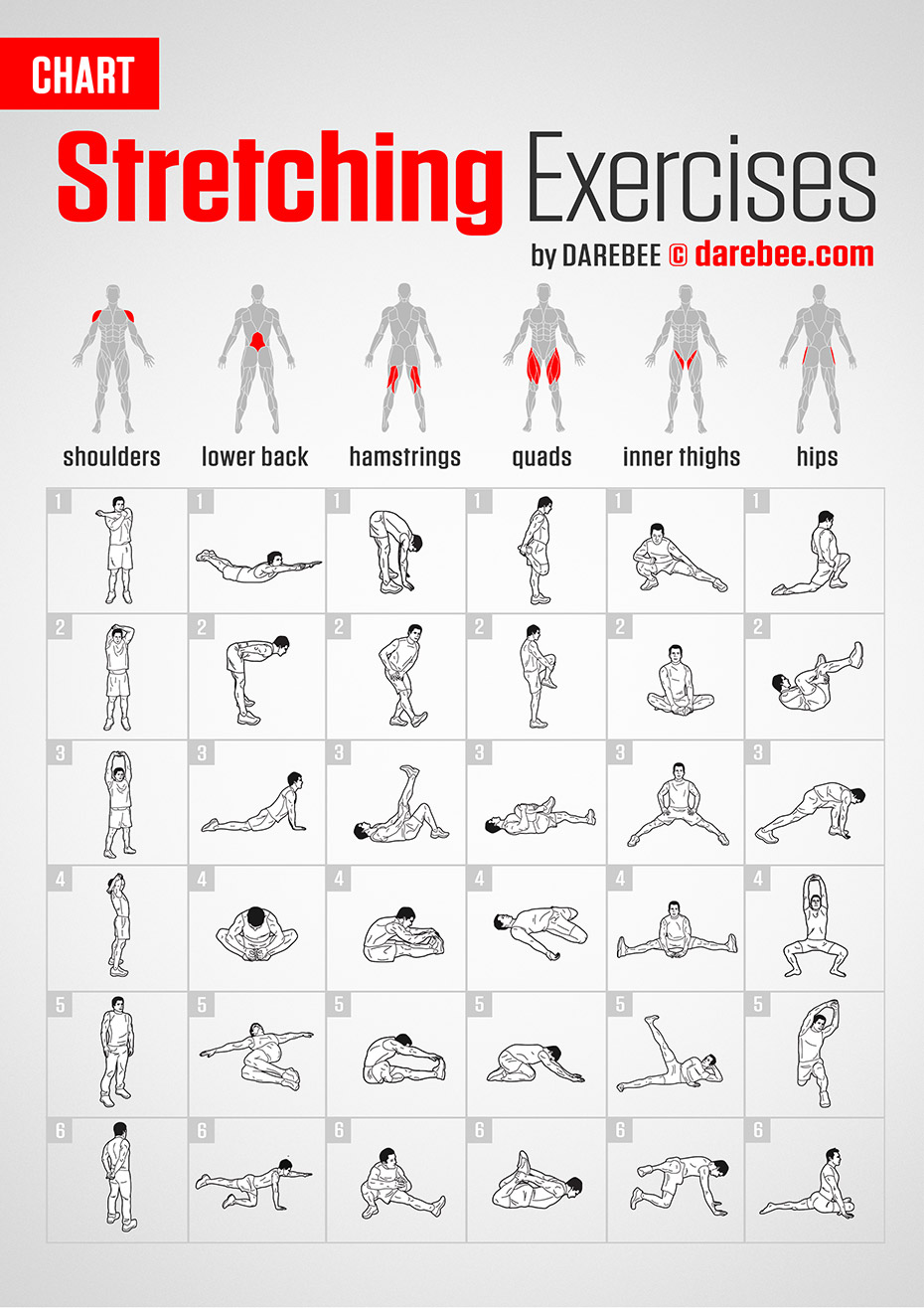
Image Source: darebee.com
Deciphering Stretching
Stretching is more than just bending over. It is a way to help your muscles. Your muscles can get short and tight. This happens when you sit a lot. It happens after you use your muscles hard. Stretching helps put length back into your muscles. It makes them more ready to work. It helps them relax after work. This makes your body feel better overall.
When you stretch, you gently pull on a muscle. You hold this pull for a short time. Or you move your body to stretch the muscle. This action tells the muscle to relax a little. It helps the muscle fibres get longer. Doing this often helps your muscles stay long and soft. Soft muscles move more easily. They do not get hurt as easily.
Why Stretching Helps You
Stretching does many good things for your body. It helps your body in several ways. People stretch for these good reasons.
Boosts Muscle Flexibility
One big help is that it makes your muscles more flexible. Muscle flexibility is how well your muscles can lengthen. Think of your muscles like rubber bands. If a rubber band is old, it is hard to stretch. If it is new, it stretches easily. Stretching helps your muscles act more like new rubber bands. This means you can move your body through a bigger range. You can lift your arm higher. You can bend down further. This makes everyday tasks easier.
Helps You Move More Easily
When your muscles are flexible, your joints can move better. Your joints are where your bones meet. Muscles pull on bones to make you move. If muscles are tight, they stop your joints from moving fully. Stretching lets your joints move like they should. This helps with walking, running, jumping, and bending. Your body feels less stiff. Moving just feels better.
Stops Problems Before They Start (Injury Prevention Stretching)
Stretching helps keep you from getting hurt. This is called injury prevention stretching. Tight muscles can pull too hard on bones and joints. This can lead to pain or injury. For example, tight muscles in your leg can hurt your knee or back. When muscles are long and flexible, they pull less. They work better with other muscles. This makes your body stronger and less likely to get hurt. If you play sports, stretching is key. It lowers the chance of pulling a muscle. It helps your body handle hard work better.
Makes You Feel More Relaxed
Stretching can help you feel less stressed. When you are stressed, your muscles often tense up. Think about how you hold your shoulders when you are busy. They might be up by your ears! Stretching helps release this tension. It tells your body to relax. Taking a few minutes to stretch can calm your mind. It can lower stress. It makes you feel better all over.
Helps Blood Move in Your Body
Stretching can help your blood flow better. Good blood flow is vital for healthy muscles. Blood brings food and oxygen to your muscles. It helps take away waste. When you stretch, it helps open up the small tubes that carry blood (capillaries) in your muscles. This means more good things get to your muscles. This helps them work well. It helps them heal after use.
Helps You Stand Up Straighter
Many people have poor posture. This means how they hold their body when standing or sitting. Poor posture often comes from tight muscles. Tight muscles in your chest or hips can make you slouch. Stretching these muscles helps your body find a better position. It helps you stand taller. It helps you sit up straighter. Good posture is important. It helps stop back pain. It helps your organs have room to work.
Different Ways to Stretch
Not all stretches are the same. There are different Types of stretching. People use different types for different reasons. It is good to know the main ones.
Two Main Kinds
The two main types are static and dynamic stretching. Understanding Static vs Dynamic stretching helps you pick the right kind for the right time.
Static Stretching
This is the most common type people think of. With static stretching, you stretch a muscle and then hold the stretch. You move into the stretch until you feel a pull. It should not hurt. Then you hold still in that position.
- How to do it:
- Move slowly into the stretch.
- Hold the stretch steady.
- Do not bounce.
- Hold for about 15 to 30 seconds.
- Repeat on the other side if needed.
- When to use it:
- After your muscles are warm.
- This is good for Cool-down stretches after exercise.
- Good for general flexibility work any time your muscles are warm.
- Examples:
- Touching your toes and holding the stretch in the back of your legs.
- Reaching over your head to stretch your side.
- Holding your foot behind you to stretch the front of your thigh (quads).
Static stretching is great for making muscles longer over time. It helps improve your flexibility little by little.
Dynamic Stretching
Dynamic stretching is different. It uses movement to stretch the muscles. You move your body through a range of motion. You do not hold still at the end of the stretch.
- How to do it:
- Move in a controlled way.
- Make the movements smooth.
- Start with smaller movements.
- Make the movements bigger as you go.
- Do not bounce hard or fast.
- When to use it:
- Before you exercise. This is good for Warm-up stretches.
- It gets your muscles ready for action.
- It gets blood flowing.
- It helps your body practice the movements it will do.
- Examples:
- Swinging your legs back and forth.
- Swinging your arms in circles.
- Walking lunges.
- High knees walking.
Dynamic stretching prepares your body for movement. It helps lower the risk of injury during exercise. It should feel easy and smooth, not forced.
Other Types (Briefly)
There are other types too, but Static and Dynamic are key for most people. PNF stretching is more advanced. It often needs a partner. Ballistic stretching uses bouncing movements. It is not for everyone and can cause injury. For most people, focusing on Static vs Dynamic stretching is best.
How to Do Stretches Right
Doing stretches the right way is important. Good Stretching techniques help you get the most benefit. They also help you stay safe.
Important Rules for Stretching
- Warm up first: Never stretch cold muscles. This is a big rule. Do some light activity first. Walk for 5-10 minutes. Or stretch after exercise. This gets blood to your muscles. Warm muscles stretch better and safer.
- Move in slowly: Go into the stretch little by little. Do not rush it. Find the point where you feel a gentle pull.
- No pain allowed: Stretching should not hurt a lot. A gentle pull is fine. Sharp pain means stop. You might be pushing too hard. Or something might be wrong. Listen to your body.
- Breathe steady: Do not hold your breath. Breathe in slowly. Breathe out slowly as you go deeper into the stretch. Breathing helps your body relax. This lets your muscles stretch better.
- Hold static stretches: If you do static stretching, hold it long enough. 15 to 30 seconds is a good time. Do it more than once per muscle group.
- Control dynamic moves: If you do dynamic stretching, make your moves smooth and controlled. Do not swing wildly.
Following these simple rules helps you stretch safely. It helps you make good progress.
Stretching Before and After
Stretching has different roles depending on when you do it. Knowing when to do which type is helpful. It is part of good Warm-up stretches and Cool-down stretches.
Before You Exercise (Warm-up Stretches)
Think of this as getting your body ready. Warm-up stretches should be dynamic.
- Why dynamic? Dynamic moves get your heart rate up a little. They send blood to your muscles. They move your joints through their full range. This tells your body it is time to work.
- What to do: Do moves that copy what you will do in your exercise.
- Going for a run? Do leg swings, butt kicks, high knees.
- Going to lift weights? Do arm circles, bodyweight squats, light twists.
- Playing a sport? Do movements used in that sport.
- How long: A warm-up, including dynamic stretching, might take 5-10 minutes.
- Goal: To prepare your muscles and body for the activity ahead. Not to gain major flexibility.
After You Exercise (Cool-down Stretches)
This is the time for static stretching. Your muscles are warm from the workout.
- Why static? Static stretches held when muscles are warm are best for improving flexibility over time. They help your muscles relax after working hard.
- What to do: Focus on the muscles you just used.
- Ran? Stretch your hamstrings, quads, calves.
- Lifted weights? Stretch the muscles you worked.
- How long: Spend 10-15 minutes on your cool-down. Hold each static stretch for 15-30 seconds. Repeat each stretch 2-3 times.
- Goal: To help muscles relax, start recovery, and work on long-term Muscle flexibility.
So, remember: Dynamic before exercise. Static after exercise.
Making Stretching a Habit (Daily Stretching Routine)
To get the best results, stretch often. A Daily stretching routine helps you make progress. It helps you keep the flexibility you gain.
How Often to Stretch
How often should you stretch? Most people can benefit from stretching most days. Aim for 5-7 days a week if you can. Even a few minutes helps. If you are new, start with 2-3 days a week. See how your body feels. Build up slowly.
How Long to Stretch
A stretching session does not need to be long. Even 10-15 minutes can make a difference. If you are doing static stretches, hold each one for 15-30 seconds. If you repeat them, that muscle gets 30-90 seconds of stretch time. If you do dynamic stretches, do 10-12 repeats of each move.
Finding Time in Your Day
It can be hard to find time. Try to fit stretching in:
* First thing in the morning.
* On your lunch break.
* After work or school.
* While watching TV.
* Before bed.
* After your workout (this is key!).
Pick a time that works for you. Try to stick to it. It will become a habit like brushing your teeth.
Making a Simple Plan
It helps to have a simple plan. Think about the main muscle groups.
* Legs (front, back, sides).
* Hips.
* Back (upper and lower).
* Chest.
* Shoulders.
* Neck.
You do not need to stretch every muscle every day. You could do a full body stretch a few times a week. Or focus on different body parts on different days.
Here is a sample Daily stretching routine plan:
| Day | Focus Muscles | Type of Stretching Recommended |
|---|---|---|
| Monday | Full Body (Hold each stretch 15-30s) | Static |
| Tuesday | Legs & Hips (Dynamic before activity, Static after or later) | Dynamic & Static |
| Wednesday | Upper Body (Chest, Shoulders, Back, Neck) | Static |
| Thursday | Rest or Light Dynamic Warm-up | Dynamic (if active) |
| Friday | Full Body (Hold each stretch 15-30s) | Static |
| Saturday | Legs & Hips (Dynamic before activity, Static after or later) | Dynamic & Static |
| Sunday | Upper Body & Core | Static |
This is just an idea. Change it to fit your life. The main thing is to do it regularly. Being steady is more important than stretching for a very long time just once.
More Ways to Be Flexible
Stretching is a core part of being flexible. But other Flexibility exercises also help. Muscle flexibility is built in different ways.
Stretching is Key
Yes, stretching is the main way. Static holds help muscles get longer. Dynamic moves help joints move better. Regular stretching is the base for good flexibility.
Other Things Help Too
Some activities combine stretching with strength and balance.
* Yoga: Yoga moves hold poses that stretch muscles. It also makes you stronger. It teaches you to breathe and relax. Many yoga poses are like static stretches. Some flows are dynamic.
* Pilates: Pilates focuses on core strength. It also works on lengthening muscles. It helps with body control and posture.
* Tai Chi: This is a slow, gentle exercise. It moves the body in a flowing way. It helps with balance and flexibility.
Doing these or other gentle movement classes can help your flexibility. They work well with a stretching routine. They are also good ways to add more movement to your day.
Things Not to Do (Common Mistakes)
Sometimes people make mistakes when stretching. Knowing these can help you stretch better and safer.
- Stretching cold: We said this before, but it is worth saying again. Muscles need to be warm. Like warm dough stretches easily. Cold dough breaks. Do a light warm-up first.
- Bouncing into stretches: This is ballistic stretching. For most people, it is not safe. It can cause a muscle to pull back hard. This can lead to injury. Always move into a stretch smoothly. Hold static stretches still.
- Holding for only a second: A quick pull does not do much. For static stretching, you need to hold the stretch. Give the muscle time to relax and lengthen. 15-30 seconds is key.
- Stretching when you feel pain: Pain is a signal. It means stop. A gentle pull is okay. Sharp pain is not. Do not push through pain. This can make an injury worse.
- Not stretching enough: Doing a stretch once every few weeks will not change much. You need to stretch regularly to see results. A Daily stretching routine is best.
- Only stretching one muscle: Think about your whole body. Muscles work in groups. If one muscle is tight, it affects others. Try to stretch all the main muscle groups over time.
Avoid these common errors. This will help you get the most from your stretching.
Stopping Problems with Stretching (Injury Prevention Stretching)
Let’s look more at how stretching helps stop injuries. It is a big part of staying active and healthy. Injury prevention stretching is vital for everyone, not just athletes.
How Being Flexible Helps
Flexible muscles are less likely to tear or pull. When you move fast or change direction, muscles stretch. If a muscle is tight, it cannot stretch much. This can make it snap or tear. A flexible muscle can handle these quick stretches better. It is more ready for sudden demands.
Less Chance of Pulls or Tears
Muscle pulls or strains are very common injuries. They happen when a muscle is stretched too far or too fast. Or when it is asked to do too much when it is tight. Regular stretching makes muscles more ready for activity. It lowers the chance of these painful pulls.
Helps If You Sit a Lot
Sitting for many hours can make certain muscles very tight. Muscles in the hips, the back of the legs (hamstrings), and the chest can get short. This can lead to back pain, hip pain, and poor posture. Stretching these areas helps. It helps fix muscle problems caused by sitting. It helps keep your body balanced.
Helps If You Play Sports
Sports need quick moves, jumps, and turns. Muscles are used in many ways. Being flexible helps your body handle these moves. It can make you better at your sport too. Better range of motion means you can move more freely and strongly. Stretching is a key part of training for any sport.
Stretching helps your body handle the stress of daily life and activity. It is like giving your muscles a little check-up and tune-up often. This keeps them working well.
Who Needs to Stretch?
Does everyone need to stretch? Yes! Almost everyone can gain something from stretching.
- People who sit at desks: Sitting shortens muscles. Stretching helps put length back. It helps with posture and stops pain from sitting.
- People who play sports: Athletes need flexibility for performance and to stop injuries. Different sports need different types of flexibility.
- Older people: As we get older, muscles can lose flexibility. Stretching helps keep movement easy. It can help with balance and lower the risk of falls.
- People who work with their hands or bodies: Jobs that use your body in the same way often can cause muscle tightness. Stretching helps ease this tension.
- People who are not active: Even if you do not exercise hard, stretching helps keep your muscles and joints healthy. It helps with simple things like bending to tie shoes.
- People feeling stressed: Stretching is a good way to relax the body and mind.
So, no matter who you are or what you do, stretching can help your body feel and work better.
Putting it Together
Stretching is a simple thing you can do. It has big rewards for your body. It makes your muscles flexible. It helps you move well. It is a key tool for injury prevention stretching. There are different Types of stretching. Static is good for holding and gaining flexibility. Dynamic is good for getting ready to move.
Doing some form of stretching often is best. Aim for a Daily stretching routine. Even a few minutes can help. Listen to your body. Do not push into pain. Use good Stretching techniques. Combine stretching with other Flexibility exercises if you like.
Start slow if you are new. Be steady with your efforts. Your body will thank you for it. Stretching is an act of self-care. It helps you feel good and move well today and in the future.
Frequently Asked Questions (FAQ)
Here are answers to common questions people ask about stretching.
Q: Can I stretch every day?
Yes, you can stretch every day. In fact, stretching daily is a great way to improve and keep your flexibility. A short, light stretch each day is better than a long, hard stretch once in a while. Just listen to your body and do not stretch muscles that are sore or hurt.
Q: How long should I hold a static stretch?
For most static stretches, holding for 15 to 30 seconds is good. Some people might hold for 60 seconds. But 15-30 seconds is enough to start. Repeat the stretch 2-3 times for each muscle group.
Q: Does stretching hurt?
No, stretching should not hurt. You should feel a gentle pull or tension in the muscle. If you feel sharp or strong pain, stop the stretch right away. Pain is a sign that something is wrong or you are pushing too hard.
Q: Is stretching enough for flexibility?
Stretching is a main part of being flexible. But being flexible also means having good range of motion in your joints. This can also be helped by moving your body in different ways. Activities like yoga or Tai Chi can help too. Good posture and avoiding sitting for too long also help keep you flexible.
Q: When is the best time to stretch?
The best time for static stretching (holding stretches) is when your muscles are warm. This is usually after exercise. Dynamic stretching (moving stretches) is best done before exercise to warm up your muscles and get them ready. You can also do light stretching any time your muscles are warm, like after a warm bath or shower, or just later in the day after you’ve been moving around.
Q: Should I stretch before or after running?
You should do dynamic stretches before running to warm up your muscles. After your run, when your muscles are warm, you should do static stretches to help them relax and improve flexibility.
Q: What happens if I don’t stretch?
If you don’t stretch, your muscles can become shorter and tighter. This can make it harder to move freely. It can increase your chance of muscle strains or other injuries. It might also lead to muscle soreness, poor posture, and less range of motion in your joints over time.
Q: How quickly will I see results from stretching?
You might feel a little more relaxed or have less tension after just one stretching session. To see big changes in flexibility, it takes time and regular effort. You might start noticing improved flexibility in a few weeks to a few months if you stretch regularly (most days of the week). Keep at it!